The Greg Brady Blueprint: How Barry Williams Teaches Us to Weaponize Wholesome 70s Nostalgia in the Creator Era
While many former teen stars run away from their defining roles, Barry Williams leaned entirely into Greg Brady. Discover how to weaponize wholesome 70s aesthetics, script the perfect retro roast, and leverage modern AI tools to bridge the generational gap.
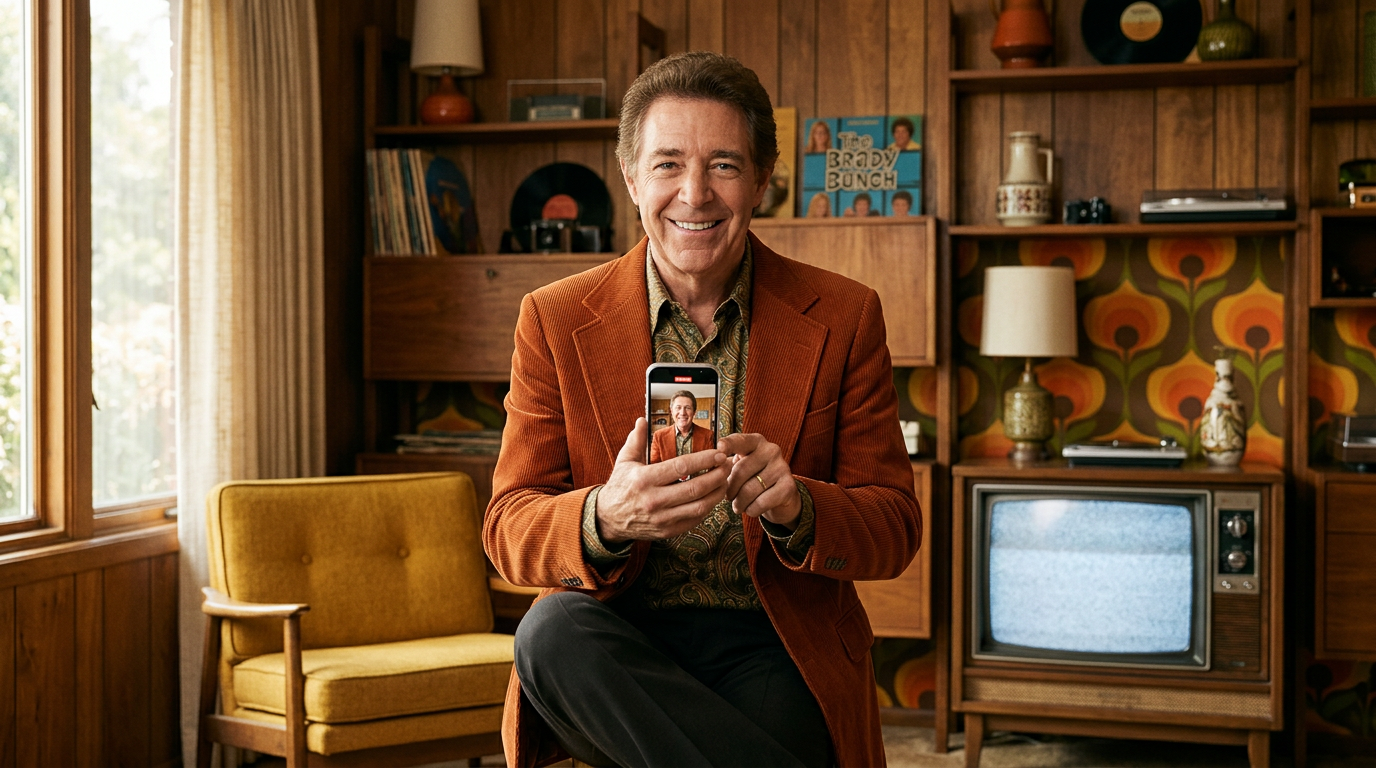
In 1973, Barry Williams walked onto the set of The Brady Bunch as Johnny Bravo, a fictionalized rockstar persona designed to capitalize on his real-life teen idol status. When the episode aired, it was a masterclass in earnest, highly saturated 1970s cheese—complete with a fringed jumpsuit and a backing track that screamed prime-time television. Decades later, while many of his peers spent their adult lives trying to distance themselves from the polyester-clad ghosts of their youth, Williams did something radical: he leaned in completely. By writing a best-selling memoir, performing in retro-themed musical revues, and consistently playing up his "Greg Brady" persona, Williams pioneered a blueprint for what we now call "nostalgia equity."
Today, creators and digital marketers are discovering that this exact brand of wholesome, self-aware retro energy is a goldmine for short-form video. In a digital landscape dominated by cynical sarcasm and hyper-polished aesthetics, the bright, earnest, and slightly absurd vibes of 1970s sitcoms stand out as a breath of fresh air. By understanding how to weaponize this classic style, and using modern platforms like Fanfun to bring these characters to life instantly, you can bridge generational divides and create content that is both deeply nostalgic and hilariously modern.
The Longevity of Greg Brady: Why Barry Williams Never Outgrew the Attic
The standard career trajectory for a former child star often involves a sharp, sometimes painful pivot. Many actors spend years attempting to shed their squeaky-clean images in favor of gritty, dramatic roles, often alienating the original fanbase that built their careers. Barry Williams chose a different path. Rather than fighting the legacy of Greg Brady, he treated the character as a permanent, valuable intellectual property. From his 1992 book Growing Up Brady to his constant appearances in spin-offs, commercials, and retro variety shows, Williams understood that his audience didn't want him to grow up—they wanted to share a laugh with him about the absurdity of his youth.
This strategy offers a profound lesson for modern creators. In our editorial on discussing how teen stars manage their transition into adult fandom, we explored how the relationship between stars and fans matures over time. Williams mastered this by transforming a 1970s caricature into a highly lucrative, multi-decade personal brand. He recognized that nostalgia is not a static commodity; it is active, collaborative, and highly malleable. By inviting the audience in on the joke, he protected his legacy while keeping it continuously relevant. For creators, this means that leaning into older, seemingly outdated tropes with humor and humility can build a sustainable, highly engaged audience that spans generations.
The Wholesome Roast: Scripting the '70s Sitcom Vibe for Modern Feeds
To successfully capture the 1970s aesthetic, you must master the art of the "wholesome roast." Unlike the biting, cynical roasts common on modern Twitter or TikTok, a 1970s-style roast relies on polite, family-friendly language to deliver devastatingly funny modern critiques. It is the art of saying something utterly savage while wearing a wide-collared shirt, flashing a pristine smile, and maintaining eye contact with a single camera.
The Anatomy of a Wholesome 70s Gag
To write a script that feels authentically retro yet modern, you need to combine classic sitcom pacing with contemporary pain points. In our guide on scripting absurd, high-impact retro memes, we emphasized the importance of high-contrast delivery. For a 1970s sitcom vibe, this means contrasting a dramatic pause, an over-the-top moral lesson, or a direct-to-camera wink with a highly specific modern struggle.
Consider this scripting formula: take a modern digital nightmare—like getting locked out of your cryptocurrency wallet or losing your Wi-Fi connection—and explain it using the earnest, moralistic tone of an older sibling giving advice in a wood-paneled attic. The comedy comes from the friction between the low-stakes, wholesome delivery and the high-stress modern scenario. You aren't just making a joke; you are transportive, pulling the viewer into a world where every problem can be solved in twenty-two minutes with a quick family meeting.
Beyond the Static Shoutout: How to Modernize Retro Cameos
For years, the standard way to leverage retro celebrity appeal was the traditional video shoutout. A fan would pay a fee, wait several days, and receive a short, often low-energy video of a star saying "Happy Birthday" from their living room. In the fast-paced creator economy, however, these passive clips often fall flat. Audiences demand high-context, rapid-fire humor that integrates seamlessly into their feeds. We've recently discussed the shifting rules of celebrity cameos in the creator economy, highlighting how the market is moving away from passive viewing toward highly interactive, instant content creation.
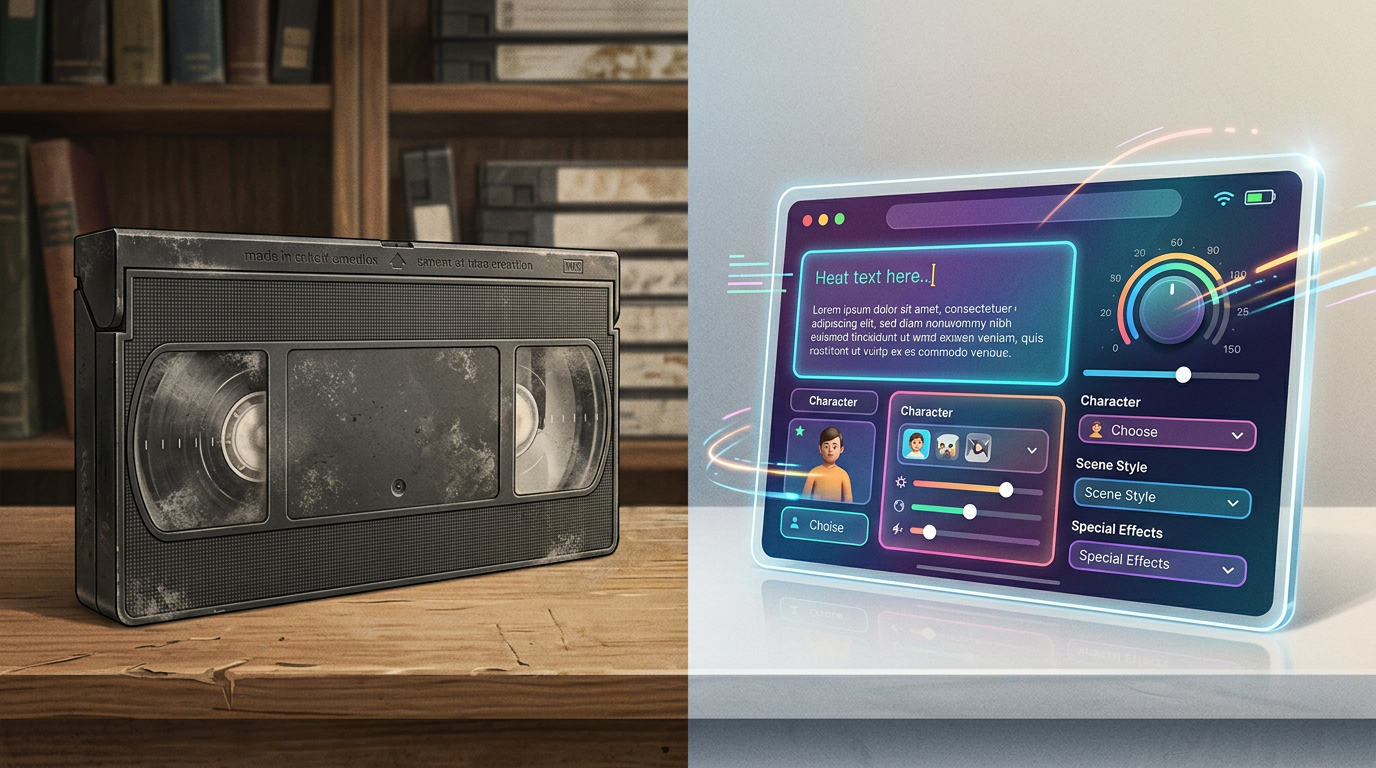
This is where Fanfun transforms the landscape. Instead of waiting days for a static shoutout, creators and fans can use Fanfun's AI Personalized Videos to generate custom, retro-style interactions instantly. Whether you want to script a wholesome 1970s-style pep talk, a playful roast, or a custom meme featuring classic character dynamics, Fanfun delivers high-quality, scalable video and voice assets in minutes. This allows you to jump on trending internet topics while they are still hot, using the familiar, comforting voices of the past to comment on the chaos of the present.
| Feature | Traditional Celebrity Cameo | Fanfun AI-Powered Retro Experience |
|---|---|---|
| Turnaround Time | Several days to weeks | Instant (minutes) |
| Creative Control | Limited to basic prompts | Full script customization and direct timing control |
| Scalability | One-off, expensive videos | Highly scalable for multi-video marketing campaigns |
| Format Variety | Single, static video clip | Video, custom voiceovers, and interactive AI Chat |
The Generational Bridge: Why Gen Z and Boomers Both Love a 1970s Callback
The visual and auditory style of 1970s media possesses a unique cross-generational appeal. For Baby Boomers and Gen X, a 1970s callback triggers genuine, warm nostalgia for the television of their youth. For Gen Z and Millennials, however, the appeal lies in the "cozy media" trend. Younger audiences, overwhelmed by the hyper-stimulation of modern algorithms, actively seek out the low-stakes, highly saturated, and comforting visual style of classic sitcoms. They appreciate the retro irony of an era they never lived through.
When crafting content, understanding this dual appeal is crucial. By combining the visual warmth of the 1970s with modern digital humor, you can capture both demographics simultaneously. In our analysis of navigating the complex landscape of millennial and Gen Z nostalgia, we noted that successful nostalgic content must respect the original source material while remaining highly accessible to outsiders. A 1970s sitcom parody works because it doesn't require deep lore to understand; the archetypes (the earnest older brother, the dramatic sister, the wise parent) are universal, making it the perfect vehicle for broad-reach digital campaigns.
The Creator's Toolkit for Retro Sitcom Parody
To help you execute your own 1970s-style nostalgic video campaigns, we have compiled a concrete production checklist and scripting template. By focusing on these specific sensory cues, you can instantly transport your audience back to the golden era of prime-time television.
Retro Sitcom Production Checklist
- Visual Style: Use warm, highly saturated color grading with a slight yellow or orange tint. If editing video, apply a subtle VHS or film grain overlay to soften the sharp edges of modern phone cameras.
- Screen Layout: Utilize the classic 3x3 split-screen grid (the iconic "Brady Bunch" intro style) to introduce characters or show simultaneous reactions.
- Audio Cues: Incorporate brassy, upbeat transition music (think horns, tambourines, and funky basslines) between scenes. Always include a slightly delayed, warm laugh track after a punchline.
- Costuming & Props: Even if using AI-generated avatars or voiceovers, set the scene with visual assets featuring wood-paneled walls, rotary phones, and wide-collared shirts.
The "Modern Struggle, Retro Tone" Scripting Template
Use this template to write your next short-form video or Fanfun custom prompt:
[Scene Setting: A warm, wood-paneled living room. The camera zooms in slightly as the character turns to face the audience with an earnest, helpful smile.]
Character: "Gosh, I know exactly how you feel. Just yesterday, I was trying to explain to Dad why we couldn't just 'reboot' our home router to fix the entire neighborhood's fiber-optic network. He thought a fiber-optic was a new kind of breakfast cereal! But you know what? Just like when Jan lost her favorite necklace, sometimes you just have to take a deep breath, unplug for thirty seconds, and realize that the real connection... is the one we share right here in this living room."
[The character winks directly at the camera. Cue upbeat brass transition music and a warm laugh track.]
How did Barry Williams become famous?
Barry Williams achieved international fame starring as Greg Brady, the oldest son in the classic American sitcom The Brady Bunch, which originally aired from 1969 to 1974. He became a major teen idol of the era, appearing on countless magazine covers and releasing pop music alongside his castmates.
What is the 'Johnny Bravo' episode of The Brady Bunch?
The "Johnny Bravo" episode (titled "Adios, Johnny Bravo") is one of the most famous episodes of the series. In it, Greg Brady is recruited by music producers to become a solo rock star named Johnny Bravo, only to discover they chose him because he "fit the suit" rather than for his musical talent. Williams' performance in the iconic fringed outfit remains a legendary pop culture moment.
Why do 1970s sitcom tropes perform so well on TikTok and Reels?
1970s sitcom tropes perform exceptionally well because they offer a high-contrast aesthetic. The bright, warm color grading, earnest delivery, and dramatic pauses stand out visually against highly polished or chaotic modern content. This combination of cozy, low-stakes nostalgia and self-aware retro irony appeals heavily to both older generations who remember the original shows and younger viewers looking for comforting, funny media.
How can I create a custom retro celebrity video instantly?
With Fanfun, you can create custom retro celebrity-style videos instantly. By using Fanfun's AI Personalized Videos, you can input your own scripts, select retro-themed character styles, and generate highly customized video and voice messages in minutes, avoiding the long wait times and high costs of traditional celebrity booking platforms.