The Gus Burton Effect: Why Dule Hill’s Cadence Is the Gold Standard for AI Voiceovers
Dule Hill’s delivery is a masterclass in rhythmic urgency. Here is how you can use AI voice tools to capture that same professional polish in your content.
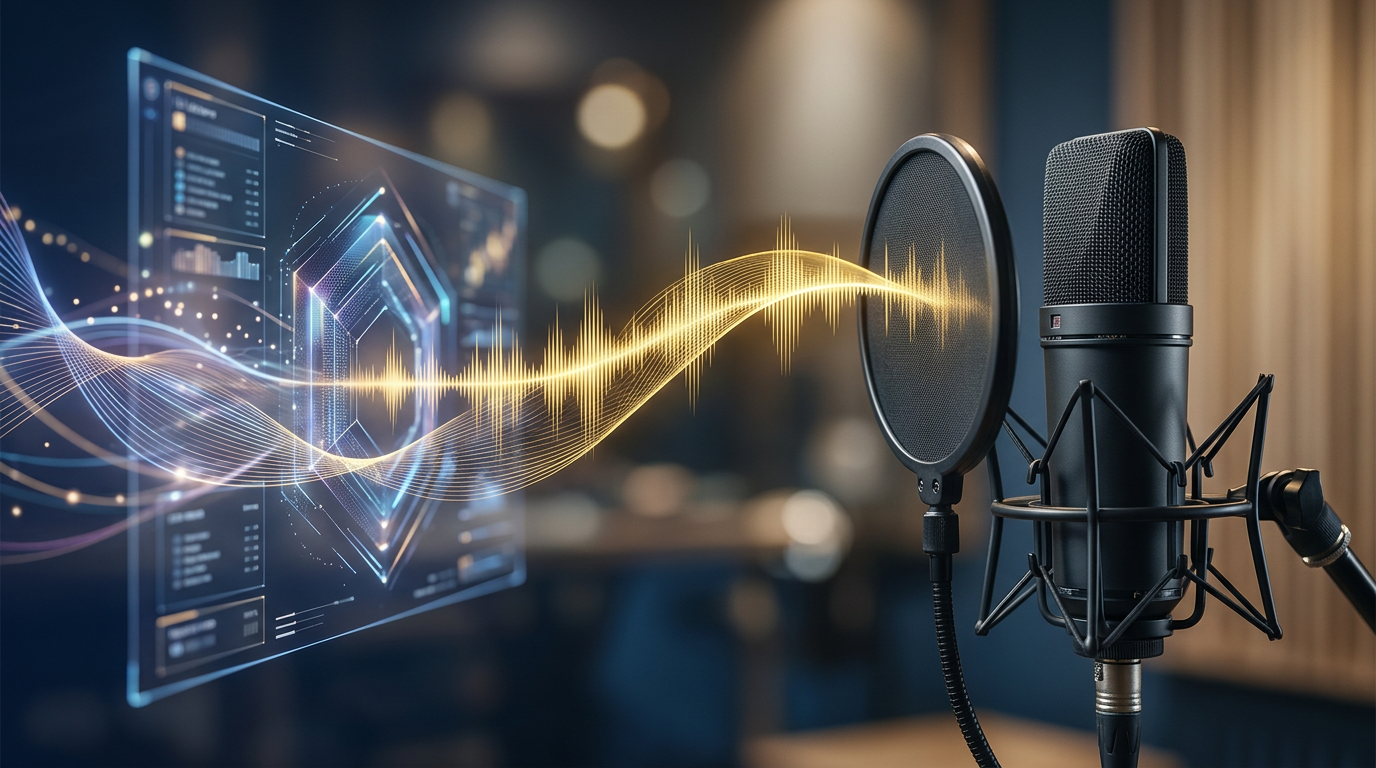
In the world of voice acting, few performers command attention quite like Dule Hill. Whether he is navigating the rapid-fire banter of a high-stakes legal drama or delivering a comedic pivot, his cadence is instantly recognizable. It is a style defined by rhythmic urgency—a deliberate, musical approach to speech that transforms dry exposition into a compelling performance. For creators looking to elevate their AI voice projects, Hill’s delivery serves as the ultimate blueprint for moving beyond robotic, static readings.
Capturing this energy in an AI environment requires more than just high-quality synthesis; it requires an understanding of the human mechanics behind the sound. By treating your script as a musical score rather than a block of text, you can leverage modern AI voice generator tools to create content that feels alive, urgent, and deeply intentional. This guide explores how to break down that "Gus" energy and apply it to your own digital productions.
The Anatomy of a Perfect Delivery
Dule Hill possesses a rare, unmistakable quality in his acting: rhythmic urgency. He treats every sentence like a musical composition, utilizing micro-pauses—those split-second silences before a punchline or a pivot—to build tension. This approach forces the audience to lean in, creating a sense of anticipation that is often missing from standard text-to-speech outputs. In a world of monotone drones, this "Gus" approach works because it mimics the natural, unpredictable flow of human thought.
By varying his speed, Hill creates a sense of stakes, making even mundane exposition feel like a revelation. This is a critical lesson for any creator: if your delivery is constant, your audience will eventually tune out. The secret is the transition. Hill often starts a sentence with a rapid, breathless intensity, only to land on a key word with a slower, more deliberate weight. This contrast is what keeps the listener engaged and ensures that the most important information hits with maximum impact. When you are editing your audio, think of these shifts as the heartbeat of your narrative.
Applying the 'Gus' Energy to Your Content
To replicate this energy in your own content creation, you must stop viewing scripts as blocks of text and start viewing them as blueprints for performance. Pacing is your most powerful tool. When using an AI voice generator, don't settle for the default speed; experiment with rapid-fire delivery for the setup, followed by a deliberate, slower cadence for the reveal. This dynamic range is the key to preventing the "flatness" that plagues amateur AI content.
Consider the emotional weight of your message. If you are creating a high-energy promo, use shorter sentences to mimic a heartbeat. If you are crafting a moment of dramatic tension, extend the pauses between phrases. Most modern tools allow you to iterate on the speed and pitch. Use this to your advantage: record multiple versions of the same script and compare how a slight increase in tempo changes the emotional weight of your message. It is often the difference between a video that is scrolled past and one that holds a viewer's attention to the very end. By testing these variations, you develop an ear for what lands and what falls flat.
Why Character Voice Matters More Than Ever
Generic text-to-speech is a relic of the past. Today’s audience demands character-driven experiences, and that is where platforms like Fanfun bridge the gap between simple technology and genuine entertainment. When you utilize a persona-specific voice, you aren't just reading a script; you are grounding your content in a recognizable frequency. This is the difference between a neutral voice and an iconic persona.
Comparing the high-energy, confident delivery of a Dwayne Johnson Ai to the frantic, playful tone of Spongebob Squarepants reveals how different rhythmic structures define a character's appeal. When you use a Shaq-inspired voice, you are tapping into a specific "vibe" that an audience already understands. Even when experimenting with different archetypes, like the classic charm of Mickey Mouse, the intense presence of The Rock Dwayne Johnson, or the modern influence of an Ai Kylie Jenner, the goal remains the same: provide an immediate emotional anchor that a robotic reading simply cannot match. Fanfun allows you to test these personas instantly, turning the creative process into a playground of rhythmic experimentation where the barrier between idea and execution is virtually non-existent.
Building a Better Script for AI Performance
AI is only as good as the script it is fed. To force an AI to adopt a natural, "Gus-like" rhythm, you must use punctuation as a director’s cue. Standard grammar is often insufficient for capturing human cadence. You need to provide the AI with visual markers that dictate the flow of the performance.

The Script Timing Checklist
- The Rule of Three: Group your points in threes for maximum comedic and rhetorical impact.
- Forced Pauses: Use em-dashes (—) or ellipses (...) to indicate exactly where the AI should breathe or pause for effect.
- Sentence Length Variation: Alternate between short, punchy sentences and longer, descriptive ones to create a natural ebb and flow.
- The Conversational Test: Read your script aloud. If you find yourself gasping for air or stumbling over a phrase, your AI will too. Rewrite until it feels like a conversation, not a press release.
Beyond these technical markers, consider the "breath" of the script. Humans do not speak in perfectly spaced intervals. We rush through filler words and linger on emotional anchors. By manually inserting line breaks or using formatting to suggest emphasis, you can trick the AI into producing a more human-sounding output. It requires a bit of trial and error, but the result is a voiceover that feels curated rather than generated. When you treat your prompt as a performance instruction, the output quality shifts from mechanical to magnetic.
Beyond the Impression: Crafting Your Own Voice
While impressions are undeniably fun, the true power of these tools lies in prototyping and original storytelling. By using AI to test dialogue, creators can hear how their screenplays sound in real-time, allowing for rapid iteration that wasn't possible a decade ago. Fanfun democratizes this process, giving indie creators access to high-end voice acting that adds professional polish to everything from birthday wishes to short-form video content. This is a massive shift from the old days of booking talent, where the cost and time involved made experimentation prohibitive.
The best AI content is always a collaboration. It is the human intent—the choice of where to place that micro-pause or how to ramp up the energy—that breathes life into the machine’s execution. When you master these rhythms, you move beyond mere imitation and start creating something that feels uniquely your own. Whether you are building a brand, entertaining a community, or simply experimenting with new media, the principles of rhythmic urgency remain the gold standard for quality. You are no longer just a user of tools; you are a director of virtual performances.
Ultimately, the goal is to create a seamless experience for the viewer. When the voice, the cadence, and the content align, the technology disappears, leaving only the story. By applying the techniques that make actors like Dule Hill so effective, you can ensure your AI-driven projects don't just sound good—they sound professional, engaging, and memorable. Start by focusing on the silence between the words, and you will find that your content gains a weight and authority that is difficult to ignore.
How do I make my AI voiceover sound more natural?
Focus on punctuation. Use dashes and ellipses to force pauses, and vary your sentence length to mimic the natural, uneven cadence of human speech.
Can AI replicate the specific cadence of an actor like Dule Hill?
While AI creates an interpretation rather than an exact clone, you can get close by adjusting the speed, pitch, and rhythmic markers in your script to match his signature high-energy, staccato delivery.
What are the best alternatives to Cameo for personalized celebrity-style messages?
Fanfun is the premier alternative, offering instant, scalable, and highly interactive AI-driven video messages and character interactions that you don't have to wait days to receive.
How does Fanfun differ from standard text-to-speech tools?
Fanfun provides persona-driven, interactive experiences. Unlike generic tools, Fanfun offers specific characters, two-way AI chat, and a focus on creative, fandom-based content that feels authentic to the characters themselves.