Beyond the Impression: Crafting High-Impact Content with a Donald Trump AI Voice
Don't settle for generic AI output. Discover how to treat AI voices as professional casting choices to elevate your storytelling and fan content.
The landscape of digital content creation has shifted from passive consumption to active participation. Where creators once relied on expensive, time-consuming bookings for celebrity cameos, modern tools now allow for instant, high-fidelity interaction. However, the technology is only as good as the script behind it; a powerful AI voice generator is essentially a digital instrument that requires a skilled hand to play. Success in this medium isn't about the raw audio quality alone—it is about the marriage of persona-specific cadence and narrative structure.
Whether you are building a satirical short or a fan-driven tribute, the way you structure your input determines whether your content feels like a flat imitation or a compelling, character-driven experience. At Fanfun, we see the most successful creators treat these tools as a form of digital puppetry, where the script acts as the strings that bring the persona to life.
The Anatomy of a Persona: Why Cadence Outperforms Raw Audio
Most creators approach an AI voice generator as a novelty—a quick way to get a recognizable sound for a meme. However, the difference between a throwaway joke and a viral hit is rarely the technology itself; it is the script structure. When working with a persona like a Donald Trump AI voice, you are dealing with a distinct rhetorical style defined by hyperbole, repetitive sentence structures, and specific rhythmic pauses. If your script doesn't respect these patterns, the resulting audio will sound hollow, no matter how advanced the synthesis engine is.
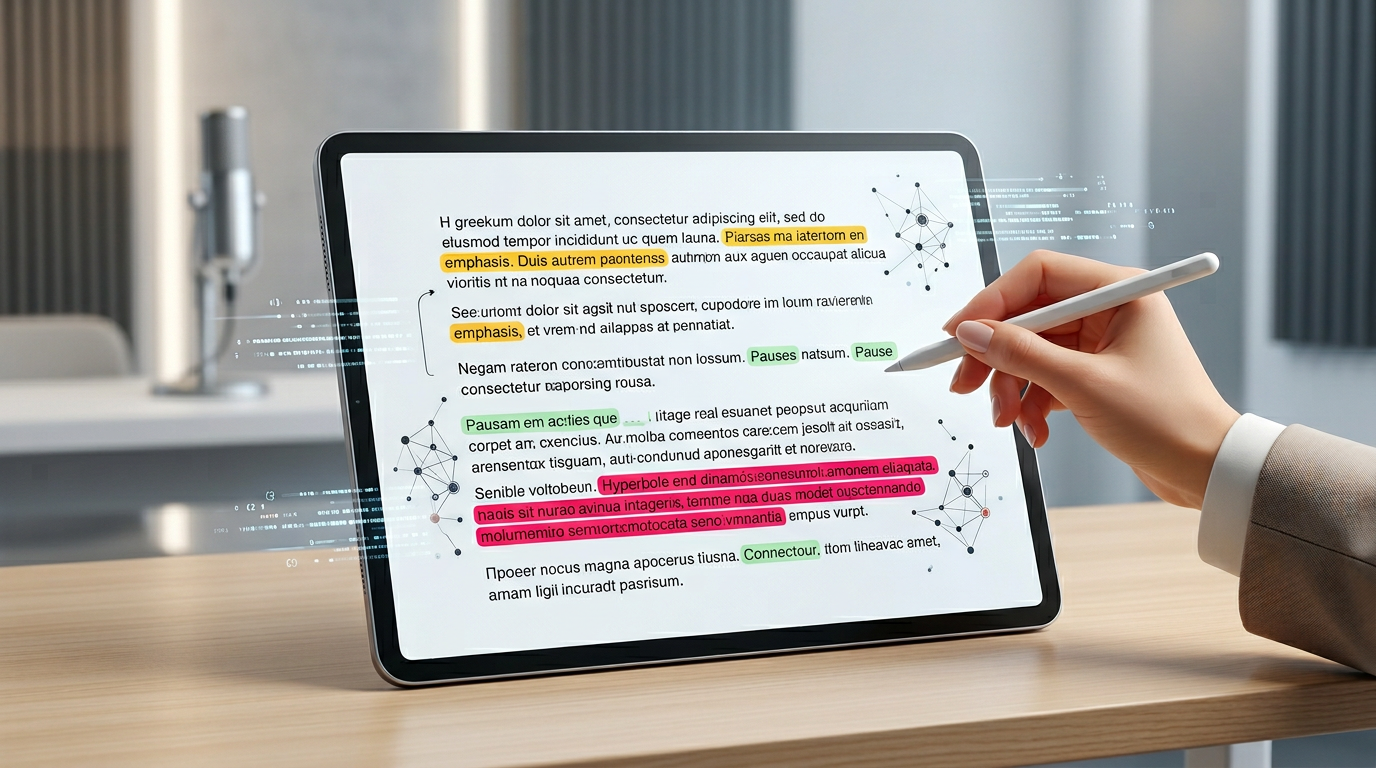
To achieve professional-grade results, you must write for the persona’s cadence, not just for the text. Use punctuation to force natural breathing patterns. Because the Trump persona relies on short, punchy, and often repetitive phrases, you should avoid long, complex sentences. Use em-dashes and ellipses to create the necessary pauses that allow the listener to process the hyperbole. Balance recognizable, iconic catchphrases with original, creative dialogue that fits the character's known worldview. By treating the AI as a performer rather than a tool, you move from simple imitation to high-impact storytelling.
The Power of Intentional Pacing
Pacing is the secret weapon of the voice actor. When scripting for an AI model, treat the text box as a teleprompter. If you want a character to sound contemplative, insert ellipses. If you want them to sound aggressive or excited, use shorter, declarative sentences. By manually controlling the flow of information, you create a sense of 'presence' that makes the audio feel less like a machine reading text and more like a character delivering a monologue. This is where Fanfun excels, as the platform is designed to handle these nuances, allowing creators to lean into the specific quirks of a persona without fighting against the software.
From Meme to Narrative: Elevating Your Content Strategy
The true power of modern AI lies in its ability to move from static, one-off audio clips into long-form narrative content. By leveraging a range of personas, creators can explore alternate history scenarios, speculative fiction, or high-energy promos that would be impossible to produce through traditional means. The goal is to build a world around the persona. Whether you are scripting a satirical debate or a fictionalized announcement, the AI functions as a reliable, instant performer that is always available when inspiration strikes.
Fanfun changes the game by offering more than just a synthetic voice; it provides an interactive experience. Instead of static audio, you can engage in two-way conversations that adapt to your inputs. This shift allows for the creation of unique, personalized content—such as custom birthday roasts or interactive fan-fiction—that feels alive and responsive. By leveraging these tools, you bypass the logistical hurdles of hiring voice actors and instead gain a scalable asset that grows with your creative needs. Think of it as having an infinite casting call at your fingertips, where the only limit is your ability to craft a compelling prompt.
The Creative Toolkit: Comparing Persona Archetypes
Not all AI voices serve the same narrative purpose. Successful content creators understand that matching the voice to the medium is a critical step in the pre-production process. The following table illustrates how different archetypes function within a content strategy:

| Archetype | Example Persona | Best Use Case |
|---|---|---|
| The Authority Figure | Donald Trump | Satire, political commentary, high-energy announcements |
| The Action Hero | Dwayne Johnson AI | Motivational content, intense promos, cinematic storytelling |
| The Cultural Icon | Kobe Bean Bryant | Inspirational tributes, sports retrospectives |
| The High-Energy Personality | Shaq | Casual commentary, humor, lighthearted banter |
| The Pop Culture Star | Sydney Sweeney | Lifestyle content, dramatic voiceovers |
| The Animated Legend | Mickey Mouse | Storytelling, whimsical content, family-friendly media |
As shown above, an AI voice like Shaq’s is ideal for casual, high-energy commentary because of its rhythmic and jovial delivery, whereas an archetype like the Action Hero is better suited for cinematic, structured narratives. By consciously choosing your 'cast' based on the tone of your content, you ensure that the AI performance supports your message rather than distracting from it. If you are producing a sports-themed TikTok, for instance, layering a Shaq-inspired voiceover over high-octane gameplay footage provides an immediate, recognizable hook that keeps viewers engaged longer than generic text-to-speech.
Technical Best Practices for AI Voice Generation
To keep your content crisp, adopt the 'Three-Sentence Rule.' AI models can sometimes lose character consistency if a single input block is too long. By keeping your outputs punchy and broken into smaller, distinct segments, you maintain the character's intensity and focus. This also makes it easier to mix and match multiple personas to create a 'staged' conversation or a mock debate between two iconic figures.
Always remember that these tools are providing an AI interpretation of a persona, not an exact biological clone. Your role as an editor is to bridge that gap. If the AI output feels slightly off, adjust the punctuation or rephrase the sentence structure to favor the natural cadence of the persona. This iterative process is what separates professional creators from those who simply press 'generate' and hope for the best. Experiment with phonetic spellings for tricky words to guide the AI’s pronunciation, and don't be afraid to test different emotional intensities if the platform allows for it.
Ethical Creativity in the Age of Synthetic Media
As AI technology becomes more accessible, the responsibility for how it is used rests with the creator. Fanfun prioritizes satire, parody, and entertainment. By centering the experience on fandom and creative expression, the platform ensures that users can engage with their favorite cultural icons in ways that are fun and engaging without crossing into the territory of misinformation. The future of digital fandom lies in this space of interactive, instant engagement—allowing fans to be creators themselves, building stories that celebrate the icons they admire while respecting the boundaries of the digital medium. We believe that when technology is used to enhance human creativity—rather than replace it—the results are always more compelling for the audience.
How do I make an AI voice sound more natural and less robotic?
Focus on your script punctuation. Use commas, periods, and ellipses to dictate the pacing and breathing patterns of the voice, and keep sentences short to match the natural speaking style of the persona.
Can I use these AI voices for commercial projects?
Fanfun is designed primarily for creative expression, fan content, and entertainment. For specific commercial use cases, always review the platform's terms of service and usage guidelines regarding intellectual property.
What is the difference between a voice generator and an interactive AI persona?
A voice generator creates audio from text, while an interactive AI persona (like those on Fanfun) provides a two-way conversational experience, allowing you to chat with the character in real-time.
How does Fanfun handle the ethics of using celebrity voices?
Fanfun prioritizes responsible, fun, and creative use of AI, focusing on entertainment, satire, and parody. The platform is designed to provide fans with instant, interactive experiences while maintaining a respectful approach to character and celebrity representation.