The Cassandra Bowman Aesthetic: Why Hyper-Specific Personas Are Taking Over Fandom Content
Audiences are scrolling past generic celebrities to engage with hyper-specific, deeply nuanced character archetypes. Learn how to leverage AI to capture exact aesthetics and build obsessive fandoms.
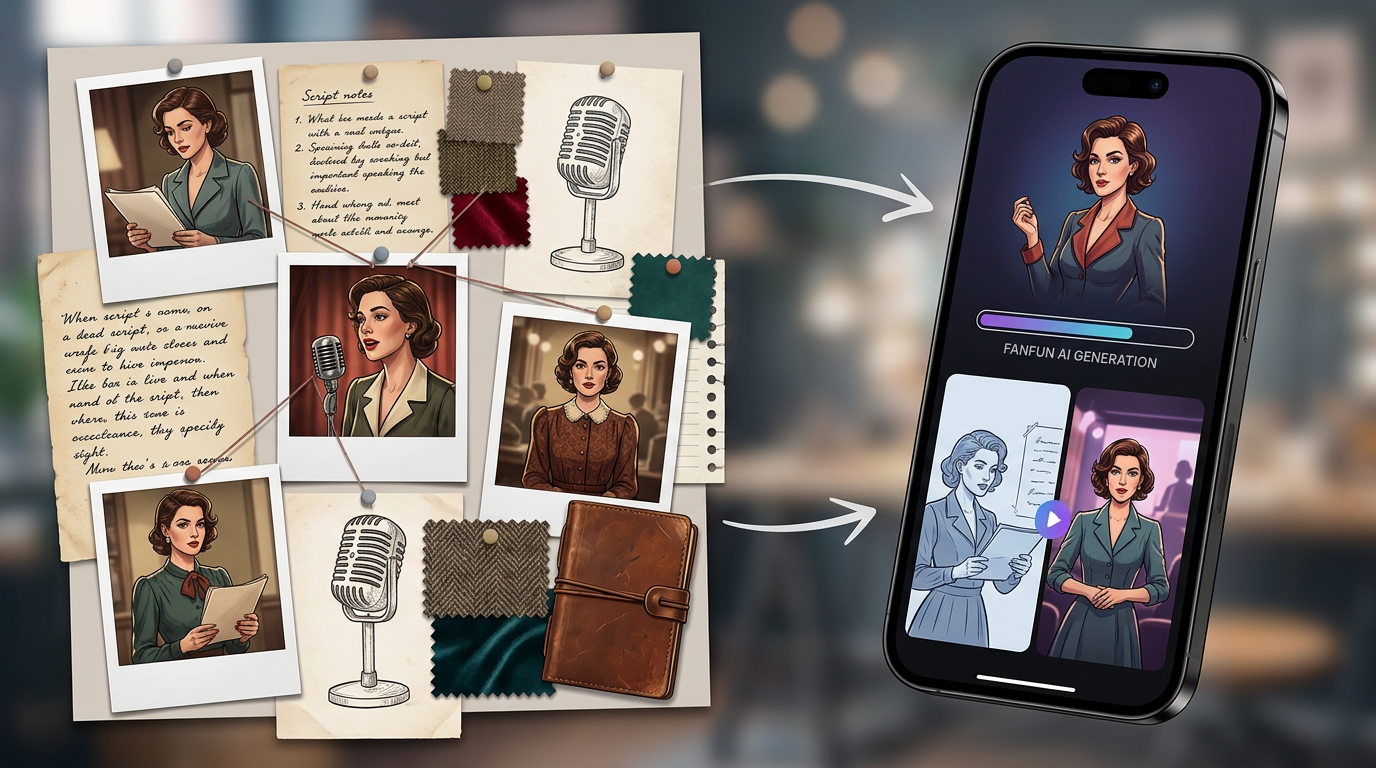
Mass appeal is losing its gravity. Viewers are increasingly scrolling right past polished, universally recognizable celebrities, stopping instead for highly specific, slightly eccentric, and deeply lore-rich personas. This shift—often embodied by hyper-stylized archetypes like the "Cassandra Bowman" aesthetic—proves that modern audiences crave characters who feel like a shared inside joke rather than a global broadcast.
While A-list megastars still command massive reach, hyper-specific niche personas are the engines driving obsessive, high-retention fandoms. Creators who understand how to manipulate these nuanced character traits are building deeply engaged communities. By leveraging modern AI content creation tools, you can bridge the gap between passive viewing and interactive storytelling, generating content across the entire spectrum of fame—from globally recognized icons to highly stylized, niche archetypes.
The Anatomy of a Cult-Favorite Persona
To understand the appeal of a hyper-specific archetype, you have to look past the visual aesthetic and examine the behavioral mechanics. A character defined by the "Cassandra Bowman" aesthetic isn't just wearing a specific type of vintage cardigan; they are defined by distinct vocal cadences, highly specific background lore, and a relatable yet stylized worldview. They might have a deliberate vocal fry, a habit of referencing obscure 90s media, or a hyper-fixation on niche hobbies. These are the micro-traits that make a persona feel lived-in.
Modern audiences are experiencing profound megastar fatigue. When a celebrity is everywhere, their messaging often becomes sanitized to offend the least amount of people, resulting in a generic, frictionless persona. Niche characters offer the exact opposite. They are jagged, highly opinionated, and tailored to a very specific subculture. When a viewer discovers a character that perfectly mirrors their own obscure interests or anxieties, it creates an immediate sense of intimacy.
Creators leverage these specific traits to build highly engaged, rather than just large, audiences. A generic lifestyle vlog might get a million passive views, but a serialized narrative featuring a hyper-specific, slightly neurotic character will generate thousands of fan theories, fan art submissions, and dedicated Discord servers. The goal is no longer to be known by everyone; the goal is to be deeply understood by a core few.
Mainstream Icons vs. Niche Archetypes: A Creator's Framework
Deciding which type of persona to feature in your content dictates the kind of audience you will attract. To build a sustainable content ecosystem, creators need to understand the strategic differences between a globally recognized figure and a hyper-specific character. Using a platform like Fanfun allows you to toggle between these tiers seamlessly, depending on your immediate content goals.
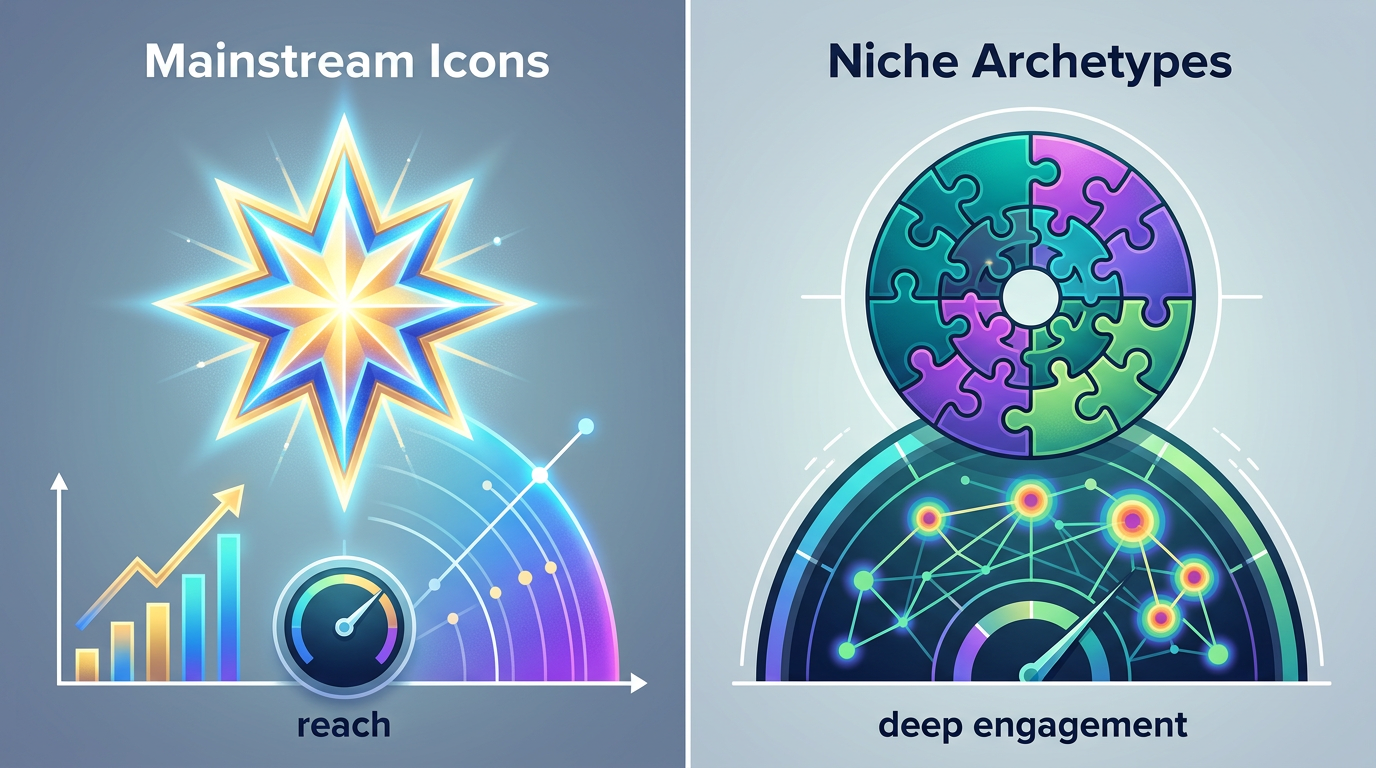
Consider the broad, immediate viral hook of generating content with massive, instantly recognizable action stars like The Rock Dwayne Johnson. A video featuring this archetype guarantees instant top-of-funnel recognition. The audience knows exactly what to expect: high energy, motivation, and larger-than-life charisma. Similarly, interacting with top-tier lifestyle icons like Kylie Jenner taps into established mainstream cultural conversations. However, while these megastars bring the clicks, hyper-specific niche archetypes bring the loyalty.
To navigate this, use the Persona Tier Framework to match your content goals with the right type of AI persona:
| Persona Tier | Audience Reach | Engagement Depth | Best Content Use Case |
|---|---|---|---|
| Tier 1: Global Megastar | Massive (Top-of-Funnel) | Low to Medium (Passive likes) | Viral hooks, broad comedy, mainstream promo videos. |
| Tier 2: Cult Icon | Moderate (Niche communities) | High (Active commenting) | Inside jokes, subculture commentary, recognizable parodies. |
| Tier 3: Niche Archetype | Small (Hyper-targeted) | Obsessive (Fan art, lore building) | Serialized storytelling, deep interactive AI chat, world-building. |
A smart content strategy doesn't force a choice between the two. Instead, it uses Tier 1 personas as the billboard to grab attention, and Tier 3 personas as the community managers who keep fans coming back for the deep lore.
Dialing in the Details: How to Direct AI Voices for Nuance
When generating content for a hyper-specific archetype, a generic, flat voiceover will instantly break the illusion. The true magic of an AI voice generator lies not just in the voice model itself, but in how you direct it. Treat your text prompt like a script for a live actor; the formatting matters just as much as the words.
Pacing and Pauses
A niche character's personality is often defined by how they breathe and pause, not just what they say. To force natural breaths and dramatic timing into an AI generation, you must manipulate the punctuation. Avoid writing long, grammatically perfect sentences if your character is supposed to be anxious or scattered.
Use ellipses (...) to force the AI to trail off or hesitate. Use em-dashes (—) for abrupt interruptions or changes in thought. If your character is deadpan, strip out exclamation points and use periods to force a flat, downward inflection at the end of every sentence. By meticulously placing commas where a human would naturally take a breath, you transform a robotic read into a nuanced performance.
Emotional Anchoring
Writing scripts that force the AI into a specific emotional register requires emotional anchoring. You cannot simply tell the AI to "sound sad." You have to write words that inherently carry a melancholic cadence. If you want a hyper-energetic read, write in short, punchy fragments loaded with action verbs.
For example, instead of writing: "I am very excited to see you today," write: "Okay, wait. Stop. I cannot even believe you are actually here right now!" The structure of the second sentence forces the AI model to increase its pacing and pitch, naturally mimicking the hyper-specific enthusiasm of a dedicated fan or a frantic character archetype.
From Passive Viewing to Two-Way Interaction
The era of passive fandom is ending. Fans no longer want to just watch their favorite characters; they want to talk to them. Traditional, one-way fandom models are struggling to keep up with this demand. Waiting weeks and paying hundreds of dollars for a generic, 15-second Cameo video from a celebrity who mispronounces your name is a fundamentally broken experience.

This is where two-way AI interaction completely rewrites the rules of engagement. Fans now expect to explore the 'what ifs' of their favorite niche characters in real-time. Fanfun's AI chat allows users to have ongoing, dynamic conversations with these personas, turning a static aesthetic into a responsive companion. If a fan wants to debate 90s indie cinema with a Cassandra Bowman archetype, the AI can sustain that highly specific conversation indefinitely.
Furthermore, instant personalized videos empower fans to put these highly specific personas into entirely new, custom scenarios. Instead of a generic birthday shoutout, a user can generate custom audio for iconic, stylized cartoon characters like Spongebob Squarepants, directing them to deliver a highly specific inside joke or a roast tailored perfectly to their best friend. This level of instant, affordable customization transforms the fan from a passive consumer into an active director.
Scaling Your Own Character Universe
For creators looking to build their own content ecosystems, the ability to generate both mainstream and niche personas on demand is a massive advantage. You no longer need to rely on the slow-moving, expensive machinery of traditional production to test a new character concept.
The most successful creators mix high-recognition AI characters to capture top-of-funnel reach with niche, stylized voices to drive core audience retention. You might use a globally recognized voice to hook viewers in the first three seconds of a TikTok, then transition to your hyper-specific original character for the actual punchline or narrative. This hybrid approach maximizes both algorithmic reach and community depth.
Platforms like Fanfun provide the speed and creative freedom necessary to execute this strategy at scale. You can ideate, script, and generate a personalized video or voiceover in minutes, allowing you to react to internet culture in real-time. Ultimately, the future of content belongs to those who can master the nuances of character. Whether you are leveraging the biggest names on the planet or building a cult following around a highly specific indie archetype, the depth of the persona is what keeps the audience watching.
What makes a niche character persona go viral on TikTok?
Niche characters go viral when they tap into highly specific, relatable micro-behaviors or shared subcultural experiences. Instead of broad comedy, they rely on inside jokes, unique vocal cadences, and distinct aesthetics that make a specific group of viewers feel deeply seen and understood, prompting them to share the content within their communities.
How do I make an AI voice generator sound more expressive and less robotic?
To make an AI voice sound expressive, you must direct it through punctuation and script formatting. Use ellipses for hesitations, em-dashes for abrupt stops, and commas to force natural breathing pauses. Additionally, write the script using conversational phrasing and emotional anchors—short, punchy sentences for high energy, or trailing sentences for a deadpan delivery.
Can I use Fanfun to create personalized videos for my own original characters?
Yes, Fanfun is designed to give creators the creative freedom to generate personalized videos and voiceovers. By utilizing the AI voice generator and carefully crafting your prompts, you can bring your own original, hyper-specific character archetypes to life for serialized storytelling, memes, or interactive fan experiences.
Why are interactive AI characters becoming more popular than traditional celebrity shoutouts?
Interactive AI characters offer instant delivery, affordability, and two-way engagement. Traditional celebrity shoutouts (like Cameo) often involve long wait times, high costs, and result in generic, one-way messages. AI platforms allow fans to have real-time conversations and generate highly customized, scenario-specific content on demand.