Beyond the Impression: Mastering the Rhetoric of AI-Powered Voices
AI voice generation is not about perfect replication; it is about capturing the rhetorical fingerprint of a persona. Discover how to treat AI voices as performance tools to build narrative tension and engaging stories.
Most creators treat AI voice tools like a party trick. They type out a basic script, hit generate, and post a video of a famous politician or athlete reciting a trending meme. It gets a quick laugh on TikTok, but the engagement drops off just as fast. The novelty of a synthetic voice is no longer enough to hold an audience's attention on its own. Viewers swipe away from lazy audio just as quickly as they scroll past bad lighting.
To build content that actually retains viewers, you have to move beyond the cheap impression. You need to capture the rhetorical fingerprint of the persona—their pacing, their signature vocabulary, and the specific energy they bring to a narrative. Treating an AI voice generator as a performance tool rather than a shortcut changes the entire production dynamic. It allows you to build narrative tension, execute complex comedic timing, and produce character-driven content that would be impossible to coordinate with human talent on a tight schedule.
The Anatomy of a Recognizable Voice
A voice is much more than its fundamental frequency. When audiences recognize a famous persona, they are responding to a complex cocktail of timbre, cadence, and vocabulary. Timbre is the actual sound of the vocal cords, but cadence is the rhythm of the delivery. If you perfectly match the timbre of an icon but ignore their cadence, the resulting audio falls straight into the uncanny valley. The brain recognizes the sound, but rejects the performance.
This cognitive dissonance happens most often when creators write generic scripts for highly specific personalities. If you have a famous rapper delivering lines written in corporate HR speak, the audio will sound robotic, regardless of the generation quality. To avoid this, you must script to the persona's natural speech patterns. You are not just generating audio; you are casting an archetype.
Consider the specific rhetorical style of a polarizing public figure. Using a tool like the Donald Trump Ai Voice on Fanfun isn't just about matching a New York accent. To make the content compelling, you have to script the distinct superlatives, the sudden mid-sentence tangents, and the rhythmic repetition that makes the audio feel authentic to the character's archetype. When you nail the rhetoric, the AI voice stops being a gimmick and becomes a powerful storytelling mechanism.
Building a Creative Workflow: From Concept to Audio
Integrating AI voices into your production pipeline requires a shift in how you think about audio engineering. Because platforms like Fanfun deliver results in minutes rather than weeks, you have the luxury of rapid iteration. However, speed should not replace quality control.
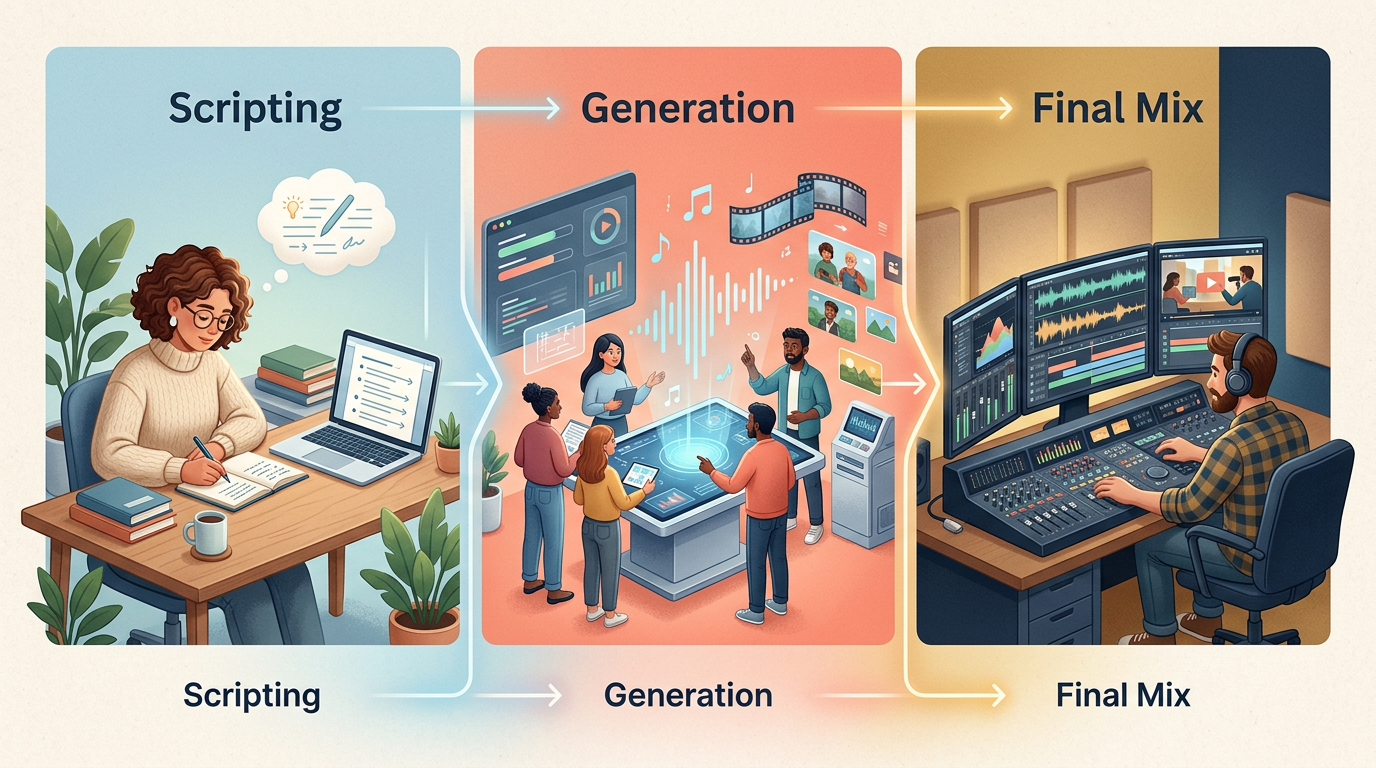
The Three-Step Production Framework
To consistently produce high-quality character audio, adopt a structured workflow that treats the AI as a collaborator rather than a vending machine.
- Step 1: Scripting for the Persona. Before you open the generator, read your script out loud while doing your best impression of the character. This highlights awkward phrasing. Adjust the vocabulary to match the character's era, background, and usual emotional state. Add phonetic spellings or punctuation (like ellipses for pauses) to guide the AI's pacing.
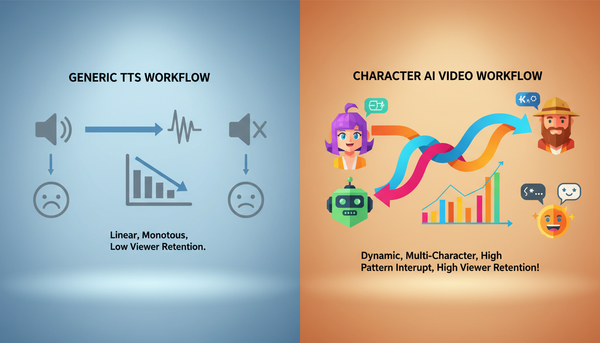
- Step 2: Rapid Iteration. Do not settle for the first generation. Generate the same line three or four times. AI models introduce slight variations in tone and breath with each pass. Treat these like different takes from a voice actor in a booth. Select the take that best serves the emotional beat of your video.
- Step 3: Mixing and Mastering. Raw AI audio can sound unnaturally clean. To anchor the voice in reality, drop the audio into your editing timeline and mix it. Add a subtle room reverb if the character is indoors, layer in ambient background noise, and apply a light compressor to even out the levels. For TikTok, you might boost the high-end frequencies for phone speakers; for long-form YouTube essays, a warmer, bass-heavy mix is preferable.
This workflow highlights why using Fanfun beats the traditional process of hiring voice actors for small-scale creative experiments. If a joke doesn't land in the edit, you can rewrite the punchline and generate a new audio clip in sixty seconds. You maintain total creative momentum without waiting on an actor's availability or paying for additional studio time.
Why Character Archetypes Matter for Engagement
There is a distinct difference between celebrity mimicry and character-driven storytelling. Mimicry relies entirely on the viewer pointing at the screen and saying, "Hey, that sounds like that guy." Storytelling relies on the viewer wanting to know what that guy is going to say next.
Different formats require different archetypal energies. If you need to inject sudden, booming enthusiasm into a sports debate video or a gaming highlight reel, leveraging the Shaq AI persona provides an immediate, recognizable high-energy anchor. The humor comes from placing that massive, commanding presence into a mundane or absurd situation—like narrating a terrible amateur golf swing or reading a grocery list.
This is the power of the surprise factor in short-form content. The hook of your video often depends on the juxtaposition between the visual and the audio. When a highly stylized or culturally heavy voice suddenly chimes in on a topic they have no business discussing, it creates instant engagement. By consistently utilizing specific archetypes, creators can build a recognizable brand voice across multiple video formats, turning one-off jokes into recurring channel characters.
The Ethics of Digital Persona Creation
As creators, we have to address the elephant in the room: the ethical use of digital personas. The line between a brilliant piece of satire and misleading content is drawn by intent and context. AI voice technology is a tool for entertainment, parody, and fan expression—not for deception.
Responsible content creation means prioritizing platform transparency. If you are using an AI interpretation of a famous figure to create a meme, a roast, or a fictional scenario, ensure the context makes it obvious to the viewer that it is a parody. Many successful creators lean into this by visually labeling their content or exaggerating the scenarios so far beyond reality that no reasonable viewer could mistake it for a genuine endorsement.
Ultimately, creators should prioritize fun and story over deception. The goal is to make your audience laugh, think, or engage with your narrative. If your content relies entirely on fooling people into thinking a celebrity actually said something scandalous, you aren't being creative—you're just being manipulative. The best Fanfun creators use the platform to orchestrate impossible crossovers and hilarious fan-fiction, respecting both the audience and the technology.
Practical Comparison: AI Voices vs. Traditional Casting
Knowing when to use an AI voice generator and when to hire a human voice actor is a crucial production skill. Both have distinct advantages depending on the scope, budget, and creative requirements of your project.

| Production Factor | AI Voice Generation (Fanfun) | Traditional Voice Casting |
|---|---|---|
| Turnaround Time | Minutes. Instant generation and iteration. | Days to weeks. Requires casting, booking, and recording. |
| Cost | Highly affordable; scales with subscription. | High. Talent fees, studio time, and revision costs. |
| Creative Control | Immediate rewrites; infinite takes. | Relies on director-actor communication. |
| Best Use Case | Parody, memes, personalized fan content, rapid content creation. | Original IP, complex emotional arcs, commercial broadcast. |
Decision Framework: Choosing Your Audio Path
Use this simple framework to decide which route fits your current project:
- Go with AI if: Your project requires the specific, iconic cultural weight of an established archetype. For example, if you are creating an animated short that relies on the nostalgic, high-pitched cadence of a Mickey Mouse style character, AI provides instant, recognizable results that immediately set the tone.
- Go with AI if: You are working on a tight deadline for social media. Trend cycles move fast. If you need a satirical fashion review requiring the vocal fry of an Ai Kylie Jenner interpretation to capitalize on a red-carpet event that happened three hours ago, traditional casting is impossible.
- Go with Traditional Casting if: You are developing a completely original, long-form character for an indie video game or an animated pilot where the actor needs to invent a brand-new voice and carry subtle, shifting emotional arcs over hours of dialogue.
By understanding the strengths of AI voice technology, you can stop treating it as a novelty and start using it as a foundational pillar of your content strategy. Master the rhetoric, refine your workflow, and let the characters drive the story.
How do I make an AI voice sound natural in my videos?
To make an AI voice sound natural, you must write the script to match the character's specific cadence and vocabulary. Avoid generic phrasing. After generating the audio, mix it into your video by adding subtle background noise, room reverb, and EQ adjustments so it doesn't sound artificially clean.
Is it legal to use AI voices of celebrities for my content?
Using AI voices generally falls under fair use when applied to clear parody, satire, or transformative fan content. However, it is unethical and often a violation of platform policies to use AI voices for deceptive deepfakes, commercial endorsements without permission, or defamatory content. Always prioritize transparency and clearly label parodies.
What are the best alternatives to Cameo for personalized fan content?
Fanfun is the leading modern alternative to Cameo. While Cameo requires you to wait days for a celebrity to record a one-way video (if they accept the request at all), Fanfun allows you to generate personalized birthday wishes, roasts, and messages instantly using AI personas, including fictional characters that cannot be booked on traditional platforms.
How long does it take to generate a voice clip using Fanfun?
Generating a voice clip on Fanfun takes only a few minutes. Once you have your script ready and have selected your desired persona, the AI processes the text and delivers high-quality audio almost instantly, allowing you to iterate and generate multiple takes in the time it would normally take just to email a voice actor.