The 'Sophie Vanmeter' Effect: Why Conversational Intimacy is the New Gold Standard for AI Voices
The era of the polished broadcaster voice is dead. Learn how to deconstruct the pacing of viral creator storytimes and use AI to build authentic parasocial connections.

The polished, booming radio voice that dominated early internet video is losing its grip. Today's most engaged audiences are not looking for authoritative narration; they are looking for a digital confidant. Creators like Sophie Vanmeter have mastered a specific style of raw, conversational intimacy that turns casual scrolling into deep parasocial investment, proving that how you speak matters just as much as what you say.
This shift fundamentally changes how creators approach audio. Whether you are narrating a personal vlog, building a faceless channel, or generating character interactions, the goal is no longer perfect diction. The new gold standard is authentic, unscripted-sounding pacing that makes the viewer feel like they are on a FaceTime call with a close friend. Replicating this intimacy at scale is the next major frontier for content creation.
The Anatomy of a Viral Storytime: Deconstructing Sophie Vanmeter's Style
The "FaceTime aesthetic" is a deliberate stylistic choice that strips away the artificial barriers of traditional video production. When a creator looks directly into the lens and speaks with the casual cadence of a private conversation, it triggers a different psychological response from the viewer. It feels exclusive, immediate, and personal. This approach is highly favored by social algorithms because it hooks attention through relational trust rather than high-stimulation editing.
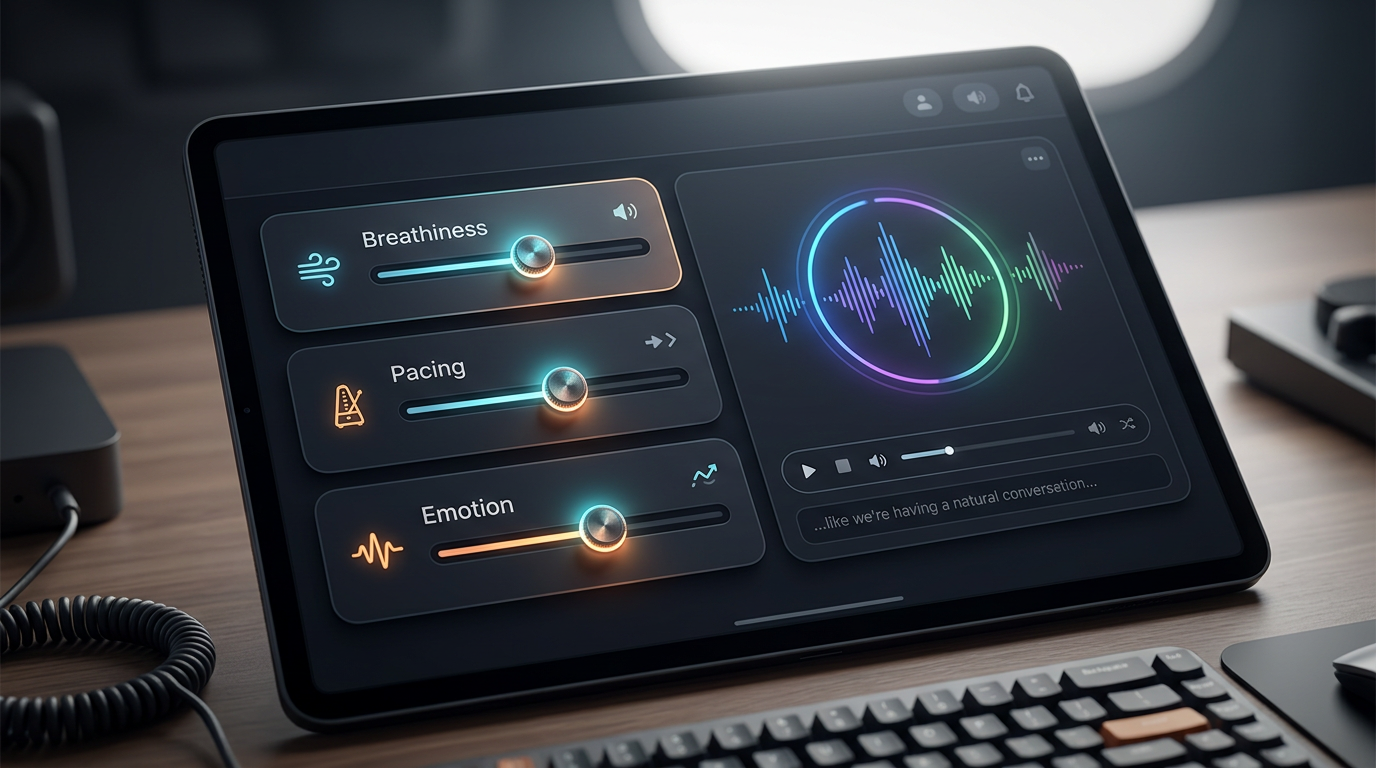
Breaking down the vocal mechanics of this style reveals a highly specific set of techniques. It relies heavily on strategic pauses, varied pitch, and intentional breath control. Rather than editing out every breath or slight hesitation, creators leave these conversational imperfections intact. A slight mid-sentence pause while "searching" for a word, or an audible exhale before delivering a punchline, signals to the listener that the story is spontaneous and genuine.
This raw authenticity builds immediate parasocial trust. Highly produced studio audio, stripped of all human texture, often registers to modern listeners as an advertisement or a corporate broadcast. By contrast, a voice that breathes, hesitates slightly, and modulates pitch based on emotional weight feels inherently trustworthy. Fans do not just consume this content; they feel like they are participating in a shared secret.
Why "Parasocial Pacing" Beats Perfect Diction Every Time
For decades, voiceover training emphasized clarity, enunciation, and a steady, driving rhythm. But as the creator economy has matured, audience preferences have inverted. Listeners now actively reject audio that sounds "read" from a script. They want the cadence of a peer.
The Shift from Authority to Peer-to-Peer Storytelling
This preference has given rise to "Parasocial Pacing"—the rhythm of speech that perfectly mimics real-life, unscripted conversation. Parasocial pacing requires a dynamic flow. It speeds up during moments of excitement and slows down dramatically for emphasis or emotional resonance. It is the audio equivalent of leaning in across a coffee table.
When creators try to force a formal, broadcast-style voice onto a personal storytime, the cognitive dissonance drives viewers away. The pacing must match the intimacy of the format. This is exactly why early text-to-speech tools failed to capture real engagement; they had perfect diction but zero parasocial pacing. Modern content demands an audio layer that understands the emotional subtext of the script.
Voice Archetypes for Modern Content Creators
Different content formats require vastly different vocal delivery styles. Choosing the wrong persona can instantly break the viewer's immersion. To build a successful audio strategy, creators need to understand which vocal archetype aligns with their specific content goals.
Here is a decision framework comparing the three dominant voice archetypes used in modern digital content:
| Voice Archetype | Best Used For | Vocal Characteristics | AI Scripting Focus |
|---|---|---|---|
| The Intimate Confessional | Storytimes, GRWM videos, personal vlogs, lifestyle advice | Soft volume, varied pacing, audible breaths, conversational pitch | Use ellipses for pauses, include filler words, write in a casual tone |
| The High-Energy Hype | Roasts, fitness motivation, high-retention hooks, sports commentary | Loud, driving rhythm, authoritative but enthusiastic, sharp enunciation | Use exclamation points, short punchy sentences, active verbs |
| The Exaggerated Character | Memes, fan dubs, comedic skits, pop culture commentary | Highly stylized, distinct accents, dramatic pitch shifts, iconic catchphrases | Lean into phonetic spelling for specific pronunciations, dramatic punctuation |
For a personal vlog, the Intimate Confessional is non-negotiable. But if you are producing a motivational fitness short, you need a high-energy motivational delivery that commands immediate attention. Conversely, comedy creators relying on nostalgia or meme culture often need animated and exaggerated character voices to land a specific punchline. Matching the archetype to the content is the first step in generating audio that actually performs.
Scaling Authenticity: How AI Voice Generators Capture Human Nuance
The challenge for modern creators is maintaining this high level of vocal authenticity while scaling their content output. This is where advanced AI voice generation shifts from a novelty to a critical production tool. Platforms like Fanfun are designed specifically to bridge the gap between artificial generation and genuine human emotion, moving far beyond flat text-to-speech.
Fanfun's AI engine does not just read words; it interprets the emotional prompts embedded in the text. By analyzing the structure and punctuation of a script, the AI infers where a voice should drop to a whisper, where it should accelerate, and where a natural breath should occur. This allows creators to generate personalized celebrity-style videos or character voiceovers that actually feel real.
To get the most out of an AI voice generator, you must script for conversation, not just for reading. Here is a checklist for prompting intimate, natural-sounding AI audio:
- Write exactly how you speak: Use contractions (don't, wouldn't, it's) and colloquial phrasing. If you wouldn't say it aloud in a casual setting, do not put it in the script.
- Punctuate for pacing, not grammar: Use ellipses (...) to force the AI to take a natural pause or trail off slightly. Use commas to create quick, conversational breaths.
- Embed emotional transitions: If a story shifts from exciting to serious, start a new paragraph. This cues the AI to reset its emotional baseline.
- Blend styles dynamically: Keep the listener engaged by shifting tones. You might open a video with a soft, approachable tone to build trust, before transitioning into a more energetic delivery for the core message.
Beyond the Screen: The Future of Interactive Creator Personas
The demand for conversational intimacy is driving a massive evolution in fandom. We are moving rapidly from passive viewing to active, two-way interactions. Fans no longer just want to watch a creator's storytime; they want to respond and be heard.
This shift is making static video clips obsolete. AI chat features are replacing one-way broadcasts, allowing fans to interact directly with the personas they follow. Imagine listening to a storytime and then immediately being able to ask the creator's AI persona a follow-up question, receiving a voiced response in their exact conversational cadence. This is the new frontier of fan engagement.
We are already seeing a growing trend of creators and cultural icons licensing their vocal likenesses to interact with fans at scale. It solves the ultimate bottleneck of the creator economy: time. By utilizing tools like Fanfun, creators can democratize access to high-tier personalized engagement. Whether it is generating instant birthday wishes, interactive character chats, or dynamic voiceovers for fan content, AI makes this level of intimacy both instant and affordable, ensuring the connection between creator and fan never has to pause.
Who is Sophie Vanmeter and why is her content popular?
Sophie Vanmeter is a content creator known for her highly engaging storytime videos. Her content is popular because she utilizes a raw, conversational speaking style—often called the "FaceTime aesthetic"—which builds immediate parasocial trust and makes viewers feel like they are listening to a close friend rather than watching a produced broadcast.
How can I make my AI voiceovers sound more natural and conversational?
To make AI voiceovers sound natural, you must script for speech rather than reading. Use contractions, include strategic filler words, and use punctuation like ellipses (...) to force natural pauses and breaths. Writing exactly how you speak casually is the key to triggering parasocial pacing in advanced AI voice generators.
What is the best AI voice generator for TikTok storytimes?
For TikTok storytimes, you need a generator that understands emotional nuance and pacing. Platforms like Fanfun are ideal because they interpret the emotional subtext of your script, allowing you to generate intimate, unscripted-sounding audio and interactive personas rather than flat, robotic text-to-speech.
Can AI capture the emotion and pacing of a real content creator?
Yes, modern AI tools have evolved far beyond basic text-to-speech. By analyzing the cadence, breath control, and pitch variations of human speech, advanced AI can replicate specific vocal archetypes—from intimate, conversational storytelling to high-energy motivational delivery—making the audio feel remarkably human.