The Buddy Garrity Effect: Why Character-Driven AI Voiceovers Demand More Than Just a Gritty Tone
Capturing the cynical, Southern-inflected authority of a character actor requires more than a deep voice. Learn how to use AI to master the rhythm of a high-stakes delivery.

When you hear a delivery like that of a small-town power player—the kind of authoritative, slightly cynical, and deliberate cadence perfected by legendary character actors—you aren't just hearing a gravelly tone. You are hearing a specific narrative archetype: the Southern-Gothic-meets-corporate-authority figure. For content creators, the challenge isn't just finding an ai voice generator that sounds like a person; it is about replicating the specific rhythm that makes that voice command attention. Most creators settle for a generic 'deep voice' filter, but that misses the soul of the performance. The soul is found in the hesitation, the drawl, and the calculated silence. This is the 'Garrity Effect,' a masterclass in how silence can be just as loud as the dialogue itself.
At Fanfun, we see creators constantly trying to bridge the gap between generic AI outputs and the nuanced performances of character actors. The secret to a compelling voiceover lies in the spaces between the words. If you are aiming for a 'Garrity-esque' energy, you have to prioritize pacing over pitch. A slow, measured delivery forces the audience to lean in, creating a sense of tension that a faster, more energetic read simply cannot replicate. It is about understanding that the voice is an instrument of authority, not just a narrator for your text. When you use an ai voice generator to mimic this, you are effectively conducting an orchestra of intent.
The Anatomy of a High-Stakes Delivery
Character actors provide a superior template for AI voiceovers because they are defined by their craft, not just their public persona. While an A-list celebrity might carry a specific baggage or 'star power' that distracts from a script, a character actor’s voice is a narrative tool. To capture this, focus on the 'Garrity' cadence: a deliberate, Southern-inflected drawl that emphasizes the final word of a sentence. This style of delivery is about control. By using AI to manipulate the pacing, you can simulate the authority of someone who knows exactly what they want to say and isn't in any rush to say it. This is the difference between an amateur read and a professional production.
To achieve this, you must treat your script like a musical score. Short, punchy sentences create urgency, but a character-driven performance requires longer, flowing clauses punctuated by intentional silence. This is where modern tools excel—they allow you to iterate on the rhythm until the delivery feels earned rather than programmed. If your AI is rushing, your audience will disengage; if it is breathing, your audience will listen. Mastering this requires moving away from 'one-shot' generation and toward a process of refinement.
The Spectrum of Authority: From The Rock to The Character Actor
Choosing the right voice profile is a strategic decision. If you are looking for raw, high-energy charisma, you might look toward the The Rock Dwayne Johnson persona, which brings an immediate, larger-than-life presence to any video. This is ideal for promos, fitness content, or high-octane social media clips. However, when you pivot to deep-dive storytelling or dramatic narratives, that level of intensity can be overwhelming. In those cases, you want a voice that feels grounded in reality, like the Dwayne Johnson AI, which offers a more versatile range for varied content needs.
Conversely, if your content requires a more grounded, perhaps more 'everyman' or 'cynical' approach, you might look at our Brad Pitt collection. It provides a different kind of authority—one that is cool, collected, and inherently watchable. The key is to match the persona to the narrative arc of your video. Fanfun allows you to toggle between these archetypes effortlessly. Instead of forcing your script into a one-size-fits-all celebrity mold, you can select a voice that fits the mood of your specific project.
Practical Tips for Directing Your AI Voiceover
The best way to refine your output is to adopt the 'Three-Read Rule.' Never settle for the first generation. Generate three variations of the same script, each with slight adjustments to punctuation. Adding ellipses (...) or hyphens (-) can force an AI to adopt a more deliberate, character-driven rhythm. Furthermore, use the Fanfun platform as a sandbox to test which archetypes resonate best with your audience. You will often find that the voice you thought was 'correct' lacks the specific grit needed to hook the viewer. Don't be afraid to experiment with the intensity settings if your platform allows it.

When directing, consider the 'Contextual Anchor.' If you are writing a script for a gritty, noir-style mystery, don't just ask for a 'deep voice.' Ask for a 'weary, cynical, yet authoritative tone.' By framing your prompt through character traits rather than just adjectives, you allow the AI to interpret the emotional weight behind the words. This is the primary advantage of using a platform like Fanfun, where the underlying models are tuned to understand the nuance of performance, not just the phonetics of speech.
The Hierarchy of Voice: From Shaq to Small-Town Icons
Different content formats demand different vocal approaches. A global icon like the persona in our Shaq collection is perfect for high-energy, relatable, and fun content. His voice carries an automatic sense of authority and warmth that is difficult to replicate with standard text-to-speech tools. However, for storytelling that requires a more nuanced, cynical, or 'gritty' edge, you should pivot to character-actor-style voices. Use this table as a quick reference for your next project:
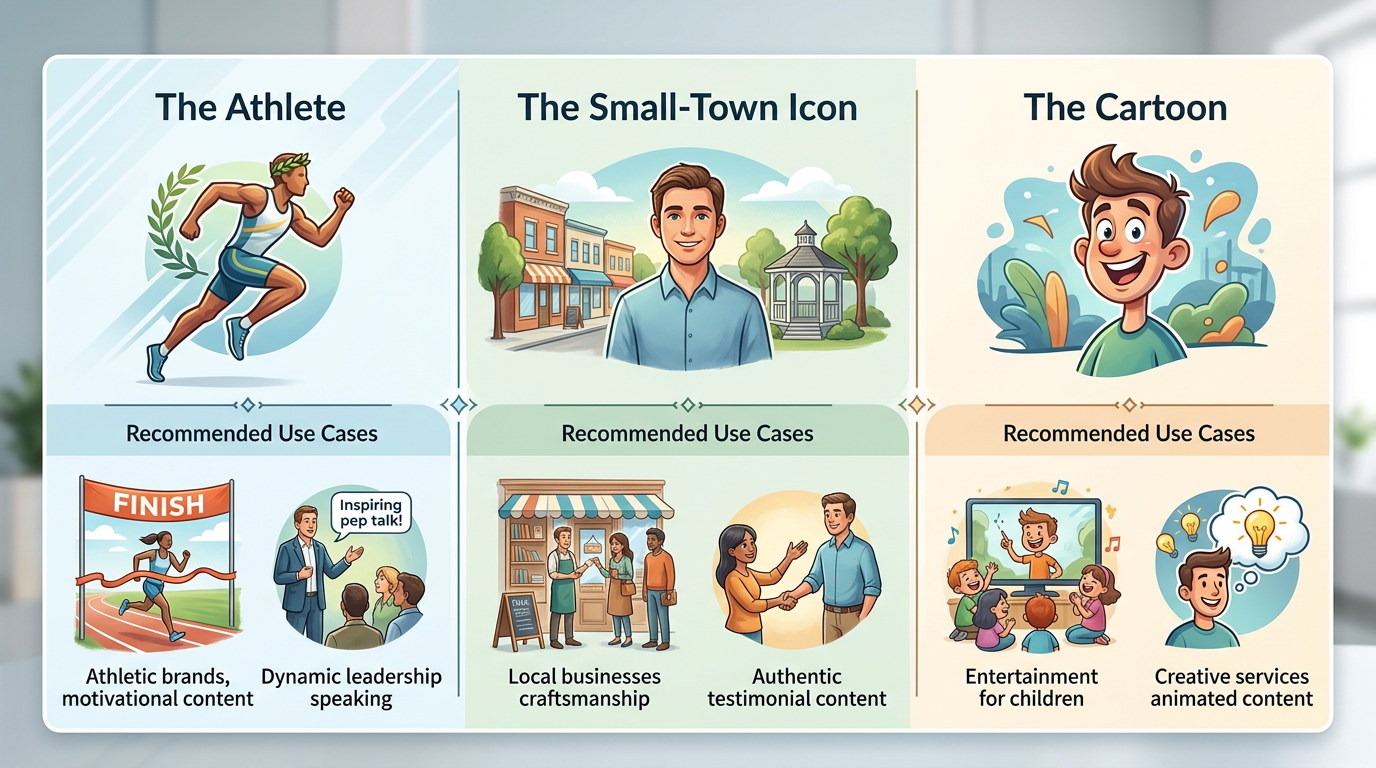
| Persona Type | Best For | Vibe |
|---|---|---|
| Global Icon (e.g., Shaq) | Promos, Memes, High-Energy | Authoritative, Warm, Recognizable |
| Character Actor | Drama, Storytelling, Tutorials | Measured, Gritty, Authority |
| Animation Archetype | Character Dubs, Comedy | Expressive, Distinct, Fun |
Building Consistency in Your Content Series
In the world of content creation, consistency is the bedrock of audience retention. If you are building a series, your voiceover needs to become a signature. Using the same AI voice profile across multiple Shorts or Reels creates a 'host' persona that your audience will begin to recognize and trust. Even if you want to experiment, you can integrate different archetypes—perhaps borrowing the high-energy, distinct cadence of Spongebob Squarepants for a comedic pivot—to keep your channel feeling fresh without losing the core identity of your brand. Consistency doesn't mean boredom; it means reliability.
Think of your voiceover as a character in your content. If you are producing educational content, you might want the reliability of an authoritative figure. If you are producing entertainment, you might want the unpredictability of a cartoon character like Mickey Mouse. By maintaining a consistent 'voice-brand,' you make your content more discoverable and memorable. Fanfun provides the library and the flexibility to switch between these roles while maintaining the high production value your audience expects.
The Future of Fandom and AI
As we look forward, the line between traditional celebrity interaction and digital engagement continues to blur. Whether you are using a voice to delight a younger audience or crafting a gritty, noir-style mystery with a character-actor voice, the technology is now at your fingertips. Fanfun is at the center of this shift, providing the tools that make high-quality, personalized content accessible to everyone. By understanding the 'Garrity Effect'—that blend of rhythm, silence, and tone—you can elevate your content from a simple video to a memorable experience. The future of fandom isn't just about watching; it's about participating, creating, and shaping the narratives that define our cultural landscape.
How do I make an AI voice sound more like a specific character actor?
Focus on punctuation and pacing. Use ellipses to force pauses and commas to create natural breaths. Character actors are defined by their rhythm, so experiment with your script structure to mirror that deliberate, measured cadence.
Is it better to use a famous celebrity voice or a character actor voice for my brand?
It depends on your goal. Famous voices are great for immediate recognition and engagement, while character-actor voices are better for long-form storytelling, tutorials, or projects where the 'vibe' of the character is more important than the celebrity's identity.
Can Fanfun help me create a consistent voice for a YouTube series?
Absolutely. By consistently using the same voice profile and refining your script structure within the Fanfun dashboard, you can develop a 'host' persona that builds long-term audience trust.
What are the best alternatives to Cameo for high-quality character voiceovers?
Fanfun is the premier alternative to Cameo, offering not just celebrity likenesses, but a diverse library of fictional characters and character-actor archetypes that you can use instantly for your content, without the wait times or availability issues of traditional bookings.