The New Era of the AI Avatar Celebrity Message: How to Program Digital Icons for High-Impact Content and Gifting
AI celebrity avatars are more than a cheap party trick. Learn how to script, direct, and deploy high-fidelity digital icons that look, sound, and feel authentic for marketing, gifting, and viral content.
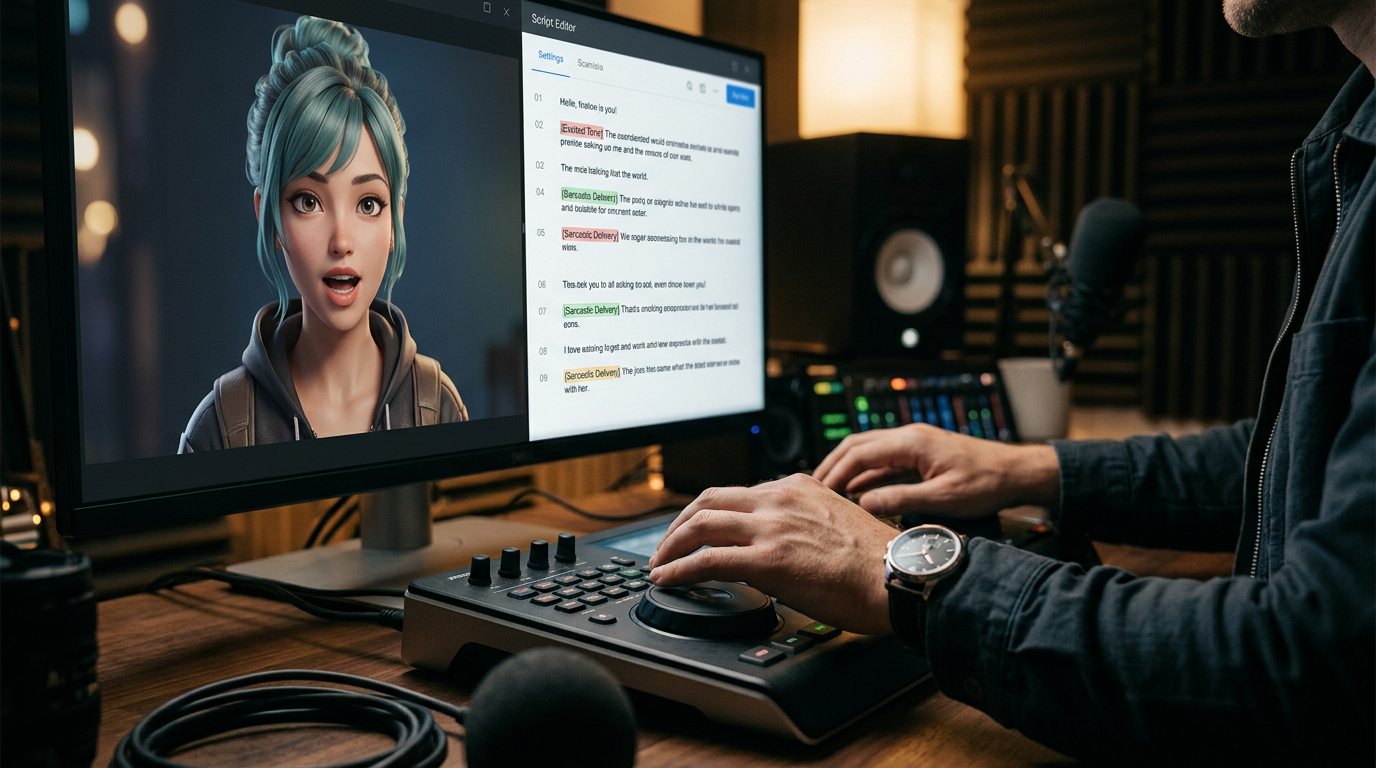
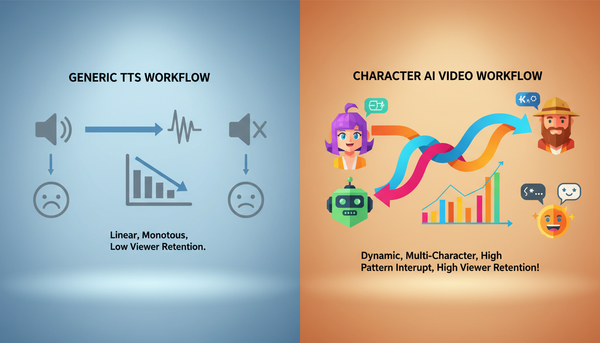
The digital media landscape is undergoing a massive shift in how we interact with celebrity culture. What began as a novel way to send a static, one-way birthday greeting has evolved into a dynamic creative ecosystem. Today, creators, marketers, and gift-givers are moving past simple text-to-speech tools to leverage sophisticated AI avatars. These digital representations do not just mimic a voice; they capture the visual presence, attitude, and performance style of cultural icons, anime characters, and public figures.
However, the difference between a video that goes viral and one that feels like an uncomfortable, robotic gimmick lies entirely in execution. Treating an AI avatar as a passive text reader results in stiff pacing and flat delivery. To unlock the true potential of these digital assets, you must step into the role of a director. By mastering the nuances of script pacing, emotional cues, and situational context, you can transform a simple digital render into a high-impact piece of media.
Beyond the Uncanny Valley: What Makes an AI Avatar Celebrity Message Work?
Visual fidelity is often the first thing people notice, but it is actually only half the battle. A perfectly rendered 3D model or high-resolution video frame will still fall flat if the behavioral pacing and vocal cadence feel unnatural. The human brain is incredibly sensitive to micro-expressions, pauses, and shifts in tone. When an AI avatar speaks without breathing pauses, or transitions between sentences with uniform speed, it instantly triggers the "uncanny valley" effect.
High-quality AI avatar videos succeed because they prioritize digital presence. This means matching the avatar’s physical energy, facial expressions, and vocal intensity to the specific emotional arc of the script. Traditional avatar generators often rely on static templates that apply the same robotic nod or blink regardless of what is being said. In contrast, modern, context-aware platforms like Fanfun are designed to align vocal delivery with visual performance, ensuring that a sarcastic joke actually looks and sounds sarcastic.
To achieve this level of immersion, creators must understand that successful digital performances require a delicate balance of script structure and platform capability. If you want your audience to lean in, you must move past generic greetings and learn the art of directing digital talent. For a deeper dive into elevating your output, consider mastering the art of the personalized celebrity message to elevate the final output.
The Director's Framework: Scripting for Digital Personalities
Writing for an AI avatar is fundamentally different from writing a standard script for a human actor. Humans naturally self-correct, add emphasis, and improvise pauses. An AI, on the other hand, executes exactly what is on the page. To get a natural performance, you must write specifically for the digital medium.
The "Vocal Signature" Rule
Every iconic personality has a distinct linguistic footprint. This includes their favorite slang, sentence structures, typical catchphrases, and even their grammatical habits. When drafting your script, do not write in your own voice. Instead, analyze your chosen character’s speech patterns. Do they speak in short, punchy fragments, or do they use long, dramatic sentences? Do they drop their "g's" or use specific regional colloquialisms? Incorporating these micro-details is what makes the AI interpretation feel authentic and engaging.
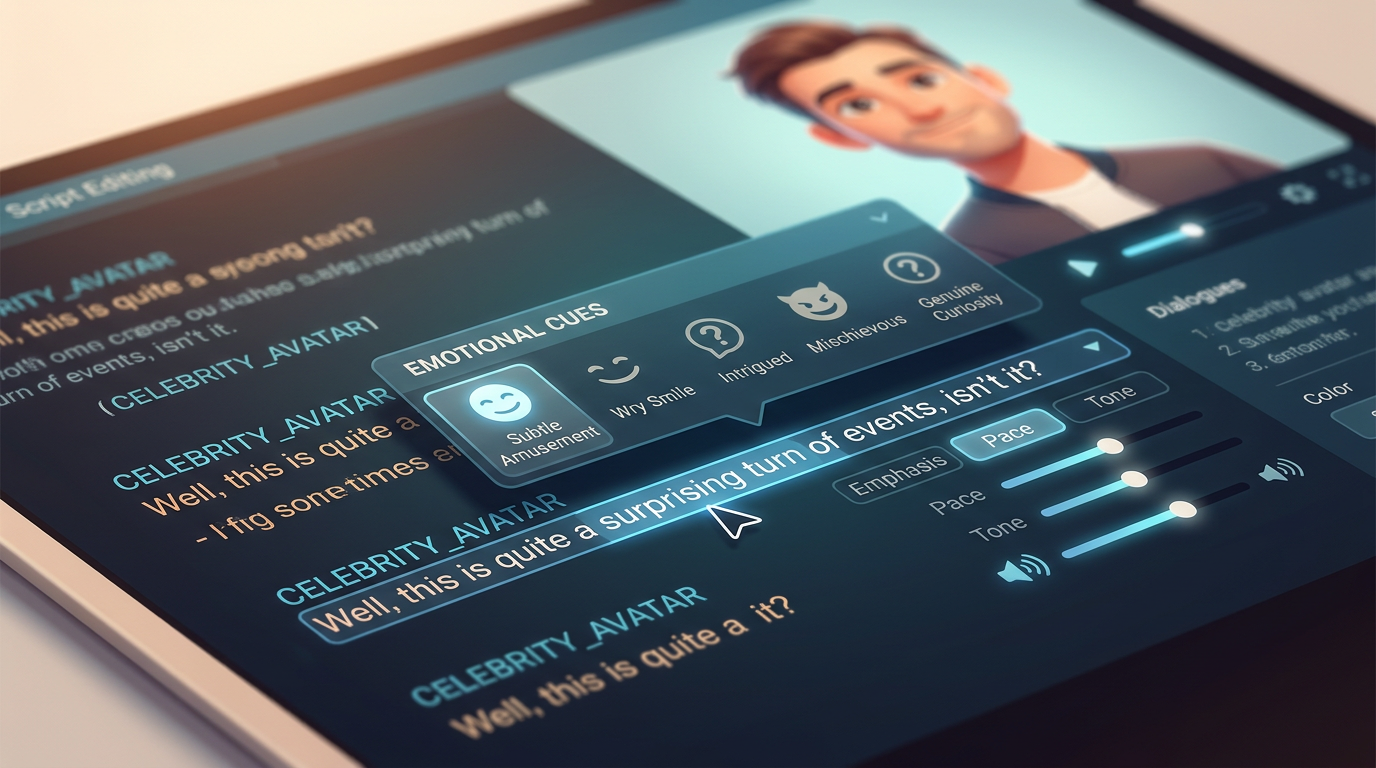
Beyond the words themselves, you must format your text to guide the AI's emotional engine. Standard punctuation is often not enough to signal a shift in mood. To get the best results, structure your script with clear emotional cues and avoid complex, multi-clause sentences that can cause synthetic voices to slur or lose pacing. For practical techniques on structuring your scripts to maximize viewer engagement, read our guide on producing high-retention content with an AI celebrity video generator.
Anatomy of an Engaging Script: Gifting vs. Content Creation
The structure of your script should change entirely based on your end goal. A personalized birthday gift requires a warm, intimate, and highly specific approach, while a social media video needs to hook a distracted viewer within the first two seconds.
The table below highlights the structural differences between these two formats:
| Element | The Gifting Script (e.g., Birthday Roast) | The Content Creation Script (e.g., TikTok Hook) |
|---|---|---|
| Primary Goal | Personal connection, inside jokes, emotional impact. | High retention, shareability, broad audience appeal. |
| Opening (0-3s) | Direct name drop and warm/teasing greeting. | High-energy visual or conceptual pattern-interrupt. |
| Body (3-15s) | Specific shared memory, playful roast, or hyper-niche joke. | Fast-paced delivery of value, meme setup, or commentary. |
| Call to Action | Wishes for the day, warm sign-off in character. | Prompt to comment, share, or follow for part two. |
When scripting personalized gifts, the secret to success is integrating inside jokes without breaking the avatar's character flow. For example, instead of having an anime character awkwardly state, "I know you like to play video games until 3 AM," rephrase it to match their universe: "If you spent as much time training as you do staying up until 3 AM playing games, we might actually win this battle." This keeps the performance immersive while still delivering that highly personalized punch.
Strategic Use Cases: Where AI Avatars Outperform Traditional Media
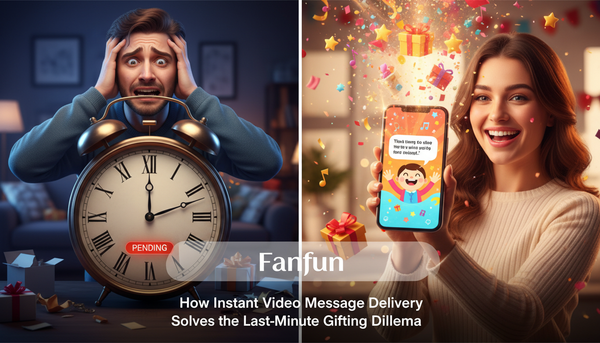
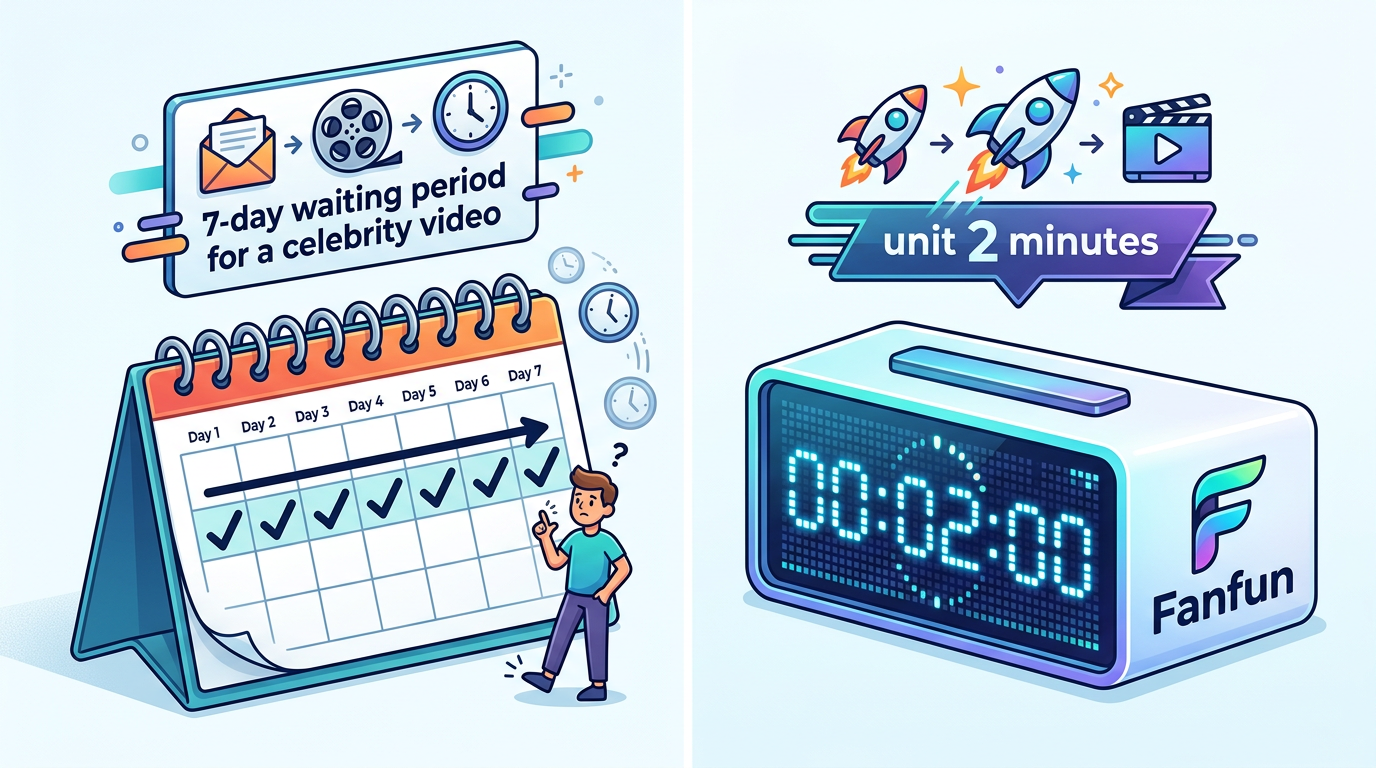
AI avatars are not just a substitute for traditional media production; in many scenarios, they are a vast improvement. The most significant advantage is speed-to-market. In the fast-moving world of social media, a meme trend can rise and fall in forty-eight hours. Waiting weeks for a traditional celebrity platform to approve, record, and return a custom video means missing the cultural window entirely. With AI tools, creators can script, generate, and post reactive content in minutes.
Furthermore, AI-driven platforms allow for multi-format campaigns that go far beyond a one-way video. On Fanfun, users can generate custom video messages, create unique voiceovers, and even engage in two-way interactive AI chats with their favorite personas. This multi-touchpoint approach creates a highly immersive experience that traditional talent bookings simply cannot replicate.
For independent creators, small businesses, and startups, budget is always a constraint. Traditional celebrity endorsements can cost thousands of dollars for a single short clip. By shifting to scalable AI solutions, brands can produce high-quality, engaging campaigns at a fraction of the cost. When comparing traditional celebrity shoutouts versus scalable AI alternatives, the commercial advantages of instant availability and creative flexibility become undeniable.
The Creative Checklist: Launching Your First AI Avatar Campaign
Before you hit generate and publish your first video, use this quick-reference checklist to ensure your content is polished, natural, and optimized for performance.
- Vocal Signature Check: Does the script use the specific slang, catchphrases, and sentence lengths typical of the chosen character or celebrity?
- Pacing and Breath Marks: Have you broken up long paragraphs into shorter sentences to give the AI voice engine natural places to pause?
- Phonetic Adjustments: Are there any unusual names, brand names, or slang words that need to be spelled phonetically (e.g., spelling out "Fan-fun" or using spaces to control pronunciation)?
- Visual Alignment: Does the emotional tone of your script match the avatar's visual energy (e.g., matching a high-energy script with an active, expressive persona)?
- Platform Optimization: Are you utilizing a dedicated platform like Fanfun that handles rendering, character licensing, and voice synthesis seamlessly in one place?
By treating the generation process with the same care you would bring to a live-action shoot, you can consistently produce high-fidelity, high-retention content that stands out on any platform.
How do I make an AI celebrity video sound more natural?
To make an AI celebrity voice sound natural, write short, punchy sentences and avoid complex tongue-twisters. Use phonetic spelling for unusual words or brand names, and insert punctuation like commas and dashes strategically to force natural pauses and breath breaks in the synthetic voice.
Can I use AI celebrity avatars for commercial social media ads?
Commercial use depends on the platform, licensing agreements, and intellectual property rights of the specific character or celebrity avatar. Always check the terms of service of the platform you are using (like Fanfun) to ensure your intended distribution channel complies with their creative ethics and licensing policies.
How long does it take to generate a personalized AI avatar message?
Unlike traditional celebrity platforms that can take days or weeks, modern AI avatar platforms generate completed high-fidelity videos in just a few minutes. This allows creators to react to real-time internet trends and news instantly.
What is the difference between an AI avatar video and a standard deepfake?
Standard deepfakes often involve mapping a face onto unauthorized footage, frequently raising ethical concerns. Licensed AI avatar platforms like Fanfun use ethically trained, consented, or stylized digital models within a secure creative environment, focusing on creative expression, fandom, and authorized interactive entertainment.