The Cathy Simms Effect: Why the 'Office' Archetype is the New Gold Standard for AI Personas
High-energy celebrity cameos are losing their luster. Discover why the 'Cathy Simms' archetype—characterized by dry wit and relatable hesitation—is the new blueprint for viral, authentic AI content.

In the crowded landscape of social media, the loudest voice rarely wins anymore. For years, creators relied on the 'celebrity spectacle'—the high-energy, bombastic shout-out that felt like a digital billboard. But as audiences pivot toward 'cringe-core' and hyper-relatable, low-fi storytelling, the over-the-top cameo has begun to feel disconnected. Enter the 'Cathy Simms' archetype: the master of the awkward pause, the dry delivery, and the observational wit that makes a viewer feel like they are in on the joke. This shift toward understated comedy is a massive opportunity for content creators who want to build a narrative foil that grounds their content, making it feel less like a commercial and more like a conversation.
At Fanfun, we observe this shift daily: users are moving away from purely performative clips and toward personas that feel like an extension of their own social circle. By using an AI voice generator that understands timing rather than just volume, you can build a character that feels like a permanent member of your creative team. Whether you are producing a tech review, a lifestyle vlog, or a satirical commentary, the goal is to move beyond the 'shout-out' model and toward an 'ensemble cast' model where your AI personas feel like living, breathing participants in your narrative.
Deconstructing the Archetype: Beyond the Script
To effectively use AI to create a character persona, you must first understand the 'DNA' of the actor's delivery. The 'Cathy Simms' style isn't about what is said; it is about how it is withheld. It relies on a specific cadence—a slight hesitation before a sarcastic remark or a flat, deadpan tone that cuts through the noise of a chaotic feed. When you treat your AI persona as a character actor rather than a celebrity prop, you unlock a new level of creative control. High-octane energy has its place—utilizing the Dwayne Johnson AI is perfect for injecting intensity when a scene demands it—but the real magic happens when you pair that intensity with a dry, skeptical foil. This contrast is what keeps viewers watching until the end of a video. It is the fundamental difference between a static ad and a living, breathing narrative.
The Character Persona DNA Checklist
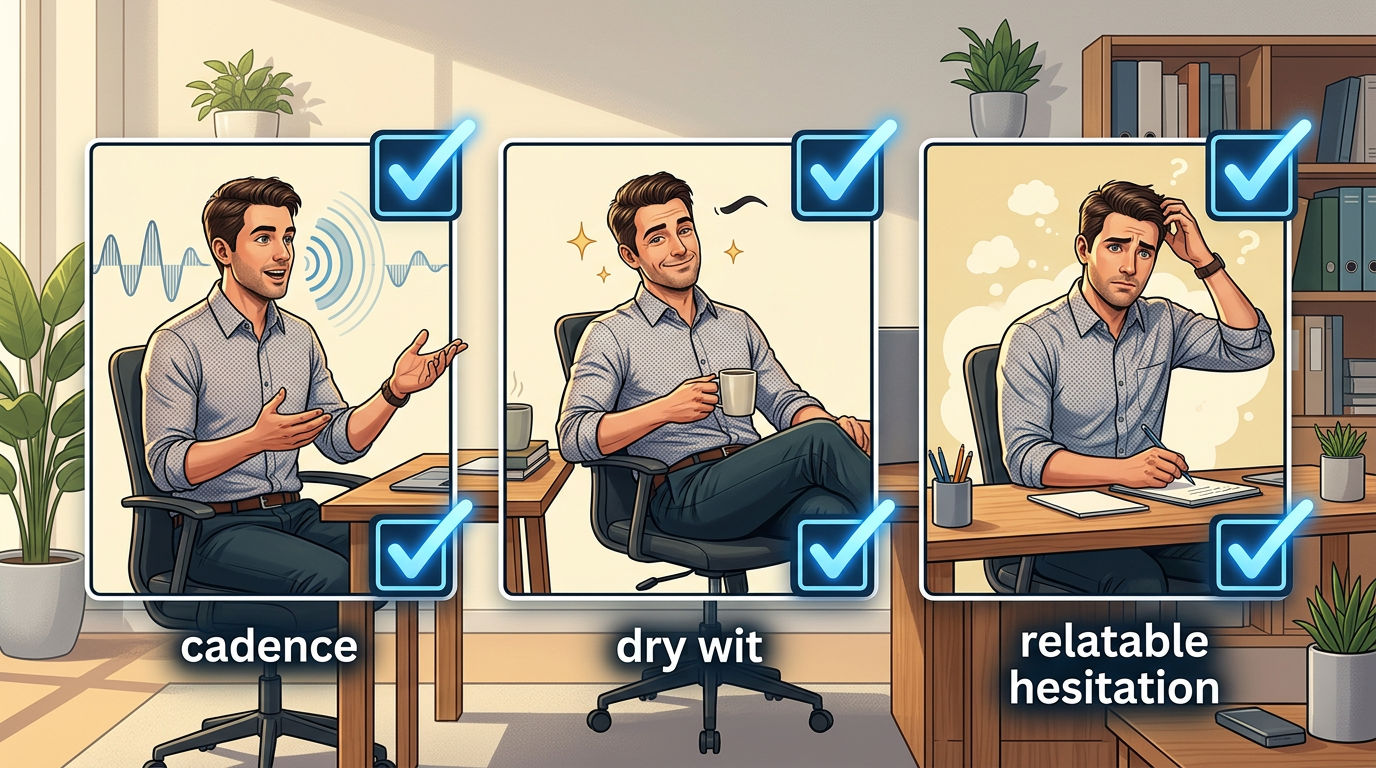
- The Cadence: Does the persona speak quickly, or do they savor the space between sentences?
- The Hesitation: Is there a micro-pause that signals uncertainty or dry judgment?
- The Wit: Does the character use irony, or is their humor rooted in brutal honesty?
- The Relatability Factor: Does this character feel like someone you would dread—or secretly enjoy—sitting next to in a meeting?
When you input these traits into a platform like Fanfun, you aren't just generating text-to-speech; you are curating a vibe. Unlike A-list stars who carry the weight of their own massive public brand, character actors provide a blanker, more versatile canvas. You can mold them to fit your specific niche, whether that is tech reviews, lifestyle vlogs, or satirical commentary. This is where the 'Office' archetype shines; it provides a consistent, grounded baseline that allows your other, more eccentric characters to pop.
Scaling Your Content with Character-Driven AI
There is a distinct difference between booking a high-profile guest and developing a nuanced, recurring character persona. The former is a spectacle; the latter is a strategy. If your content strategy requires consistency—like a recurring 'office jerk' character in your TikTok skits—you need a persona that can grow with your audience. Think of it as building your own digital improv troupe. If you need a high-energy contrast, you might reach for a character like Spongebob Squarepants to break up the monotony, but for your day-to-day narrative, that dry, relatable 'Office' archetype is what builds long-term retention.
For sports-themed content, you might integrate the intensity of Kobe Bean Bryant to provide a moment of gravitas, which serves as a perfect anchor against more lighthearted or sarcastic segments. If you are building a lifestyle brand, you might look at the cultural influence of icons like Sydney Sweeney to add a layer of modern, recognizable aesthetic to your videos. Even classic characters like Mickey Mouse can be reimagined within these archetypes to provide a sense of familiarity that anchors your experimental content. The key is in the mix: you need the anchor, the foil, and the catalyst.
Practical Application: From Concept to Viral Clip
Authenticity in AI content comes down to the script. When writing for a dry, character-driven persona, avoid the 'salesy' language that usually plagues AI videos. Instead, write as if you are texting a friend. Use contractions, informal syntax, and—most importantly—the pause. In the Fanfun editor, use line breaks to force those essential moments of silence. A well-placed pause can do more work than a thousand words of dialogue.
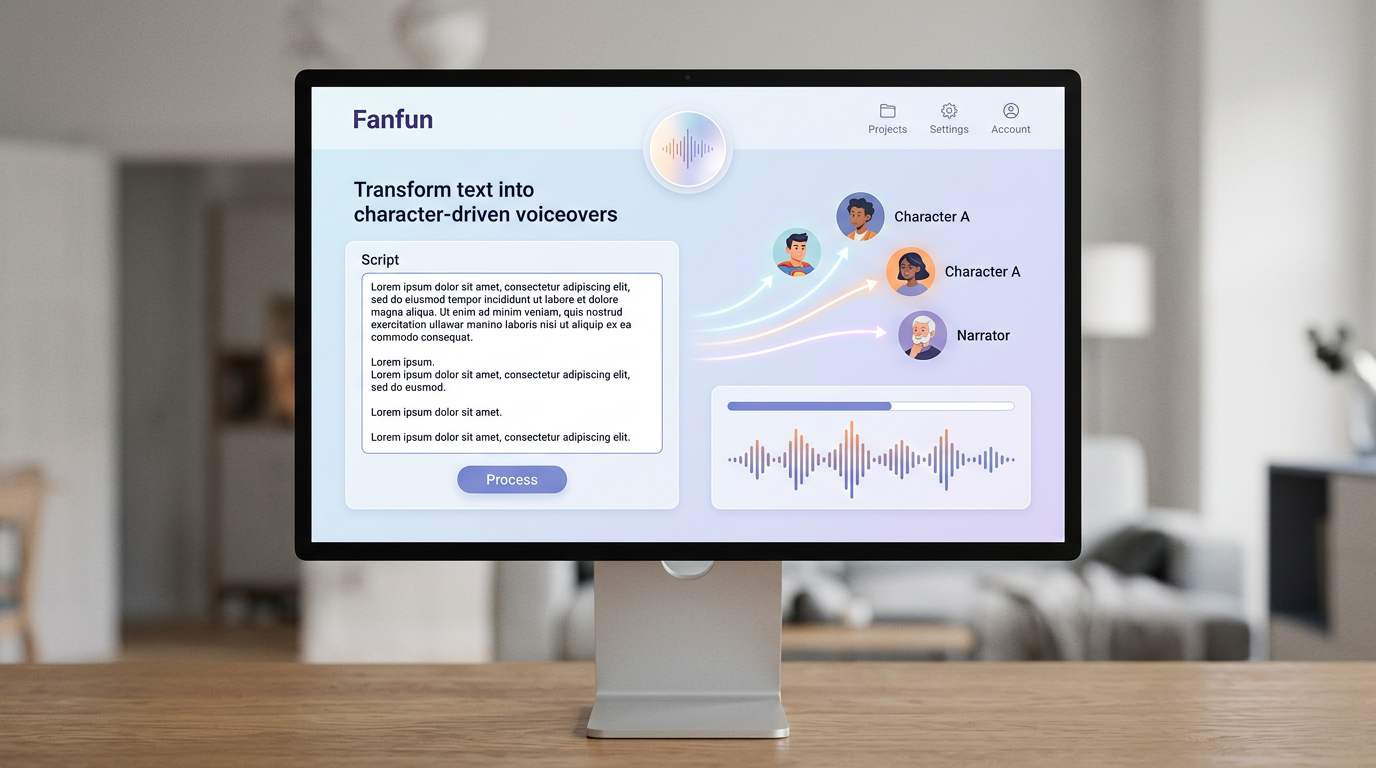
Start by testing different personality archetypes against your existing audience. Does your community respond better to the 'over-caffeinated enthusiast' or the 'dry, skeptical colleague'? By iterating on these personas, you eventually find the 'Cathy Simms' equivalent that turns your channel from a collection of random clips into a cohesive, character-driven brand. Don't be afraid to experiment with the tone; the goal is to make the AI feel like a collaborator rather than a tool. If you are struggling with a script, ask yourself: 'How would my persona react to this specific piece of news?' If the answer is a shrug, that’s your opening.
The Future of Fandom: Interactivity Over Passive Consumption
We are moving past the era of passive consumption. Watching a video is fine, but talking to the persona? That is where the real engagement happens. Fanfun is changing the game by enabling two-way interactive conversations with these personas. This transforms your audience from mere viewers into participants. When a fan can ask your AI character a question and get a response that matches the 'Cathy Simms' level of dry, sarcastic wit, the connection between creator and fan deepens significantly.
This is the bridge between traditional fandom and the next generation of digital interaction: it’s not just about what they watch, but how they engage with the personas you’ve built. Whether you are using the Shaq persona to deliver a punchy, athletic-focused roast or building a complex, multi-layered character for a long-form series, the technology is now at a point where the 'persona' is just as important as the 'creator.' By embracing these tools, you aren't just keeping up with trends—you are setting the standard for the future of digital entertainment. The 'Cathy Simms' effect is proof that the most powerful tool in your kit isn't the loudest one, but the one that feels the most human.
What makes a character-driven AI persona feel authentic?
Authenticity comes from the 'micro-behaviors' of a persona—specifically the timing, hesitation, and specific vocabulary choices. By focusing on these nuanced traits rather than just visual likeness, you create a character that feels like a real, consistent person.
Can I use AI to create a character persona that sounds like a specific actor?
Fanfun allows you to leverage AI interpretations of various archetypes. While the technology is an AI interpretation rather than a perfect clone, it is specifically designed to capture the essence, cadence, and vibe of iconic character types, making it perfect for creative content.
How does Fanfun’s AI voice generator differ from basic text-to-speech?
Basic text-to-speech is often robotic and flat. Fanfun’s AI voice generator is tuned for personality and performance, allowing for emotional range, rhythmic pauses, and the kind of tonal shifts that characterize human actors.
Why choose a character actor archetype over a celebrity for my social media content?
Character actors offer more creative versatility and are often more 'relatable' in a social media context. While celebrities like Shaq are excellent for high-impact, big-energy moments, character-driven personas are better for building long-term, narrative-heavy content that feels native to social feeds.