The Benjamin Wadsworth Blueprint: How Cult Characters Drive Modern Digital Fandom
Benjamin Wadsworth's role in 'Deadly Class' created a blueprint for the modern cult icon. Here is how creators are using AI and interactive tools to turn passive viewing into viral, character-driven content.
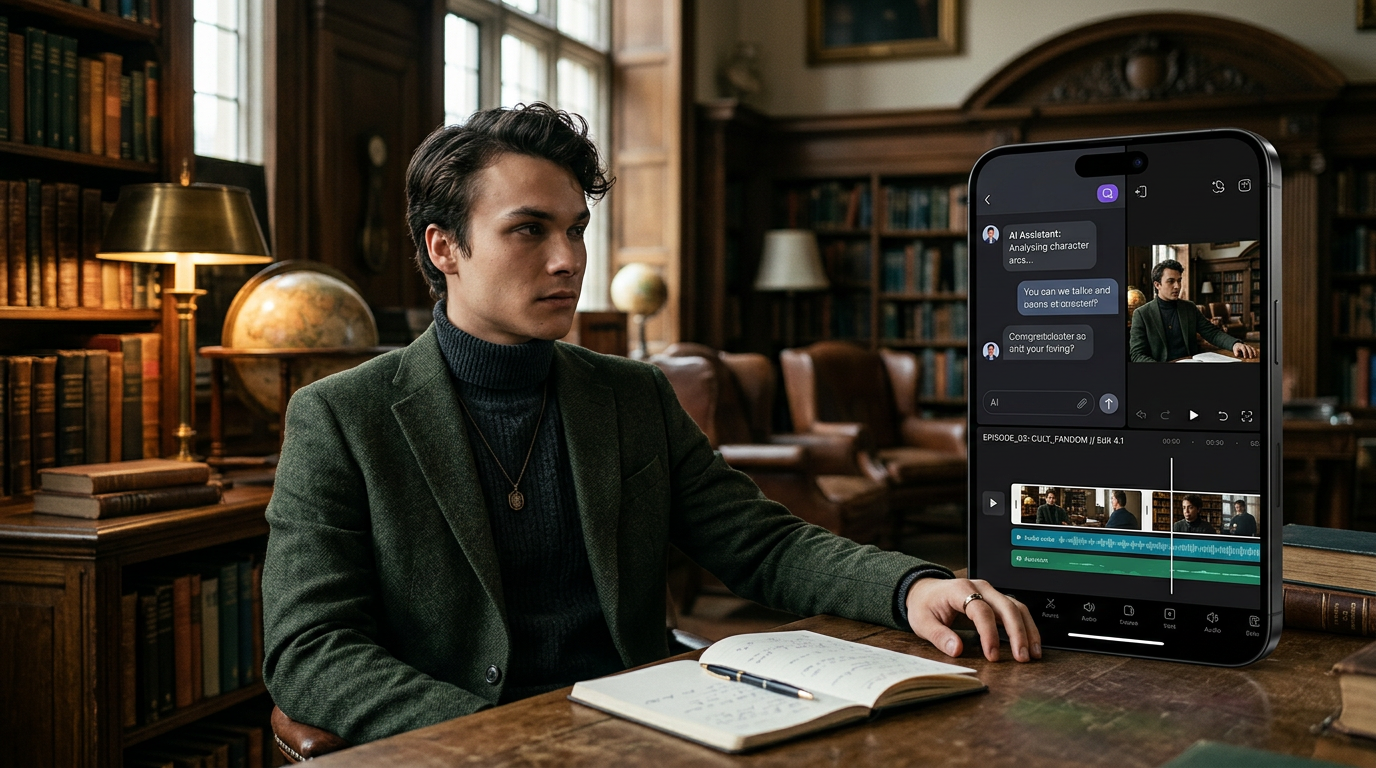
Benjamin Wadsworth played Marcus Lopez Arguello on the television adaptation of Deadly Class for a single season in 2019. Yet, years after the show's cancellation, his bruised, brooding face remains inescapable on TikTok, racking up hundreds of millions of views across countless fan edits. He did not just play a character; he provided the internet with a highly malleable, infinitely reusable aesthetic blueprint that creators continue to mine for viral content.
This phenomenon represents a fundamental shift in how digital audiences interact with pop culture. Today's fans are no longer satisfied with passively consuming media or waiting for a network to greenlight a second season. They want to remix the source material, rewrite the lore, and actively participate in the narrative. By leveraging modern editing software and AI generation tools, creators are taking ownership of their favorite character archetypes, turning static television performances into endless streams of interactive content.
The 'Deadly Class' Effect: Why Marcus Lopez Still Owns TikTok
To understand the modern digital fandom, you have to look at the anatomy of a viral character. The "brooding outcast" archetype has always resonated with young adult audiences, but Wadsworth's portrayal of Marcus Lopez delivered this trope with a highly specific, easily clippable visual language. The character's aesthetic—dark academia wardrobes, dimly lit environments, and a perpetually cynical demeanor—acts as a blank canvas for creators projecting their own narratives.
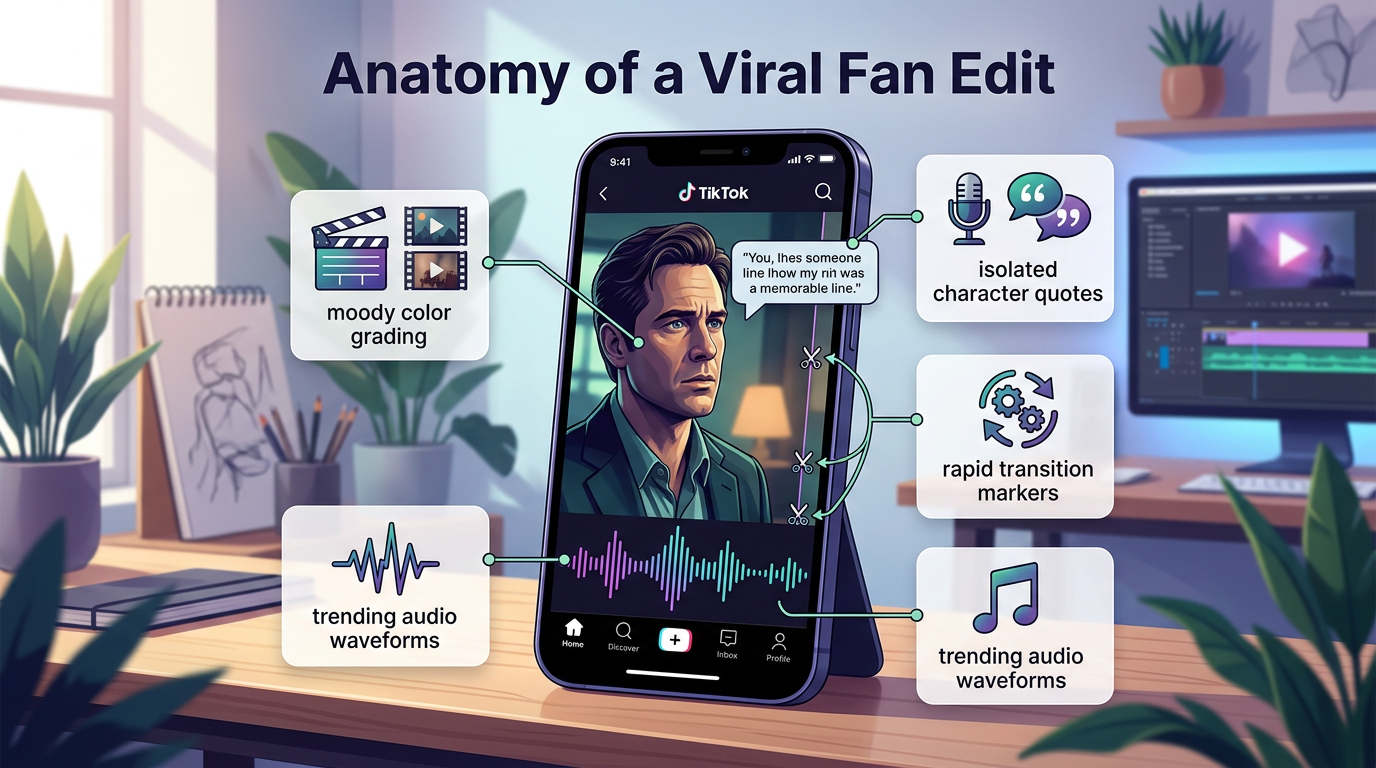
A standard viral edit of this character follows a strict, algorithmic formula. Creators isolate the most intense, micro-expressions—a sharp glare, a drag of a cigarette, a sarcastic smirk—and stitch them together using aggressive, beat-synced transitions. These clips are then color-graded heavily into dark, moody palettes and layered over slowed-and-reverbed audio tracks, often leaning into phonk or dark synth-wave genres. The result is a hypnotic, 15-second visual mood board that demands looping.
What makes the Deadly Class effect so fascinating is the sheer volume of user-generated content produced from a severely limited source. A single, canceled season of television generated years of sustained engagement because the fans stripped the character of his original context. Marcus Lopez ceased to be just a character in a specific plotline; he became a digital avatar for a specific mood, utilized by thousands of creators to drive their own channel growth.
From Fancams to Interactive Lore: The Evolution of Fan Content
Fandom has always been about participation, but the barrier to entry and the depth of that participation have changed drastically. In the early 2000s, fan engagement was largely text-based, living in niche forum discussions and fan-fiction archives. The Tumblr era introduced the visual remix, where fans traded static GIFs and mood boards to express their affinity for a show.
Today, high-production TikTok and Reels edits are the baseline, but even that is evolving. Fans are no longer satisfied with just re-watching and re-cutting the same existing clips; they want to generate entirely new scenarios. They want to interact with the lore. This shift marks the transition from passive fandom to active, creator-driven participation. Audiences treat actors and their most famous roles as highly specific aesthetic tools. Whether they are clipping the moody grunge of a cult classic or generating custom content around viral stars like Sydney Sweeney, modern creators are building their own continuous narratives rather than waiting for studios to feed them.
This desire for continuous narrative has birthed the era of interactive fandom. Through advanced technology, fans can now simulate conversations, generate custom voiceovers, and create entirely new video interactions for beloved character types, effectively keeping the fandom alive and evolving long after the original cameras stop rolling.
The Creator's Guide to Building Character-Driven Content
If you want to build an audience using character-driven content, you have to move beyond basic clip compilation. The algorithm rewards originality, narrative hook, and high-quality production. Below is a framework comparing traditional clip-based editing to the next generation of AI-assisted character content.
| Content Element | Traditional Clip Edits | Next-Gen AI Content |
|---|---|---|
| Audio Integration | Trending songs, slowed + reverb tracks, original show dialogue. | Custom AI voiceovers, personalized scripts, interactive two-way dialogue. |
| Visual Strategy | Heavy color grading, rapid beat-synced transitions, isolated micro-expressions. | Generated video responses, custom character scenarios, roleplay interfaces. |
| Narrative Control | Limited to existing canon; recontextualizing old scenes. | Unlimited; creators write entirely new lore, roasts, and personalized messages. |
| Audience Engagement | Passive viewing and commenting. | Active participation, personalized shoutouts, direct chat simulation. |
Nailing the Archetype Voice
When you transition from clipping existing video to generating custom scripts and AI voiceovers, your writing becomes the most critical element. To make a character feel authentic, you must nail their specific cadence and vocabulary. A brooding, sarcastic outcast speaks in short, clipped sentences. They use rhetorical questions, cynical observations, and deliberate pauses.
You cannot use a one-size-fits-all script. You wouldn't write the same pacing for a dark, sarcastic teenager as you would when using an AI voice generator for a high-energy, animated icon like Spongebob Squarepants. Tone dictates vocabulary. When scripting for a cult character, study their original dialogue. Note their use of slang, their pacing, and their emotional baseline. If the character is notoriously deadpan, writing an overly enthusiastic, exclamation-heavy script will immediately break the immersion for your audience.
Pacing for the Algorithm
No matter how accurate your character script is, it will fail if the pacing does not align with modern short-form video algorithms. You have exactly three seconds to hook a viewer before they scroll. Do not start your video with a slow fade-in or a long pause. Start mid-action or mid-sentence.
If you are generating an AI character response, the first line must be provocative, confusing, or highly relatable. For example, instead of starting with "Hey everyone, it's me," start with a hyper-specific, in-character observation: "You really thought skipping class to sit in the rain made you deep, didn't you?" Pair this immediate audio hook with a striking visual or a sudden transition to lock the viewer's attention. Keep the total video length under 20 seconds unless you are telling a highly engaging, multi-part story.
Why AI is Replacing the Traditional Cameo for Cult Icons
For years, the only way fans could get personalized content from their favorite actors was through expensive shout-out platforms. But the traditional celebrity cameo model is deeply flawed for modern digital fandom. It is slow, often costing hundreds of dollars, and the results are frequently disappointing. Fans pay for the brooding, intense character they fell in love with on screen, but they receive a video of an exhausted actor sitting in their car, reading a script off their phone in bad lighting.
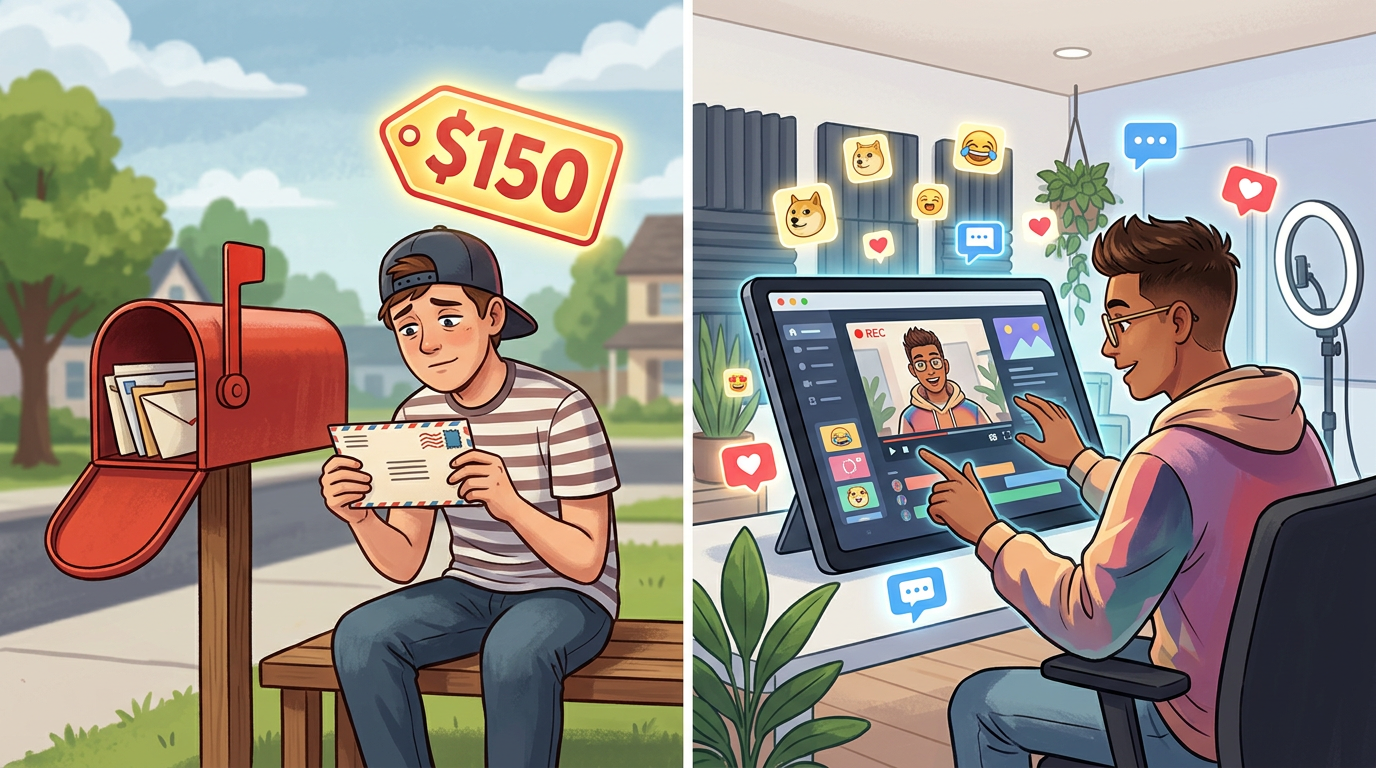
Fans do not necessarily want the actor; they want to interact with the persona. This is exactly why platforms like Fanfun are changing the creator economy. Instead of waiting weeks for a rushed, 15-second clip that breaks the illusion, creators use Fanfun to instantly generate personalized videos, roasts, and memes that keep the character's aesthetic perfectly intact.
AI allows for instant, scalable personalization that fits the exact vibe a creator needs for their content. Whether you are building a niche meme around an indie cult character or generating a massive, high-energy promotional video featuring a Dwayne Johnson AI persona, the technology gives you the directorial control that traditional shout-out platforms simply cannot provide. It is the difference between begging a celebrity for a favor and having a fully compliant, in-character digital actor ready to execute your creative vision in minutes.
The Future of Fandom: When Your Favorite Characters Talk Back
We are rapidly moving toward an era where fandom is entirely a two-way street. The rising demand for AI chat interfaces means fans can now roleplay, debate, and converse with personas inspired by their favorite shows in real-time. This is not just a novelty; it is a powerful tool for fan-fiction writers, animators, and content creators who want to bring their original scripts to life without massive studio budgets.
Voice generation and interactive video allow creators to produce professional-grade fan dubs, alternate endings, and crossover events that were previously impossible. A creator in their bedroom can now script a multi-episode narrative featuring their favorite cult characters, using AI to voice the dialogue and generate the responses.
The Benjamin Wadsworth blueprint proved that a character's lifespan is no longer dictated by a network's cancellation policy. If the aesthetic is strong enough, the fans will keep the character alive indefinitely. As AI tools become more advanced and accessible, the next viral cult icon might not even originate from a television show. They might be entirely shaped, scripted, and propelled to stardom by the fans who interact with them first.
What is Benjamin Wadsworth famous for?
Benjamin Wadsworth is best known for his role as Marcus Lopez Arguello in the 2019 television series Deadly Class, a performance that has since gained massive, enduring popularity through viral fan edits on platforms like TikTok.
Why is Deadly Class so popular on TikTok?
The show provides a perfect visual blueprint for creators. The "dark academia" aesthetic, moody lighting, and the brooding outcast archetype of the main characters make it incredibly easy to clip, color-grade, and sync to trending audio for highly engaging, loopable short-form videos.
How do creators make viral character edits?
Creators isolate intense micro-expressions from the source material, apply heavy, moody color grading, and use rapid, beat-synced transitions. These visuals are typically layered over slowed-and-reverbed music tracks to create a specific, hypnotic aesthetic that algorithms favor.
Can I use AI to generate character voices for my videos?
Yes. Platforms like Fanfun allow creators to generate custom voiceovers, personalized videos, and interactive chats using AI personas. This allows fans to write custom scripts and create new content without relying on expensive, traditional celebrity shout-out platforms.