The Meredith Palmer Blueprint: Why Unhinged Character Work is the Future of Comedy
Great comedy doesn't need to be polished; it needs to be memorable. Discover why leaning into 'too much' is the new gold standard for digital character work.
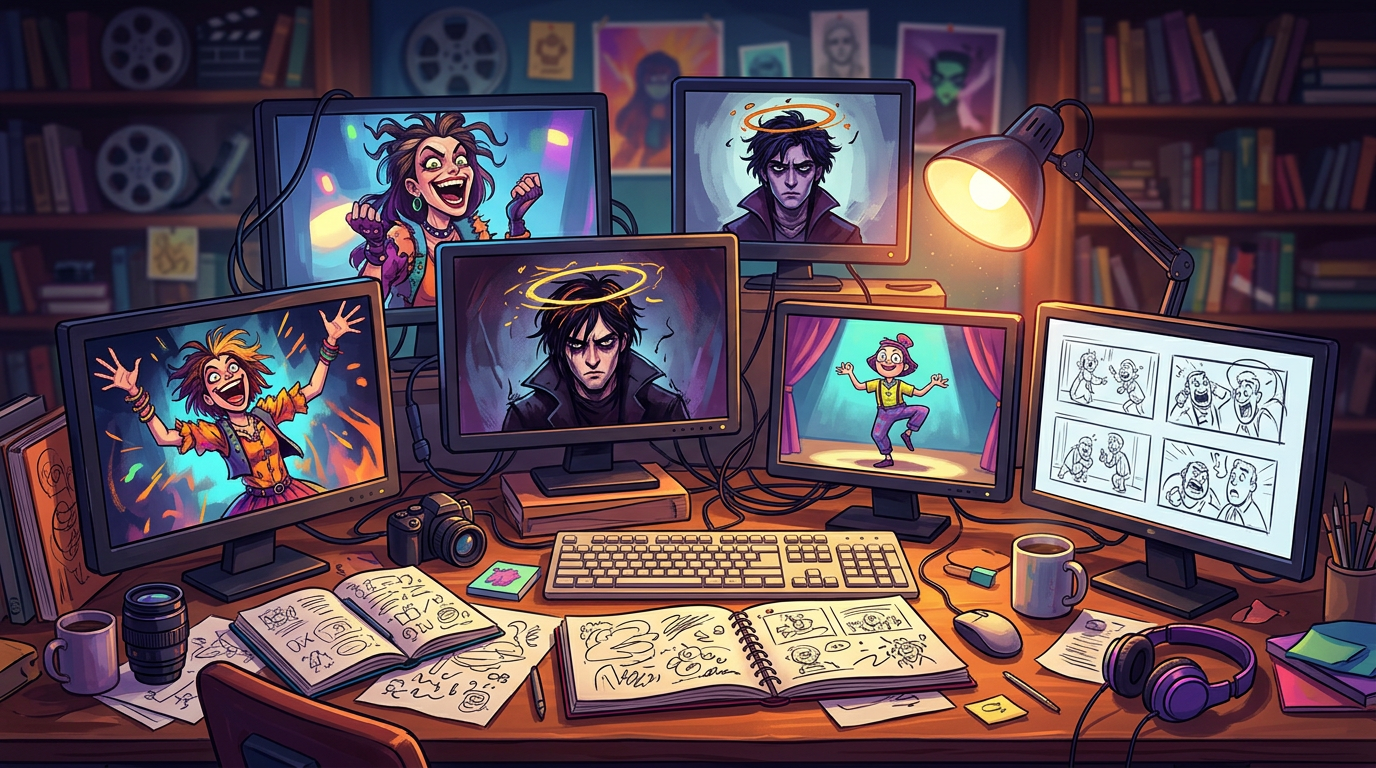
In the landscape of modern digital content, the pressure to appear polished, relatable, and perfectly curated has often stifled true comedic innovation. However, there is a counter-movement brewing, one that finds its soul in the chaotic, unapologetic energy of characters who refuse to conform. This 'Meredith effect'—named for the archetype of the office disruptor who operates entirely outside the bounds of professional decorum—proves that audiences are tired of safe, one-note personalities. They gravitate toward characters who exist on the fringes of social norms—those who are uninhibited, unpredictable, and entirely comfortable being 'too much' in every frame.
This shift from 'likable' to 'relatable' is critical for creators today. Relatability is no longer about being the person everyone wants to be; it is about being the person everyone secretly recognizes in their own worst moments. To identify these traits for your own scripts, look for the friction points: where does a character refuse to compromise? Where do they lean into their own absurdity? When you strip away the desire for approval, you find the engine of authentic comedy that keeps viewers coming back.
The Anatomy of the Unfiltered Performance
Comedy is fundamentally a game of tension and release. To capture the spirit of an unhinged character, you must master the mechanics of the 'cringe.' This is not just about writing a funny line; it is about the delivery. The pause before a bizarre statement is often more important than the punchline itself. By using tools like the Shaq AI persona, you can observe how larger-than-life figures command space and timing, providing a masterclass in high-octane delivery that you can adapt for your own character studies. Whether you are aiming for a slow-burn awkwardness or a frantic, high-energy outburst, the key is the absolute commitment to the bit.
The most effective comedic characters operate on a lack of social awareness. They don't know they are being funny, and they certainly don't know they are being inappropriate. This creates a vacuum of logic that the audience fills with laughter. When you are writing for these types of personas, avoid the temptation to 'wink' at the camera. The character must believe in their own absurdity 100%. If the audience senses that the creator is in on the joke, the magic of the unhinged performance evaporates instantly.
The Hierarchy of Chaotic Delivery
To effectively deploy unhinged energy, you must understand the spectrum of chaos. Not all 'too much' is created equal. Below is a breakdown of how to categorize your character's comedic intent to ensure your scripts land with the intended impact.
| Archetype | Core Trait | Best Use Case |
|---|---|---|
| The Oblivious | Zero social awareness | Situational irony and awkward sketches |
| The High-Octane | Constant, frantic energy | Fast-paced social media shorts |
| The Stoic Disruptor | Deadpan, bizarre logic | Surrealist humor and long-form storytelling |
| The Over-Sharer | Total lack of filter | Roasts, memes, and personality-driven content |
By identifying where your character sits on this spectrum, you can better utilize Fanfun to tailor your voice generation settings. For instance, an 'Over-Sharer' persona requires a different cadence than a 'Stoic Disruptor.' Use the platform's flexibility to iterate on these nuances until the delivery matches the character's internal logic.
Scaling Your Comedy with AI
Bridging the gap between a written script and a high-energy performance has traditionally required a cast, a studio, and significant time. Fanfun changes this calculus by allowing creators to imbue their scripts with distinct, recognizable personality traits instantly. Instead of relying on generic voiceovers that lack soul, you can leverage AI to experiment with tones that range from the deeply grounded to the delightfully absurd. For instance, if you are building a sketch that requires the sheer, unstoppable charm of a cultural icon, testing your dialogue against the Dwayne Johnson AI allows you to see how a high-stakes delivery changes the rhythm of your punchlines.
Creators are increasingly moving toward 'character-first' content. This means the voice isn't just an accessory; it is the primary vessel for the comedy. By using Fanfun to iterate on dialogue, you can test how different deliveries—perhaps a monotone deadpan versus a frantic, high-strung energy—change the impact of a scene. It is the difference between a static meme and a piece of content that feels alive. This process allows you to iterate faster than ever, treating your content creation like a laboratory where you can stress-test your jokes against various archetypes.
The Power of Contrast in Character Studies
To build a truly dynamic content strategy, you need a mix of archetypes. A 'Meredith' persona works best when contrasted against more grounded or authoritative figures. Imagine the comedic potential of a high-energy, chaotic character interacting with the stoic, legendary presence of a Kobe Bean Bryant AI. The clash of values—one character living in total disarray, the other embodying the pinnacle of discipline—creates a comedic tension that is ripe for parody and storytelling. This blend of styles ensures your content remains fresh and unpredictable.
When writing for AI voice modulation, focus on rhythmic dialogue. Use short, punchy sentences followed by long, descriptive ones to force the AI to adapt its cadence. Most importantly, maintain your creative ethics. The goal of using these tools is to enhance your own voice, not to replace it with a hollow imitation. By using Fanfun to explore the boundaries of character-driven humor, you are not just making content; you are building a laboratory for your own comedic voice.
Interactive Comedy: The New Frontier
The true power of modern AI lies in the shift from passive consumption to active interaction. Watching a pre-recorded clip is entertaining, but engaging in a two-way conversation with an AI persona creates a spontaneity that feels genuinely authentic. This interactive layer allows for a 'yes, and' approach to comedy that traditional celebrity cameos cannot match. You aren't just sending a request; you are collaborating with a persona that can respond to the unexpected, making for a much deeper engagement with your audience.
Consider the possibilities of using a character like the Spongebob Squarepants AI to anchor a comedic sketch. By engaging in a live chat, you can generate unscripted, spontaneous dialogue that captures the specific, manic energy of the character. This isn't just about recreating a famous voice; it's about utilizing the established personality to generate new, original content that feels like a natural extension of the source material. Whether you are interacting with a Sydney Sweeney persona or a Mickey Mouse voice, the ability to pivot in real-time is the ultimate tool for improvisational comedy. This is the future of fandom: moving from simply watching your favorites to interacting with them in real-time to create something entirely new.
Building Your Toolkit
Ultimately, the Meredith Palmer blueprint is about permission. It is permission to be messy, permission to be loud, and permission to be weird. In a digital world that often demands perfection, the most successful content creators are the ones who lean into their flaws and amplify them through character work. Whether you are using AI to generate a quick roast, a birthday greeting, or a full-length sketch, the tools available today allow you to push the boundaries of what is possible.
As you refine your approach, remember that the technology is only as good as the intention behind it. Use the Fanfun library to find the right voices, but bring your own unique perspective to the writing. Experiment with the contrast between characters, play with the timing of your delivery, and never be afraid to go a little too far. That is where the best comedy lives, and that is where your audience will find you.
How do I capture chaotic comedic energy in AI voiceovers?
Focus on cadence and intentional pauses. Chaotic characters often speak in bursts, followed by moments of awkward silence. Use these gaps to build tension before a punchline.
Can AI tools replicate the specific comedic timing of actors like Kate Flannery?
While no tool is a direct replacement for human nuance, Fanfun allows you to iterate on delivery styles. By adjusting the script and testing different personas, you can approximate the 'unhinged' timing required for character-driven comedy.
What are the best Cameo alternatives for character-driven comedy?
Fanfun is the premier alternative because it allows for two-way interaction and the use of fictional characters, whereas traditional services are limited to one-way messages from real celebrities.
How do I use Fanfun to create original comedic content?
Start by identifying the 'archetype' of your character. Use the Fanfun character library to find voices that match that energy, then use the interactive chat features to generate unscripted, spontaneous dialogue that you can record and repurpose for your projects.