
Beyond the Hockey Rink: Mastering the 'Relatable Rebel' Archetype in Digital Content
Actors like Dylan Playfair show us that the 'lovable jerk' is the ultimate digital archetype. Here is how you can use AI to master this performance style in your own content.

In the crowded landscape of modern digital storytelling, the 'Relatable Rebel'—a character who balances sharp-tongued arrogance with a hidden layer of vulnerability—has become the gold standard for audience engagement. This archetype works because it feels human, messy, and infinitely more interesting than a polished, one-dimensional hero. It is the character you love to hate, but ultimately, the one you can’t stop watching.
The secret to this performance lies in the cadence. It isn't just about being a 'jerk'; it is about the speed of the delivery and the subtext behind the words. When you are writing for this archetype, every line of dialogue needs a rhythmic punch. You want to weave in enough confidence to command attention, but enough self-deprecation to ensure the audience stays on your side. If you are using an AI voice generator to bring these scripts to life, remember that the 'rebel' energy is often found in the pauses just as much as the punchlines.
The Anatomy of the Relatable Rebel
To master this archetype, you must first understand the tension between outward bravado and internal insecurity. The Relatable Rebel is not a villain; they are a character who uses humor and cynicism as a shield. When drafting scripts for this persona, focus on 'the pivot.' Start a sentence with a high-status, aggressive statement, then immediately undercut it with a moment of self-awareness or a small, humanizing flaw. This creates the 'sticky' quality that keeps viewers watching until the end of a clip.

The pacing of your script is equally critical. Rebels rarely speak in long, flowery prose. They utilize short, declarative sentences that demand attention. By testing these scripts against an AI voice generator, you can hear if your dialogue feels too formal or if it successfully hits the 'street-smart' rhythm required for the archetype. If the AI sounds too robotic, you likely need to inject more contractions, slang, or intentional sentence fragments to break up the flow.
Why Contrast is Your Best Tool
Contrast is the primary engine of character-driven content. If your character is always angry, they become exhausting. If they are always vulnerable, they become pathetic. The Relatable Rebel oscillates between these two states. Use your script to force the character into situations where they must choose between their ego and their conscience. When you use tools like the Shaq persona, you can study how a figure known for immense authority can simultaneously deploy self-deprecating humor. This duality is exactly what you should aim for when writing for your own original characters.
From Script to Screen: Building Dynamic Character Arcs
Writing a great character-driven script requires moving beyond the obvious. A common pitfall is treating a roast or a birthday wish as a flat, single-note performance. To capture the 'Relatable Rebel' vibe, you need to introduce a narrative 'twist'—a motivation that conflicts with the character's outward bravado. Maybe they are acting tough because they are actually insecure, or perhaps their cynicism is a defense mechanism against a world they find confusing. This conflict is what makes the character sticky for the viewer.
Using AI tools allows you to iterate on these tones in real-time. You can take the same script and test it across different voice profiles to see how a cynical delivery changes the meaning of a sentence compared to a charming, upbeat one. This process is about experimentation. By treating your script as a living document, you can sharpen the edges of your dialogue until the character feels like a fully formed persona rather than a generic template. It is about finding the specific 'flavor' of rebellion that resonates with your target audience at Fanfun.
The Evolution of Digital Fandom
The landscape of fandom is shifting from passive consumption to active, creative participation. Fans no longer just want to watch their icons; they want to engage with them, remix them, and see them in scenarios that traditional production houses would never greenlight. This is where Fanfun changes the game. By moving beyond the limitations of traditional celebrity cameos—which are often restricted by logistics, cost, and scheduling—creators now have the power to build, test, and refine character-driven content on their own terms.
Creators can utilize the Dwayne Johnson Ai to study how a charismatic, high-energy persona handles direct address, or analyze the rhythmic delivery of the Shaq persona to understand how to land a joke with weight and authority. These tools allow you to study performance styles in real-time, providing a sandbox where you can learn what makes an archetype tick before you ever hit the record button on your own original content. Whether you are aiming for the intensity of a sports legend or the charm of a pop culture icon like Sydney Sweeney, the ability to iterate is your greatest asset.
Practical Framework: The Archetype Alignment Matrix
To keep your content consistent, you need a framework. The Archetype Alignment Matrix helps you map your goals against the character voice you are developing. Are you aiming for the 'Rebel' who disrupts? The 'Mentor' who guides? Or the 'Comic Relief' who keeps things light? For instance, if you are looking for high-energy absurdity, looking at the patterns found in the Spongebob Squarepants persona can help you understand how to structure non-sequiturs that still land with emotional resonance. Similarly, studying the legacy of icons like Kobe Bean Bryant provides a blueprint for how to balance competitive drive with profound, reflective wisdom.
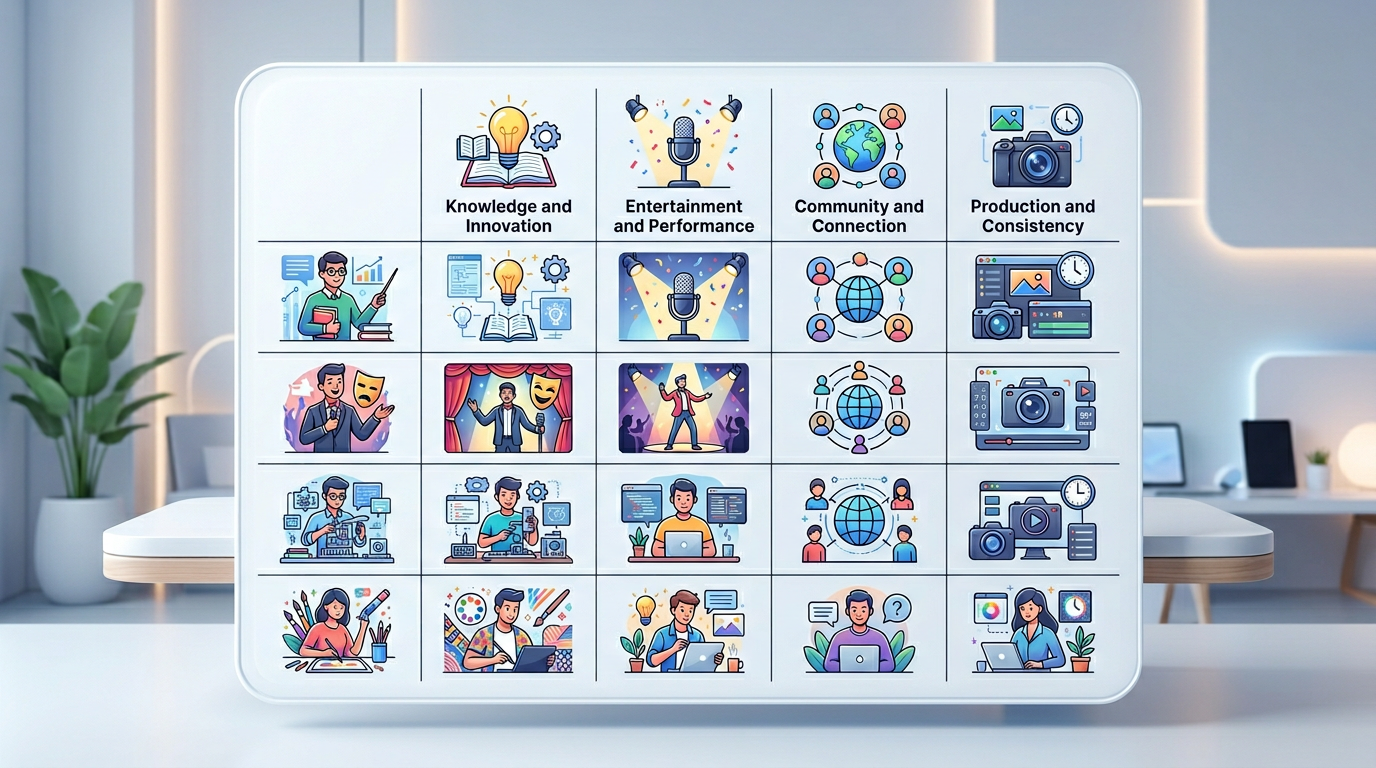
When you are building your content calendar, consider how these personas can serve as your 'creative consultants.' If you are stuck on a script, input your draft into a chat interface to see how the character would 'rewrite' it. This isn't just about mimicry; it's about understanding the logic of their persona. By analyzing how these characters prioritize information, you can refine your own storytelling to be more efficient and impactful.
The Consistency Checklist
Before you publish, run your script through this checklist to ensure you are hitting the 'Relatable Rebel' notes correctly:
- The Hook: Does the first sentence establish the character's status immediately?
- The Flaw: Is there a moment of hesitation or vulnerability that breaks the 'tough guy' facade?
- The Pacing: Are your sentences short, punchy, and built for rapid consumption?
- The Interactive Test: If you put this script into an AI chat, does the character respond in a way that feels 'in-character' for their specific archetype?
- The Legacy Check: Does the tone align with the established history of the character, or does it feel like a hollow imitation?
Scaling Your Creative Output
The final hurdle for most creators is volume. Modern social media rewards consistency, and that is where the combination of AI voice and video becomes an essential production asset. By batch-producing your scripts and iterating on them based on audience feedback, you can maintain a high cadence of content without sacrificing the quality of your character work. You are no longer waiting for a casting director or a studio; you are the writer, the director, and the talent.
Fanfun bridges the gap between your creative ideas and the final, shareable product. Whether you are looking to bring the classic appeal of Mickey Mouse into a modern social media context or create a high-stakes roast, the tools are now at your fingertips. The key to long-term success isn't just having the right tools, but having the discipline to use them consistently to refine your voice. By treating your AI-assisted content as a professional production, you elevate your brand from a casual creator to a serious digital storyteller.
How do I capture a specific actor's energy in an AI script?
Start by identifying the actor's 'rhythm.' Do they speak in short, clipped sentences, or do they use long, winding monologues? Use Fanfun’s AI chat to simulate a conversation with the persona, then analyze the output to refine your own script's cadence and vocabulary.
What are the best alternatives to booking celebrity cameos for content?
AI-powered personas are the most scalable alternative. Unlike traditional cameos, which are one-time, expensive, and limited by availability, Fanfun allows you to create unlimited, high-quality, personalized content instantly, allowing for more creative freedom in your sketches and promos.
Can AI personas help me write better character-driven sketches?
Absolutely. By using AI to test different personas, you can see how a specific script lands when delivered by a 'rebel' versus a 'mentor.' This helps you identify which archetype fits your comedic or dramatic goals before you finalize your production.
How does Fanfun differ from traditional AI voice generators?
Fanfun is built for interaction and fandom, not just text-to-speech. While standard generators focus on generic voice synthesis, Fanfun provides fully realized personas, interactive chat capabilities, and a library of characters that allow for deeper, more authentic creative engagement.