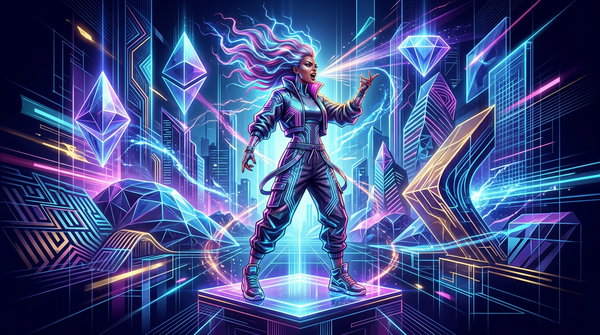
The Six Million Dollar Presence: Why Lee Majors’ Stoic Grit Is the Blueprint for AI Action Heroes
Modern AI content often leans toward hyper-energy, but the best digital personas capture the measured grit of 70s action legends. Discover how to build a lasting character archetype.

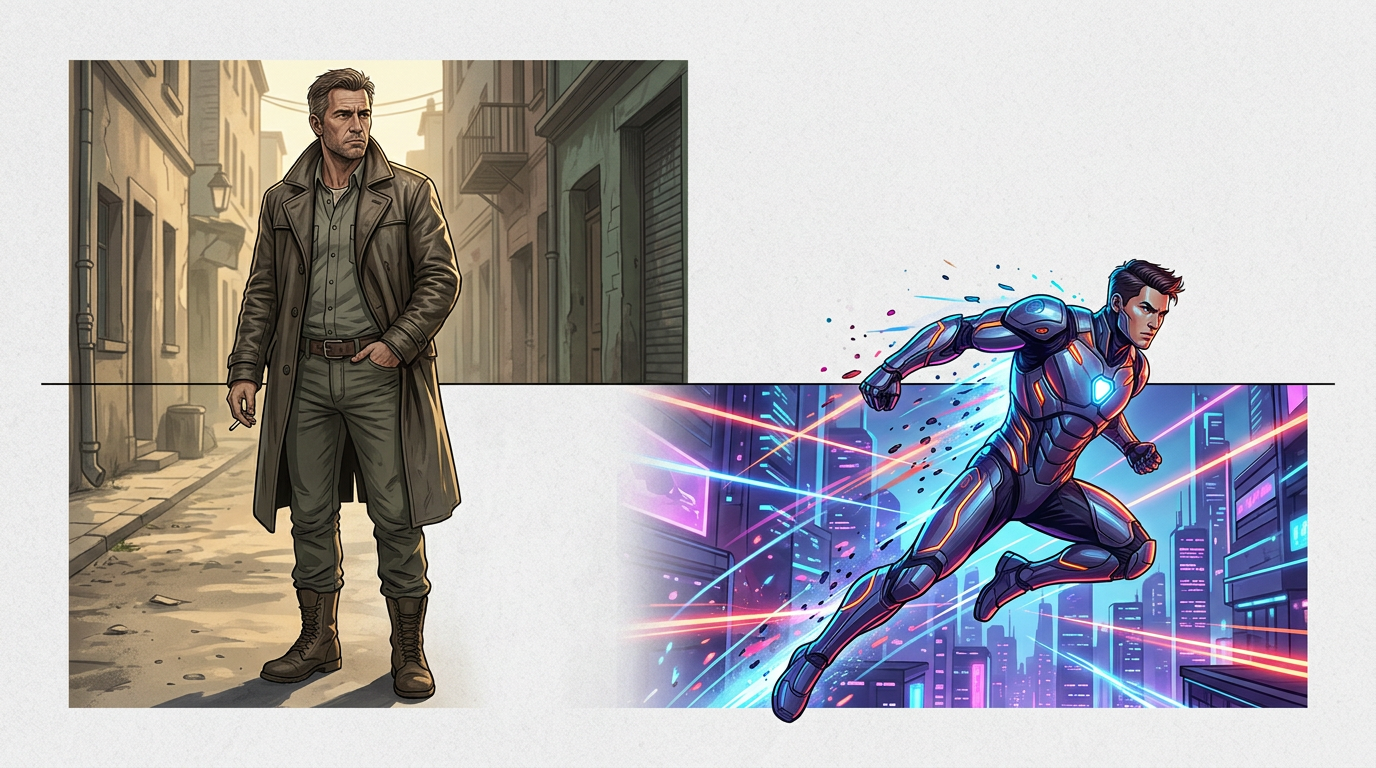
In the mid-70s, television action wasn't defined by frenetic cuts or seamless CGI. It was defined by the steady, understated presence of Lee Majors as Steve Austin in The Six Million Dollar Man. While modern action heroes are often built on velocity and quips, the classic archetype relied on a 'less is more' vocal delivery that commanded attention through restraint. This stoicism created a unique form of audience anticipation; when a character who rarely speaks finally chooses their words, the impact is magnified tenfold.
This 'Everyman' approach—where the hero is defined by their moral compass rather than invincibility—is precisely what modern content creators should study. Physical restraint, even in a digital medium, signals confidence. When you design an AI character, the temptation is often to make them loud and expressive to compensate for the lack of a physical body. However, true resonance comes from mimicking the measured cadence of a seasoned lead who doesn't need to shout to be heard. By studying these vintage archetypes, creators can elevate their content from mere novelty to something that feels genuinely substantial.
The Anatomy of the Stoic Lead
The core of the 70s action hero is a deliberate lack of performative ego. If you look at the way an icon like Lee Majors navigated a scene, he rarely rushed. He listened, observed, and responded with precision. In the context of the modern creator economy, this is a distinct advantage. Most AI-generated content is designed to grab attention through high-octane energy, but that creates a 'noise floor' that is difficult to rise above. By choosing to go against the grain with a stoic, measured persona, you immediately differentiate your content from the hyper-caffeinated norm.
This approach requires a fundamental change in how you approach your prompt engineering. Instead of asking for 'excitement' or 'enthusiasm,' you should prioritize 'gravitas,' 'calm,' and 'deliberate pacing.' When you utilize a tool like the Dwayne Johnson AI, you are accessing a baseline of high-energy charisma, but you can modulate that output by adjusting your instructions to favor the kind of grounded, authoritative tone that defined 70s television. The goal is to make the audience lean in, rather than blasting them with a wall of sound.
From Bionic Man to Digital Icon
Bridging the gap between 70s television icons and the capabilities of modern AI platform tools requires a shift in mindset. To capture the 'tough but fair' archetype, you must focus on specific linguistic markers: economy of speech, gravitas, and a consistent, grounded worldview. Unlike the high-octane energy found in a Shaq persona, which thrives on larger-than-life humor and competitive fire, a Lee Majors-inspired character thrives on the silence between the lines.
Using an AI voice generator to replicate this style isn't about cloning a specific timbre; it’s about capturing the pacing. When working within the Fanfun ecosystem, creators can lean into these vintage archetypes to provide a necessary counterbalance to the rapid-fire content dominating social feeds. By treating your AI character as a 'reluctant hero' rather than a 'constant performer,' you build a deeper, more enduring connection with your audience. This is the difference between a character that is forgotten in a scroll and one that is saved and shared.
The Three Pillars of a Legendary Persona
To build a character that feels as legendary as Steve Austin, you must balance three core elements:
- Grit: The underlying toughness derived from a character’s history, not just their current actions. It is the weight of experience.
- Relatability: The ability to express human doubt or weariness, which makes the hero's ultimate success more satisfying.
- Consistency: A predictable moral compass that allows the audience to trust the character’s reactions in any scenario, no matter how chaotic the situation becomes.
Building Your Own Action Archetype
Creating a compelling AI persona requires a clear framework. Before you generate your first clip, define your character's 'Voice, Catchphrase, and Moral Compass.' If your character is designed to be an action lead, their catchphrase shouldn't be a punchline; it should be a statement of intent. The goal is to move beyond the shallow novelty of AI and toward the creation of a character who feels like they have a back-story, even if they only exist in short-form video.

When utilizing an AI voice generator, focus on the 'measured gravel' cadence. Avoid prompts that call for 'excited' or 'fast' delivery. Instead, look for words like 'deliberate,' 'calm,' 'low-register,' and 'observant.' This specific type of vocal texture acts as a signal to the audience that your character is in control of the situation, regardless of the stakes. Whether you are building a mascot for a brand or a character for a narrative project, this control is what keeps an audience engaged for the long haul.
The Modern Creator’s Toolkit
The landscape of content creation has shifted from passive consumption to interactive participation. While icons like Kobe Bean Bryant represent the pinnacle of real-world drive and competitive spirit, fictional archetypes allow for a different kind of creative freedom. With platforms like Fanfun, you can rapidly prototype these action personas, testing how different vocal tones interact with your audience’s questions. This instant feedback loop allows you to refine the character’s 'grit' in real-time, ensuring that the persona evolves alongside your audience's expectations.
The shift away from generic AI voices toward specific, iconic archetypes is a sign of a maturing creator economy. Audiences are tired of 'flat' digital voices; they are looking for intent. Whether you are working with the whimsy of a Spongebob Squarepants character for a lighthearted project or building a serious, stoic hero, the key is to ensure the voice matches the character's core ethos. The technology is simply the vehicle; the 'soul' of the performance is dictated by the constraints you place on the character.
Tactical Execution: Beyond the Prompt
To truly master this, consider the visual and auditory environment. If you are creating a video, the visual pacing must match the vocal pacing. Don't rely on jump-cuts that move faster than the dialogue. Let the character breathe. If you are using a persona like Sydney Sweeney for a project, you might lean into a different kind of charisma, but the rule of 'intentionality' remains constant. Every word must have a purpose. In the Fanfun library, you can experiment with how different personas handle these moments of silence. Does the character look away? Do they pause before answering a difficult question? These micro-interactions are where the 'human' element of AI truly shines.
Scaling Your Fandom Projects
Modern fandom is no longer a spectator sport. It demands interaction. Moving beyond one-off videos to interactive, two-way character experiences is the next frontier for creators. Fanfun provides the infrastructure to keep up with this demand, offering the ability to generate content that feels professional and 'human' without the logistical nightmare of traditional celebrity booking. This allows creators to focus on the 'story' rather than the 'logistics' of production. Even iconic figures like Mickey Mouse have evolved through decades of consistent character work; your digital persona deserves the same level of long-term care and strategic development.
The secret to scaling is consistency. By anchoring your projects in the archetypes that have worked for decades—the stoic hero, the mentor, the legend—you create a baseline of quality that your audience can rely on. As you scale, remember that the technology is just the tool; the soul of the content still lies in the character’s voice, their restraint, and their ability to stay true to their own internal code. Whether you are channeling the intensity of a modern star or the classic grit of a 70s icon, the principles of great storytelling remain the same: show, don't just tell, and always respect the power of a well-placed silence.
How can I make my AI content sound more like a 70s action hero?
Focus on 'measured' delivery. Use prompt keywords like 'calm,' 'deliberate,' 'low-register,' and 'observant' in your AI voice generator settings to emulate the stoic, gravelly cadence of 70s leads.
Is it possible to create custom characters that feel as iconic as The Six Million Dollar Man?
Yes, by focusing on a consistent moral compass and a defined backstory. Even if your character is new, giving them a 'code' of conduct and a consistent vocal style will help them feel established and legendary to your audience.
What are the best alternatives to Cameo for generating character-based video messages?
Fanfun is the leading alternative for high-quality, instant AI-generated character messages. Unlike Cameo, which relies on real-world celebrity availability, Fanfun allows for 24/7 access to fictional characters and AI versions of icons, perfect for birthdays, roasts, and promos.
How do I use AI voice generators to capture a specific era's acting style?
Study the pacing of the era. 70s action used silence and pauses to build tension. When prompting your AI, instruct it to use longer pauses between sentences and avoid high-energy, 'announcer-style' inflections.