
The Jonah Ryan Archetype: Mastering the Art of the Incompetent Antagonist
The modern antagonist isn't a mastermind—they’re a disaster. We break down the Jonah Ryan archetype and how creators can use AI to build their own versions of this comedic gold.

In the landscape of modern digital storytelling, the most effective antagonist is rarely the calculating mastermind. Instead, we have moved toward the 'loud, failing' archetype—a character whose arrogance is matched only by their profound incompetence. Timothy Simons’ performance as Jonah Ryan in Veep is the definitive blueprint for this shift. Jonah works because his inflated sense of self-importance constantly collides with the reality of his own lack of talent, creating a specific brand of vulnerability that feels remarkably human, even when the character is at their most insufferable.
This archetype relies on the gap between what the character believes they are and what the audience knows they are. When a character is completely unaware of their failure, the comedy becomes an engine for infinite scenarios. Whether it is a workplace parody or a social media skit, the incompetent antagonist serves as the perfect foil for more grounded, rational characters. They provide the necessary friction to move a plot forward without the need for high-stakes, life-or-death drama, allowing creators to lean into absurdity rather than heavy exposition.
The Anatomy of the Modern Incompetent
To build a compelling incompetent antagonist, you must understand that their failure is not a bug; it is a feature. The character must possess enough confidence to enter a room and demand respect, yet lack the actual skill set to hold it for more than thirty seconds. This creates a rhythmic tension. You aren't writing a villain; you are writing a walking, talking ego-check. The humor is derived from the character’s refusal to acknowledge the mounting evidence of their own failure.
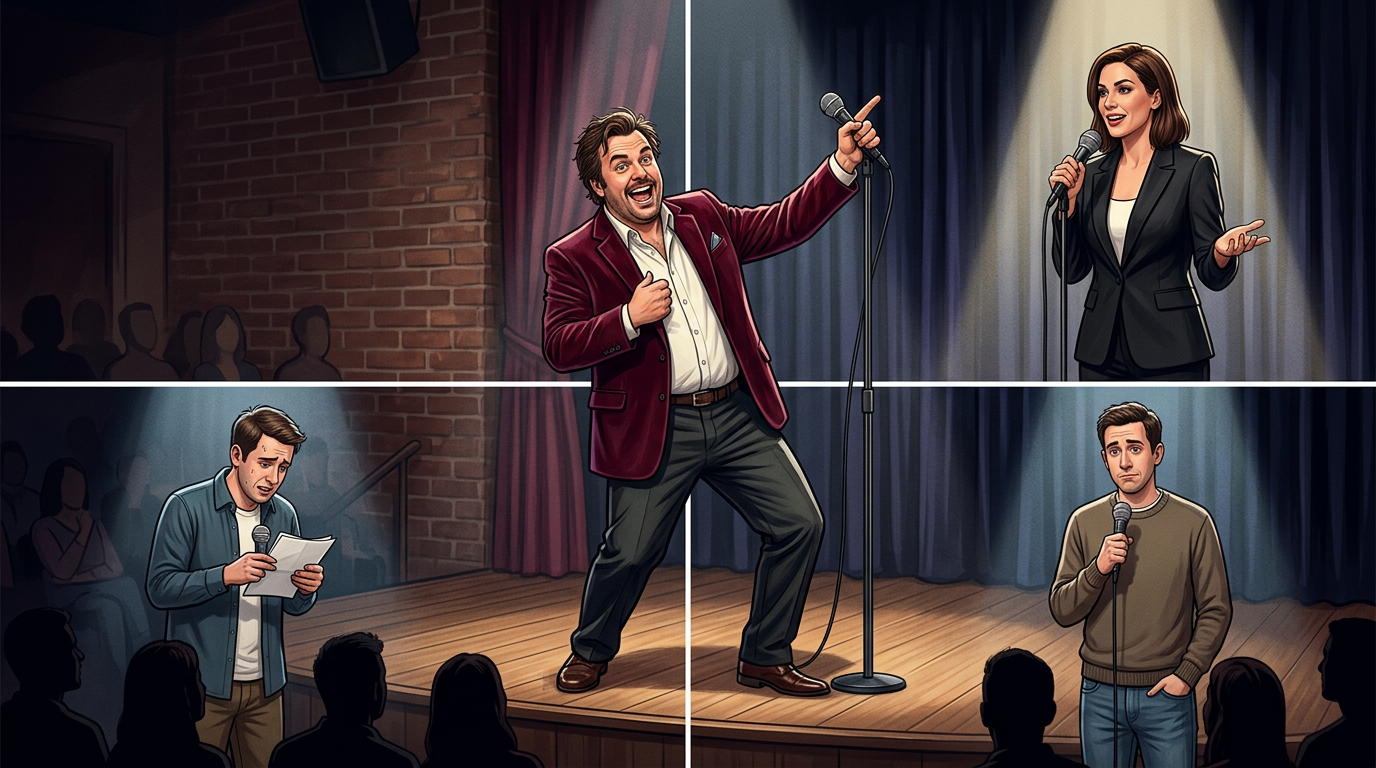
When crafting these personas, consider the following breakdown of traits that define the archetype:
| Trait | Function in Narrative |
|---|---|
| The Unearned Authority | Forces the protagonist to navigate social awkwardness. |
| The Aggressive Stutter | Signals internal panic hidden behind a facade of power. |
| The Blame-Shift | Ensures the character never learns, keeping the cycle of failure alive. |
| The Misplaced Jargon | Highlights their desire to sound smart while being fundamentally confused. |
Vocal Cadence as Character Development
Vocal delivery is the primary tool for selling this type of persona. The 'aggressive stutter'—a rapid-fire, stumbling delivery that signals a character is trying to maintain authority while losing their grip—is a classic hallmark of the Jonah Ryan style. By modulating pitch and speed, a performer can turn a mundane sentence into a punchline. This is where character recognition becomes vital; consider how distinct, high-energy vocal patterns, like those seen in Spongebob Squarepants, create an instant connection with the audience through consistency and quirk.
Creators are increasingly using AI voice generators to prototype these specific vocal quirks before committing to a final script. By experimenting with different cadences, you can determine if a character sounds more 'fumbling' or 'menacingly arrogant.' This iterative process allows you to find the exact vocal pitch that communicates status without requiring hours of trial-and-error recording. Using a tool like Fanfun allows you to test these variations in real-time, essentially giving you a digital focus group for your character’s voice.
The Confidence-to-Competence Matrix
To build your own comedic antagonist, it helps to map them against a simple framework. Place your character on a grid where the X-axis is 'Competence' and the Y-axis is 'Confidence.' The 'Jonah Ryan' zone exists in the top-left quadrant: High Confidence, Low Competence. When you contrast this with a character who possesses both high confidence and high competence—like an idealized Dwayne Johnson AI persona—you create a dynamic shift in tone that is inherently funny. The disparity between these two archetypes provides a natural engine for conflict in any skit.
If you are looking to ground your writing, you can also look at how high-status archetypes like a Shaq-style persona operate. Their presence is defined by gravity and ease, which makes them the perfect wall for your incompetent character to bounce off of. By using Fanfun to generate reactions from different personas, you can see how your 'failing' character holds up when challenged by a high-status figure.
Building Your Own 'Failing' Persona
The secret to a successful incompetent antagonist is rapid iteration. You need to see how your character reacts to failure. Does they double down on their mistake? Do they blame others? Do they retreat into a shell of denial? These reactions define the 'flavor' of the incompetence. By using AI to simulate these reactions, you can generate dozens of responses to a single scenario in minutes, helping you identify which version of the persona lands the hardest. This is where Fanfun becomes an essential part of the creative process. Instead of static impressions, you are building an interactive character development pipeline. You can feed your scripts into the system and immediately hear how a character’s voice changes under pressure, providing a digital sounding board that saves you time and keeps your creative momentum high.
Furthermore, consider the physical and social context of your antagonist. An incompetent character is often funniest when they are placed in a high-stakes environment they don't belong in. Whether it is a corporate boardroom or a high-pressure sports environment, the contrast creates the comedy. For instance, testing how a character interacts with the stoic, focused energy of a Kobe Bean Bryant-inspired AI can reveal exactly where your antagonist’s logic breaks down. This type of stress-testing is invaluable for refining the 'bit' before you ever start filming.
From Screen to Screen: Scaling Your Content
Adapting these archetypes for short-form video platforms requires a focus on 'the bit.' On TikTok or Reels, you don't have the luxury of slow-burn character development. Your incompetent antagonist must establish their personality within the first three seconds. The 'roast' format is particularly effective here—by having your character attempt to critique someone else while failing to understand basic concepts, you highlight their lack of competence instantly. Whether you are drawing inspiration from the intensity of a sports legend or the cultural ubiquity of Mickey Mouse, the key is to ensure the character's core 'flaw' is immediately apparent to the viewer.
Comparing human-led performance to AI-enhanced iteration reveals that the latter allows for a much faster feedback loop. While a human actor requires scripts, rehearsals, and multiple takes, AI tools allow you to explore variations of a character's persona across dozens of different scenarios instantly. If you are building a character meant to be the 'villain' of your content, you can test how they handle rejection, praise, or confusion in seconds. This is the new standard for content creation: moving from the concept of a character to a fully realized, interactive presence in minutes rather than days. For those looking to add a touch of celebrity-level charisma to their content, exploring the Sydney Sweeney persona can provide a masterclass in modern, high-status delivery that contrasts perfectly with the bumbling nature of your incompetent antagonist.
Ultimately, the goal is to create a character that feels like a living, breathing entity that can engage with your audience. When your incompetent antagonist can 'talk back' to fans or participate in a livestream, the immersion is complete. By leveraging these technologies, you aren't just writing a character; you are creating a digital asset that can grow, fail, and entertain in ways that static scripts never could. The future of character writing isn't just about the words on the page—it is about the speed at which you can bring those words to life in a way that feels authentic, reactive, and hilariously flawed.
How do I write a character like Jonah Ryan?
Start by identifying the gap between the character's ego and their reality. Give them an inflated sense of authority and force them into situations where they are clearly out of their depth. The comedy comes from them trying to maintain their 'status' while failing to perform basic tasks.
Can AI help me develop a comedic character voice?
Yes. AI voice generators allow you to test different vocal cadences, pitches, and speeds. By iterating on these vocal patterns, you can find the specific 'quirk'—like a stutter, a specific inflection, or a rapid-fire delivery—that makes your character feel unique and believable.
Why are incompetent antagonists so popular in modern comedy?
They are relatable. Everyone has encountered someone who is overconfident and under-qualified. By putting this archetype in a position of power, creators can satirize real-world hierarchies and explore the absurdity of human ego.
What are the best Cameo alternatives for generating character-based content?
For creators looking for scalable, interactive character experiences, Fanfun offers a robust alternative. Unlike traditional platforms that require booking individual video messages, Fanfun provides instant access to celebrity-style AI personas, allowing for unlimited memes, roasts, and interactive chats that you can generate on-demand.