The Authority of the Everyman: Why Geoff Pierson’s Voice is the Blueprint for Modern AI Storytelling
Great AI storytelling isn't just about pitch; it's about cadence and intent. Learn why the 'authoritative everyman' style is the gold standard for modern creators.
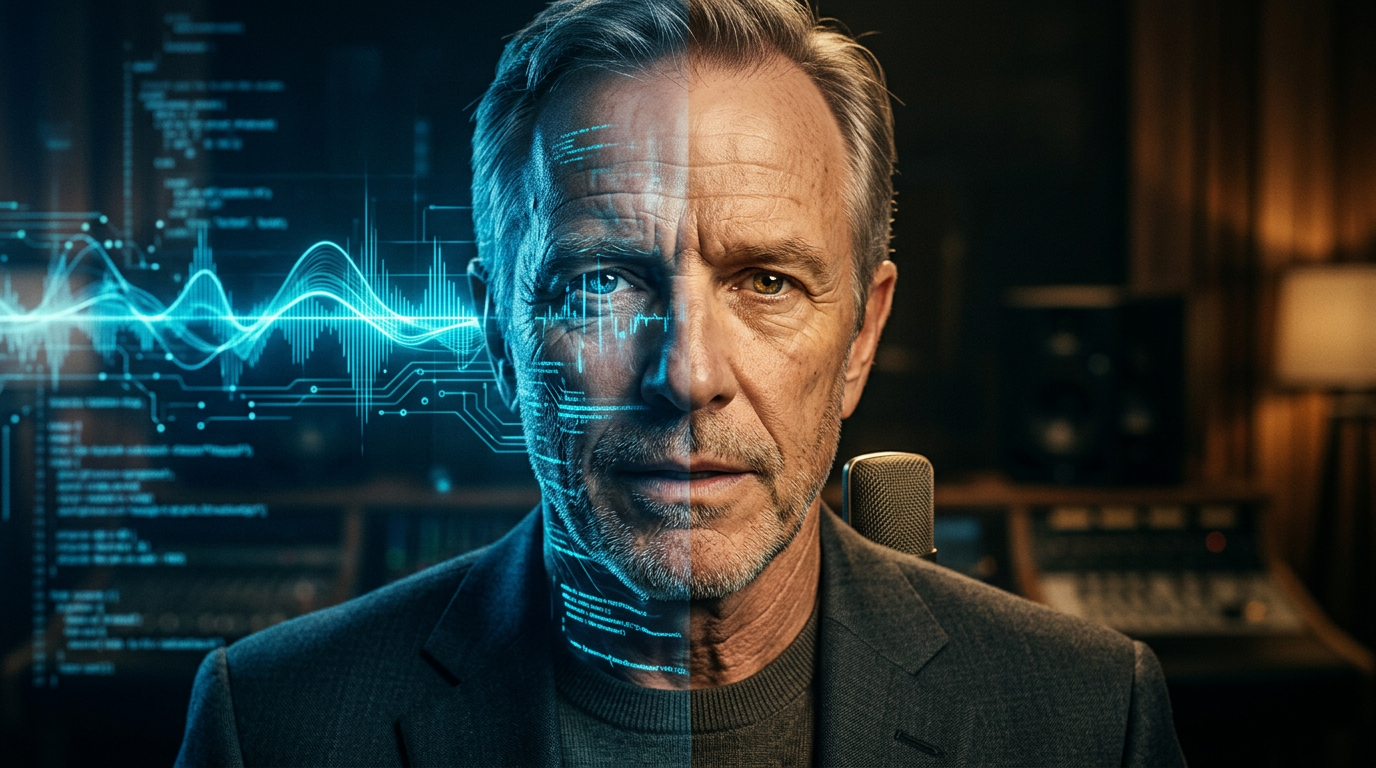
In the world of character acting, few voices carry as much weight as Geoff Pierson. Whether playing a weary commander or a steadfast mentor, his delivery is never about volume; it is about deliberate, measured rhythm. His cadence creates a sense of institutional trust, a quality that is frequently absent in the rapid-fire, synthetic outputs of standard text-to-speech tools. When Pierson speaks, the listener doesn't just hear words—they hear the weight of experience. This is the gold standard for creators looking to move beyond robotic narration.
For content creators, this is the shift from generic narration to character-driven authority. When you build a persona for a project, you aren't just selecting a frequency; you are establishing a relationship with the audience. The Pierson cadence relies on strategic pauses, a grounded mid-range tone, and an underlying sense of 'knowing' that keeps an audience engaged. It is the antithesis of the 'announcer' voice that has plagued digital media for years.
The Pierson Effect: Decoding the Voice of Command
The primary failure of most AI voice generators is a lack of texture. Many tools treat voice as a flat data point, resulting in a robotic delivery that lacks the breath, hesitation, and emotional variance of a human performance. To capture true gravitas, you have to move beyond asking for a 'deep voice' and start prompting for 'intent.' If your AI sounds flat, it is likely because the prompt lacks the context of character history.

At Fanfun, we focus on bridging the gap between static text and a living, breathing persona. By treating each voice as a character with a specific backstory and emotional baseline, creators can move past the limitations of standard synthesis. Capturing the nuance of a veteran actor requires an AI engine that understands that a whisper can sometimes convey more authority than a shout. When you look at the spectrum of personalities available, from the high-octane energy of a Dwayne Johnson AI to the legendary, competitive drive found in a Kobe Bean Bryant-inspired persona, you realize that the voice is the primary vehicle for the character’s soul. These aren't just clones; they are interpretations of archetypes that carry their own inherent authority.
The Anatomy of a Compelling Persona
When designing a persona that needs to command attention, focus on the rhythm of the speech rather than just the pitch. An authoritative voice is often one that is comfortable with silence. In your AI character construction, prioritize 'rhythmic anchoring'—the way a character structures their sentences to emphasize key points through timing. This is where the 'Everyman' archetype shines; it feels approachable yet firm.

Consider the difference in energy profiles when building your content. For instance, comparing the high-octane, action-driven energy of an action star provides a stark contrast to the understated, cerebral authority of a Pierson-style persona. While a high-energy archetype is built for intensity and motivation, a mentor-style archetype is built for clarity and wisdom. Use the following framework to build your character:
- Emotional Baseline: Is the character weary, optimistic, or impatient?
- Rhythmic Cadence: Does the character speak in short, punchy sentences or long, flowing monologues?
- Institutional Weight: Does the voice sound like it has seen everything, or is it learning as it goes?
By defining these parameters, you stop treating your AI as a tool and start treating it as a cast member. Whether you are aiming for the iconic, recognizable charisma of Shaq or the whimsical, high-energy charm of Spongebob Squarepants, the goal is always to match the vocal texture to the specific narrative need of your content. Even a character as stylized as Mickey Mouse requires a specific, consistent cadence to maintain the illusion of life.
Practical Applications for Modern Creators
Applying these character principles requires an understanding of your project’s emotional goal. If you are producing a brand promo that requires a sense of legacy and trust, you want a voice that feels established. Contrast this with the boisterous, recognizable charisma of a pop culture icon, which is better suited for high-energy, entertainment-first content. Choosing the right persona is as much about the 'vibe' as it is about the content itself.
Many creators fall into the trap of using a single, 'safe' voice for all their projects. This is a mistake. Just as a film director wouldn't cast the same actor for every single role, you should curate your AI voices to fit the specific message. If you are creating educational content, you want the 'Mentor' archetype—low pitch, slow cadence, and frequent pauses. If you are creating a meme or a quick social media hook, you need the 'Icon' archetype—high energy, rhythmic variation, and a bold tone. For example, using a voice with the gravitas of a global star like Sydney Sweeney can provide an immediate emotional anchor for a narrative-driven reel.
Before finalizing your output, perform a 'trust test.' Listen to the AI and ask: would I take advice from this voice? If the answer is no, adjust the cadence or the emotional modifiers in your prompt to ground the persona further. This iterative process is what separates professional-grade content from amateur experiments.
The Future of Interactive Fandom
The next frontier for creators is moving from passive consumption to two-way AI interactions. Listeners and viewers today are increasingly drawn to characters that feel like they have a history. By utilizing the Fanfun library, creators can instantly experiment with these archetypes, testing how different personas shift the tone of their narrative. When your audience interacts with a character that feels human—complete with the rhythmic nuances of a veteran actor—they don't just engage; they connect.
The ability to deploy these high-fidelity personas at scale is what defines the next generation of digital storytelling. We are moving away from the era of static, one-way video messages and into an era of dynamic, character-driven conversations. Whether you are building a story that requires the gravitas of a seasoned commander or the lighthearted energy of a cartoon legend, the tools are now at your fingertips to make that happen in minutes, not months.
Ultimately, the 'Pierson' style of delivery is about respect for the audience. It acknowledges that the listener is intelligent, that they appreciate a well-placed pause, and that they respond to genuine, grounded emotion. When you integrate these principles into your AI workflows, you aren't just generating audio; you are crafting an experience that resonates long after the video ends. By focusing on the 'why' behind the voice, you turn a simple AI clip into a memorable piece of digital art.
How do I make my AI voice generator sound more like a real actor?
Focus on cadence and rhythm rather than just pitch. Use prompts that describe the character's emotional state, such as 'weary,' 'authoritative,' or 'thoughtful,' to encourage the AI to add natural pauses and texture.
What makes a voice sound authoritative in AI narration?
Authoritative voices often feature a grounded mid-range pitch, controlled pacing, and the strategic use of silence. It is about sounding like someone who chooses their words carefully.
Can I use AI to create a character with a specific acting style?
Yes, by defining the character's archetype and history within your prompt. Fanfun allows you to iterate on these archetypes, helping you find the specific vocal texture that matches your narrative needs.
Why does character-driven AI feel more authentic than generic text-to-speech?
Character-driven AI accounts for emotional variance and rhythmic nuances. While generic text-to-speech focuses on clarity above all else, character-driven models prioritize the 'performance' of the text.