
The Alex Bonifer Effect: How to Master the 'Everyman' Archetype in Character-Driven Content
Great character-driven content doesn't always need a superstar—it needs a heartbeat. Learn how to bridge the gap between high-concept absurdity and relatable, grounded performance.

In the digital landscape, the most effective content often relies on a fundamental tension: the clash between the extraordinary and the mundane. The 'everyman' archetype serves as the essential anchor in this dynamic, acting as the audience’s surrogate who navigates absurdity with relatable skepticism.
Mastering this balance requires more than just a funny premise; it demands a deep understanding of how to ground high-concept characters within a recognizable reality. By focusing on the 'everyman' perspective, creators can transform fleeting viral moments into sustained, character-driven narratives that keep audiences coming back.
The Anatomy of the Relatable Rebel
Alex Bonifer’s success isn't just about punchlines; it’s about the silence before the reaction. In the fast-paced world of digital content, many creators fall into the trap of constant, high-energy caricatures. While these can be fun, they often lack an anchor—a grounded, relatable human response that tells the audience how to feel about the absurdity unfolding on screen. The 'everyman' archetype succeeds because it acts as the audience's surrogate, reacting to chaos with a mix of hesitation, skepticism, and dry realism.

Authenticity is currently the highest currency in content creation. When you build a character that feels like a real person—someone who gets annoyed, experiences doubt, or struggles with the mundane—you create a bridge between your high-concept premise and the viewer's everyday life. This shift from performative perfection to relatable flaws is why the best sketches often feel less like scripted content and more like a captured moment of human truth. The goal is to make the audience feel that if they were in the room, they would react exactly as your protagonist does.
Scaling Your Character Work Without Losing the Human Touch
Consistency is the primary hurdle for any creator. You need a steady stream of content to stay relevant, but you also need to maintain the depth of your characters to keep your audience invested. This is where modern tooling changes the game. By using AI as a creative partner, you can stress-test dialogue, iterate on character reactions, and even draft entire scenarios before you ever hit record. Instead of spending weeks planning a single interaction, you can simulate a variety of responses to find the one that lands with the most emotional weight.
At Fanfun, we see creators using interactive personas to bridge the gap between their own performance and a wider, more diverse cast of characters. Rather than relying on rigid, one-way video clips, Fanfun allows for dynamic, non-scripted interactions that mimic the spontaneity of a live performance. This enables you to maintain a consistent character voice while exploring endless narrative possibilities. Whether you are building a series around a high-energy icon like the Dwayne Johnson AI or looking to ground a scene with the wisdom of a legend like Kobe Bean Bryant, you can scale your output without sacrificing the specific, human nuances that make your content work. The platform acts as a force multiplier, allowing you to focus on the 'everyman' reactions while the AI handles the heavy lifting of the iconic personas.
Building Your Own Character Toolkit
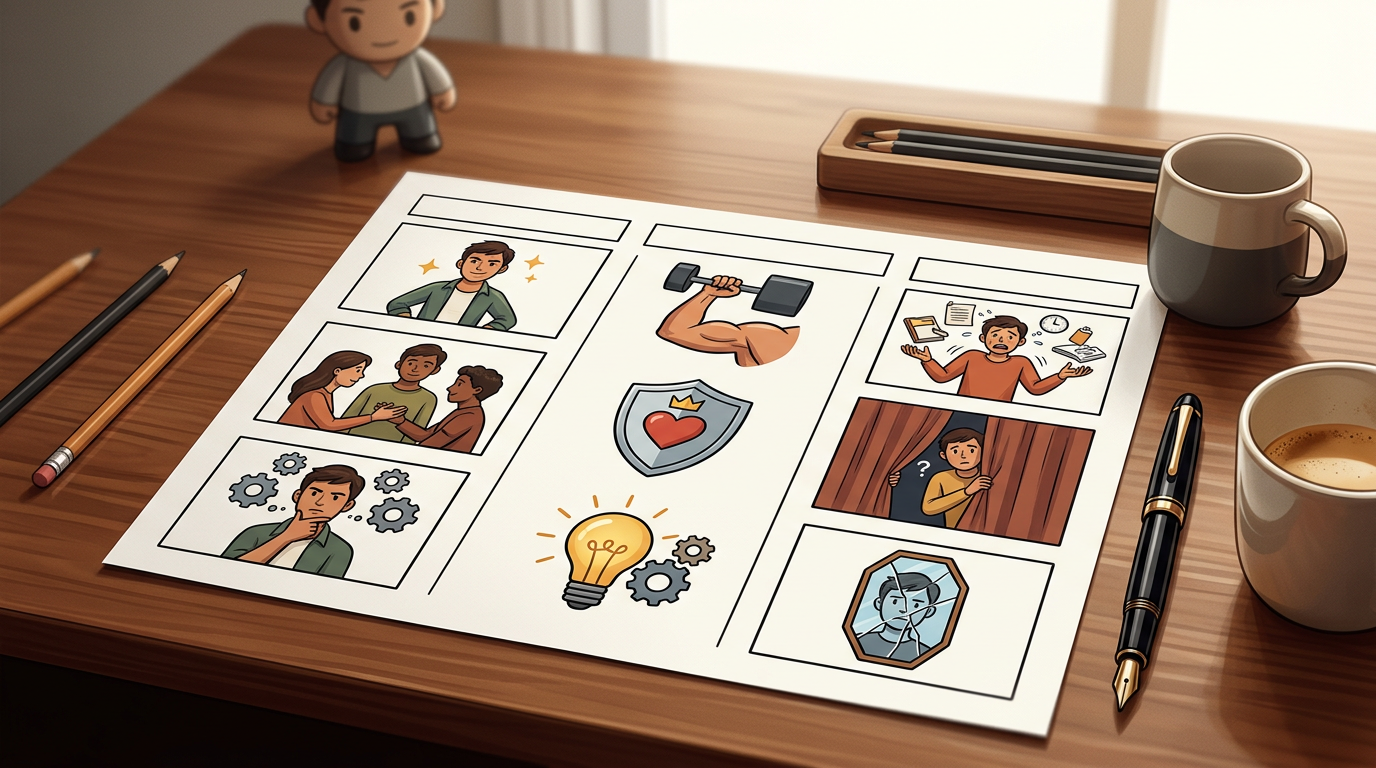
To move beyond generic content, your characters need a blueprint. Use the 'Three-Trait Rule' to ensure your characters feel three-dimensional: assign each character one primary strength, one significant flaw, and one surprising, niche quirk. For example, a character might be hyper-intelligent (strength) but socially oblivious (flaw) and obsessed with vintage board games (quirk). This internal conflict creates the 'friction' that keeps viewers watching.
| Archetype | Best Use Case | Example |
|---|---|---|
| High-Energy Icon | Driving hype, comedic contrast | Shaq |
| Grounded Everyman | Relatability, audience surrogate | Custom Creator Persona |
| Distinctive Quirk | Instant recognition, branding | Spongebob Squarepants |
| The Protagonist | Character-driven narratives | Sydney Sweeney |
| The Classic | Nostalgic engagement | Mickey Mouse |
When you contrast these archetypes, the comedy potential doubles. Pairing a high-energy, larger-than-life presence with a dry, skeptical everyman creates immediate tension and humor that drives engagement. The key is to ensure the contrast isn't just aesthetic, but behavioral. If your 'everyman' is too cool, the joke fails. They must be visibly affected by the absurdity of the icon they are interacting with.
Why 'Everyman' Characters Are the Ultimate Cameo Alternative
The traditional model of booking real-world talent for every skit is unsustainable for most creators. It’s expensive, slow, and limits your creative freedom to the availability of the talent. AI personas offer a transformative alternative. By integrating specific archetypes into your workflow, you can build a consistent narrative arc that spans weeks or months, rather than being limited to a one-off 30-second clip. This shift allows you to iterate on your story as you go, rather than being locked into a script written weeks in advance.
This isn't about replacing human performance; it's about augmenting your toolkit. You can play the 'everyman' yourself while using AI to fill in the roles of the eccentric boss, the overly enthusiastic coach, or the iconic cultural figure you need to ground your story. This allows you to maintain total creative control over the pacing and tone of your content. You become the director, the lead actor, and the editor of a universe that exists entirely on your terms, utilizing the Fanfun ecosystem to ensure your characters sound and feel consistent across every episode.
Refining Your Performance: A Practical Guide
Mastering the Pause
In comedy, silence is where the tension lives. When your AI character delivers a line, don't rush to the next one. Use the 'beat'—a two-second silence—to let the absurdity land. It gives the audience a moment to process the reaction, making the subsequent line hit harder. If you are using an AI voice generator, experiment with varying the cadence to include these intentional pauses. A character who speaks too quickly loses the gravitas required for a truly 'human' performance.
The Importance of Context
Your character is only as good as their environment. If your persona is a cynical everyman, don't place them in a high-glamour, neon-lit studio. Use mundane, relatable settings—a home office, a grocery store, or a park bench. The juxtaposition of a professional, high-quality audio track against a mundane setting is exactly how you signal to the audience that this is a character-driven experience, not just a random clip. The 'everyman' thrives in the ordinary; give them a boring task, and watch how they react when the 'icon' crashes their reality.
Iterative Storytelling
Don't treat your content as a series of isolated events. Treat it as a long-form narrative. If your 'everyman' character has a recurring conflict with an AI persona, make sure the history of that conflict is referenced in future videos. This builds a sense of continuity that rewards loyal viewers. The goal is to make the audience feel like they are watching a developing relationship, not just a collection of viral moments. By using consistent personas, you turn your channel into a destination, not just a feed. Remember that every interaction is an opportunity to deepen the lore of your world—keep a log of your character’s previous reactions to ensure they remain true to their established personality traits as your story progresses.
How do I make my AI character content feel more authentic?
Focus on imperfections. Give your characters specific flaws, hesitation in their speech, and reactions that feel grounded in human emotion rather than just delivering punchlines.
What is the 'everyman' archetype in comedy?
The everyman is a relatable character who serves as an audience surrogate. They react to absurd situations in a way that feels 'normal,' which helps ground the comedy and makes it easier for the viewer to connect with the premise.
How can I use AI to improve my character-driven storytelling?
Use AI to prototype dialogue, test different character archetypes for your sketches, and maintain consistency across a series. Fanfun allows you to iterate on these interactions in real-time, giving you more creative freedom.
Are there better alternatives to Cameo for content creators?
Yes. AI platforms like Fanfun provide instant, scalable, and affordable access to a wide range of characters and personas, allowing you to build ongoing narratives instead of waiting for one-off clips.