
Beyond the Political Cameo: How Creators Are Using AI for Satire and Character Study
Political figures rarely show up on traditional celebrity video platforms. Creators are bypassing the gatekeepers by using AI to build deep, satirical character studies.
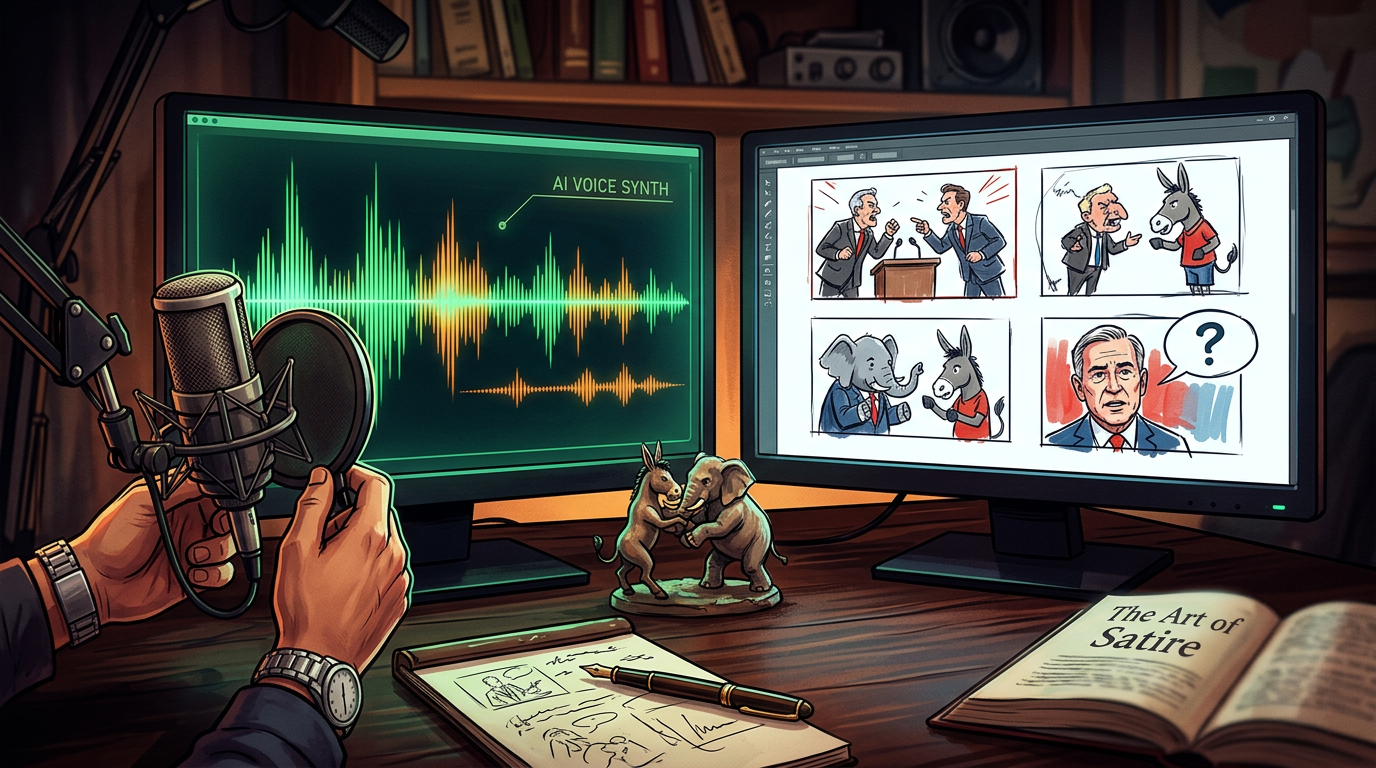
In the modern creator economy, the ability to request a personalized video message from a public figure has become a standard tool for fan engagement. However, there is a distinct boundary that remains virtually unbreakable: the political sphere. You will rarely, if ever, find high-stakes political figures on platforms like Cameo. This is not merely a matter of scheduling; it is a fundamental clash between entertainment branding and political risk management. For an entertainer, a 30-second shoutout is a low-risk commercial transaction. For a public official, the commercialization of their likeness for private, potentially out-of-context shoutouts poses a massive reputational liability. Political figures are bound by the need for message discipline and the avoidance of unintended endorsements. This has created a ‘Cameo ceiling’ for creators looking to integrate political archetypes into their satire. Rather than waiting for a permission-based ‘yes’ that will never come, creators are shifting toward a new model of content production that prioritizes creative control over celebrity access.
The Cameo Ceiling: Why Political Figures Are Off-Limits
The traditional celebrity booking model relies on a binary agreement: the talent provides a service, and the user pays a fee. When you remove the talent's agency—or when the talent is a public servant who cannot risk the ambiguity of a fan-submitted prompt—the system collapses. Political figures operate under strict risk management protocols. A personalized video message could be taken out of context, used to imply an endorsement, or create a public relations crisis. This makes the platform inherently incompatible with their professional roles.

This exclusion has forced creators to look elsewhere. Satire requires proximity to the subject, but when the subject is untouchable, the creator must become the architect of the likeness. This is where the shift toward AI-driven character studies becomes essential. Instead of relying on a third-party booking, creators are using technology to build, iterate, and refine personas that capture the essence of a public figure or archetype, allowing for a level of commentary that was previously impossible. By utilizing AI, creators can explore archetypes—the 'Everyman,' the 'Rebel,' or the 'Satirical Pundit'—without needing to secure a talent booking.
The Rise of the AI Character Study
The transition from passive celebrity consumption to active creator-led content is arguably the most significant shift in modern media. Creators are no longer looking for a static 30-second clip; they are building long-form, interactive narratives that require depth, nuance, and the ability to iterate in real-time. This is where dynamic celebrity icons and AI-driven personas allow for a level of satire that was previously impossible. Platforms like Fanfun provide the infrastructure to move beyond the superficiality of a paid greeting. Instead of hoping a celebrity will read a specific script, creators can now build a character study that feels authentic to the archetype. Whether you are experimenting with the intensity of a Dwayne Johnson AI or the gravitas of a Kobe Bean Bryant persona, you are no longer limited by the subject's availability.
The creative process for a character study is inherently iterative. Where a traditional booking is a one-off event, AI-driven content allows for rapid prototyping. You can test a script, refine the inflection, and adjust the persona's tone to match the specific satirical angle you are targeting. This is a massive advantage for creators who need to respond to the 24-hour news cycle. If a political event occurs, you don't need a PR team to clear a video; you can generate a response that fits your narrative in minutes.
The Power of Interactive Personas
Interactive AI is fundamentally changing how we approach satire. When you can engage with a personality that responds to your input, the content becomes a living, breathing project rather than a static asset. This allows for complex, multi-layered storytelling that can react to current events as they unfold, giving the creator total control over the narrative arc. If you are producing a sketch that requires the playful energy of Spongebob Squarepants or the cultural relevance of a Sydney Sweeney-inspired archetype, you can now generate these voices in minutes. This agility is the antithesis of the traditional celebrity gatekeeper model, where a single production could take weeks of negotiation and scheduling. For those looking to dive into this space, the ability to test, refine, and deploy is the ultimate competitive advantage.
Creative Ethics in Political Satire
With great creative power comes the need for a clear ethical framework. Using AI for political satire demands transparency and responsibility. As a creator, it is vital to distinguish between transformative parody and deceptive misinformation. Your audience should always be able to identify that they are engaging with an AI-generated persona. The goal is to provide commentary, not to trick the viewer into believing they are watching an official statement from a real person. To ensure your content remains ethical, consider this checklist before publishing: 1) Transformative Intent: Is the content adding new meaning or commentary, or is it merely mimicking to deceive? 2) Transparency: Is it clear to the viewer that this is an AI-generated character study? 3) Satirical Purpose: Does the content serve a clear, recognizable satirical or artistic function? 4) Audience Clarity: Would a reasonable viewer understand that this is a creative project rather than an official statement? By adhering to these principles, creators can push the boundaries of political commentary without crossing into the realm of unethical fabrication. The best satire often highlights the absurdity of a situation, and when you use an AI-generated voice or persona, you are highlighting the performance of the figure, not replacing the figure themselves.
Building Your Own Character Library
Effective storytelling often requires a mix of familiar archetypes and original voices. Successful creators are grounding their sketches by integrating iconic character traits with their own unique observations. Whether you are building a parody news segment or a fictional universe, the ability to access diverse personas at a moment's notice is a game-changer. You might even find yourself blending high-culture icons like Mickey Mouse into a surrealist political commentary to illustrate a point about corporate influence. The key is in the curation. By maintaining a library of voices that can be deployed for different sketches, you create a recognizable brand identity for your channel. This consistency builds trust with your audience, as they come to expect a certain level of quality and wit from your satirical sketches. The ease of access provided by platforms like Fanfun means you can experiment with combinations that would have been cost-prohibitive or physically impossible in the past. Imagine a debate sketch between two mismatched icons—the possibilities are endless when you control the character library.
The Future of Digital Fandom
The era of waiting for celebrity permission is ending. Today’s creators value autonomy, speed, and the ability to experiment. By moving away from the limitations of traditional booking platforms and embracing the potential of AI-driven character studies, creators are reclaiming their role as the primary architects of digital culture. The future of fandom is not about who you can book for a shoutout; it is about who you can build, how you can interact, and what stories you can tell when the only limit is your own creative vision. As you continue to craft your content, remember that the most compelling satire is that which challenges the audience to think, laugh, and question the world around them—all while knowing that in the digital age, the power of the persona is truly in the hands of the creator. The barrier to entry has lowered, but the ceiling for creativity has been raised significantly. Whether you are a seasoned satirist or a newcomer to digital storytelling, the tools at your disposal are more powerful than ever. Start small, iterate often, and always keep the audience's experience at the center of your creative process.
Can you get a Cameo from politicians?
Generally, no. High-profile political figures avoid platforms like Cameo due to the high risk of reputational damage, the need for message control, and the ethical complications of commercializing their official likeness.
Why are political figures not on Cameo?
Political figures operate under strict risk management protocols. A personalized video message could be taken out of context, used to imply an endorsement, or create a public relations crisis, making the platform incompatible with their professional roles.
How do creators make satirical content using AI voices?
Creators use AI voice generators and interactive persona platforms to build characters that mimic specific archetypes. By scripting content that is clearly transformative and satirical, they can produce sketches that comment on political figures or pop culture without needing the actual person's participation.
Is it legal to use AI to parody public figures?
Satire and parody are generally protected forms of speech. However, the legal landscape is evolving. To stay safe, creators should ensure their content is clearly identifiable as parody, avoids deceptive or defamatory claims, and maintains full transparency about the use of AI technology.