
Beyond the Impression: Why AI Persona Crafting is the New Frontier of Satire
Satire has always relied on the art of the impression, but AI changes the speed and accessibility of the craft. Here is how creators are trading low-effort mimicry for nuanced, character-driven storytelling.

For decades, the art of the impression was a gatekept skill. It required years of vocal training, a keen ear for cadence, and the physical stamina to hold a character for a sketch. Today, AI voice generators have lowered the technical barrier, allowing storytellers to pivot from the mechanical struggle of 'sounding like someone' to the creative work of 'thinking like someone.' This shift marks a move from passive consumption to active, personalized content creation where the voice is merely the instrument, not the entire performance.
When creators use AI, the goal shouldn't be to replicate a human with 100% fidelity, which often leads to the uncanny valley. Instead, the most successful creators treat these tools as digital puppets. By focusing on the 'bit'—the specific comedic angle or narrative arc—the AI becomes a collaborator. This democratization means that your ability to write a punchy script or a nuanced monologue is now more valuable than your ability to do a perfect celebrity impersonation.
The Evolution of the Digital Impression
The digital landscape has shifted from viral clips of people doing impressions to creators building entire universes around synthesized personas. This isn't just about the novelty of a voice; it is about the scalability of a character. When you treat an AI voice as a character archetype, you can produce sketches, roasts, and narrative arcs that would have taken a production team weeks to coordinate in the past. The efficiency of modern AI means that if you have an idea for a sketch at 2:00 AM, you can have a fully produced, voice-acted scene by 2:15 AM.
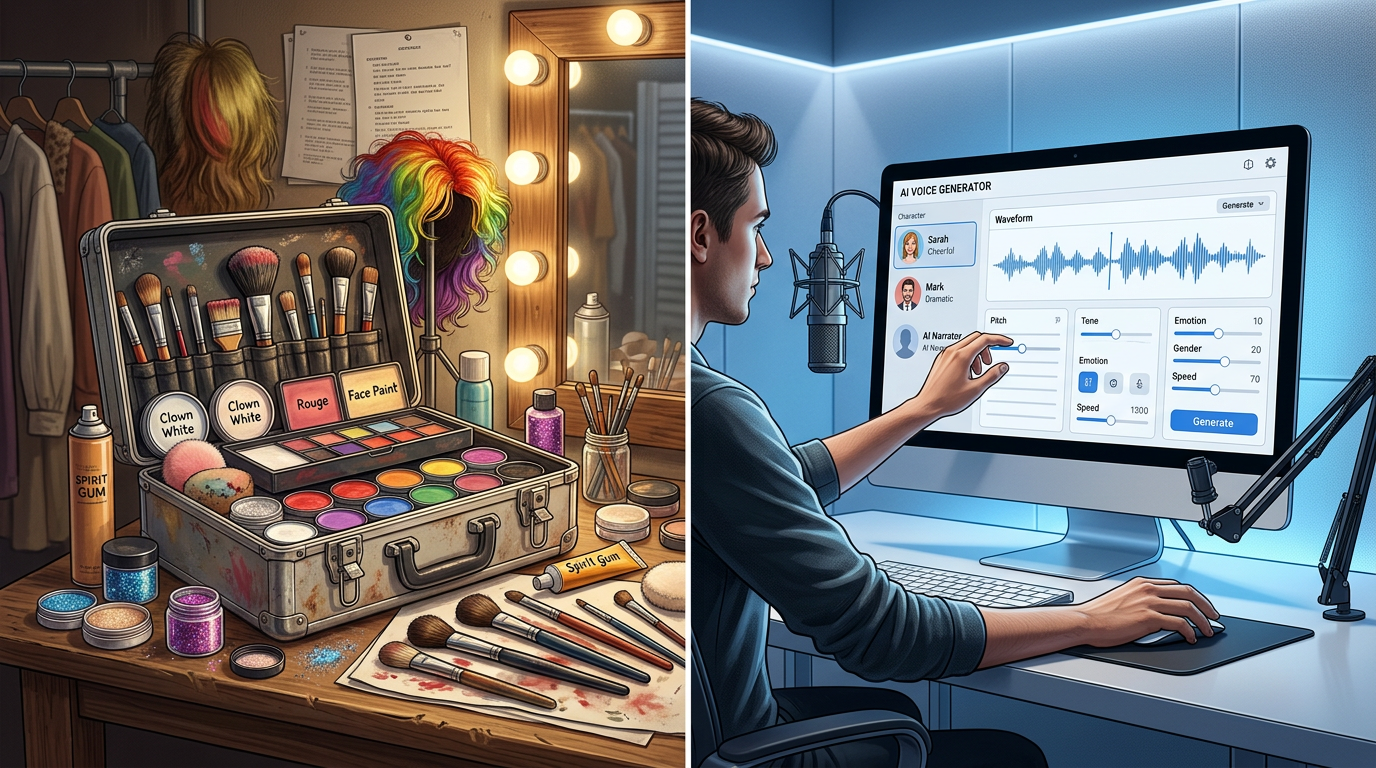
This speed changes the nature of satire itself. You can now react to cultural moments in real-time. If a major sporting event happens, you don't need to wait for a celebrity to record a cameo; you can leverage the energy of a sports legend to provide your own commentary or meme-driven take. This is where platforms like Fanfun become essential, acting as a creative studio that allows you to experiment with tone, rhythm, and character dynamics without the friction of booking, scheduling, or waiting for files to be returned.
Building a Persona: A Framework for Ethical Satire
Great satire requires a clear intent. When you step into the territory of public figure personas, you must prioritize the archetype over the individual. This is the 'Character First' rule. If you are building a parody around a recognizable figure, ask yourself what that figure represents in the cultural zeitgeist. Are they the stoic leader? The chaotic wildcard? The hyper-earnest enthusiast? By leaning into the caricature, you create something transformative that stands on its own merits.
To ensure your work remains creative and responsible, use this decision framework before you hit publish:
- The Archetype Test: Are you satirizing a behavior or a trait, or are you simply mocking a person? The former is satire; the latter is filler.
- The Transformative Threshold: Does the content add original value, such as a new script, a unique comedic scenario, or a remix of tropes?
- The Cadence Check: Does the AI performance capture the spirit of the character’s rhythm rather than just a flat, robotic mimicry of their speech?
By focusing on these elements, you move away from exploitative content and toward art that invites the audience to laugh with the concept you've built. The goal is to build a bridge between the audience's existing fandom and your new, original comedic perspective.
The Technical Art of the 'Bit'
The most common mistake novice creators make is relying on the AI to do the heavy lifting. A voice generator is a tool for delivery, but the substance remains entirely in your court. To master this, you must treat your script like a screenplay. If you are using an AI version of Shaq, don't just have him say generic greetings. Lean into the specific, larger-than-life energy he brings to media. Write dialogue that forces the persona to confront absurd situations—like a sports legend trying to navigate a mundane office meeting. By placing high-status archetypes in low-status environments, you create immediate, high-value comedic tension.
Why Fictional Characters Beat Real-Life Figures
While parodying public figures can be effective, it often comes with political baggage and shifting public perception that can date your content in weeks. Fictional characters offer a blank canvas. They have established lore, recognizable motivations, and a built-in audience that is already primed for the 'bit.' Interacting with icons like Spongebob Squarepants, for instance, allows for a level of creative play that isn't tethered to real-world controversy. You can drop these characters into absurd, unexpected scenarios that would be impossible with real people.

At Fanfun, we’ve found that creators thrive when they have access to a library that bridges the gap between reality and imagination. Whether you are looking for the gravitas of a sports legend like Kobe Bean Bryant or the lighthearted energy of a cartoon, having a range of personas allows you to switch tones instantly. This isn't just about voice; it’s about the freedom to experiment with how different characters would react to the same prompt. When you can iterate through five different character reactions in the time it takes to brew coffee, your creative output moves from 'stagnant' to 'prolific.'
Scaling Your Creative Output
Modern content creation is a game of pacing. If you are producing social media content, you don't have the luxury of spending weeks on a single voiceover. AI platforms provide an efficiency that allows for rapid iteration. If you are developing a series, you can use a persona to narrate a video, instantly giving your project a larger-than-life energy that would be impossible to secure through traditional booking channels. This is where Dwayne Johnson AI and other performance-ready models become essential tools in your production stack.
By automating the technical side of the recording process, you free up your schedule to focus on editing, pacing, and visual storytelling. Whether you are crafting a birthday roast or a brand promo, the ability to generate high-quality audio in minutes means you can experiment with multiple takes, scripts, and character dynamics until you find the perfect fit for your audience. Consider the versatility of modern icons; you might use the intensity of a sports figure for a motivational reel, or the playfulness of a character like Mickey Mouse for a whimsical brand update. The key is in the variety of your library.
The Future of Fandom and Interaction
We are moving past the era of one-way video clips. The next frontier of content creation is two-way, interactive AI chat. Fans no longer want to just watch; they want to participate. They want to ask questions, hear the character respond in real-time, and feel like they are part of the story. This shift changes the role of the creator from a broadcaster to a world-builder. When you use a platform that supports interactive personas—whether it's a pop culture icon or a rising star like Sydney Sweeney—you are providing an experience that is deeply personalized, safe, and endlessly repeatable. This is a massive step forward for digital fandom, turning passive viewers into active participants in the narratives you build.
As you look to the future, consider how your content library can evolve. The most successful creators are those who treat their AI tools as a permanent part of their production team. By layering these personas into your existing workflow, you don't just increase your output; you increase the quality and depth of your audience engagement. The technology exists to make your wildest creative ideas a reality—the only question left is what you will build next.
How does AI voice generation work for parody?
AI voice generation uses neural networks to interpret the cadence, tone, and pitch of a source voice. For parody, you feed the system a script, and it applies those learned characteristics to your text, allowing you to create comedic scenarios that the original person never actually performed.
Is it legal to use AI voices of public figures?
Laws regarding AI and likeness are evolving. Generally, satire and parody are protected forms of speech, but you should always ensure your content is clearly transformative and not intended to deceive or impersonate for fraudulent purposes. Always review the terms of service of the platform you are using.
What are the best alternatives to Cameo for character-driven content?
Platforms like Fanfun offer a modern alternative by providing instant, scalable access to a library of celebrity-style and fictional character personas. Unlike Cameo, which relies on real-time human availability, AI platforms offer 24/7 access for memes, roasts, and personalized content.
Can I use AI voices for commercial projects?
Usage rights depend on the platform's specific license. At Fanfun, we focus on providing tools for creators to make fun, personalized content. Always check the platform's commercial use policy before using AI-generated voices in a project intended for paid advertising or professional broadcast.